

Myasthenia Gravis: The Autoimmune Disease That Makes Muscles Tire Rapidly

Myasthenia Gravis, commonly called MG, is a rare autoimmune neuromuscular disorder that causes weakness and rapid fatigue of muscles. Unlike muscular dystrophies which are genetic diseases where muscles gradually degenerate over time, Myasthenia Gravis is an autoimmune disease where the body’s own immune system mistakenly attacks the connection between nerves and muscles, preventing proper muscle function. The condition affects approximately one in every five thousand people worldwide, making it a relatively uncommon disorder. Myasthenia Gravis can develop at any age but is more common in women in their twenties to thirties and in men in their sixties to seventies. The characteristic feature of Myasthenia Gravis is that muscles become progressively weaker during periods of activity and improve with rest. This is very different from muscular dystrophies where weakness is constant and progressively gets worse over time. A muscle with Myasthenia Gravis might work fine at the beginning of the day but become progressively weaker as the day goes on. The symptoms can fluctuate from day to day or even hour to hour. Before modern treatments were developed, Myasthenia Gravis was a serious and sometimes life-threatening condition. However, with proper diagnosis and treatment, most people with MG can manage their symptoms and have normal or near-normal quality of life. Some people with mild forms of Myasthenia Gravis may go into remission, where symptoms disappear completely, either spontaneously or with treatment. Understanding Myasthenia Gravis and how it affects the neuromuscular junction is important for recognizing symptoms early and seeking appropriate treatment.
How Does the Immune System Attack the Neuromuscular Junction?
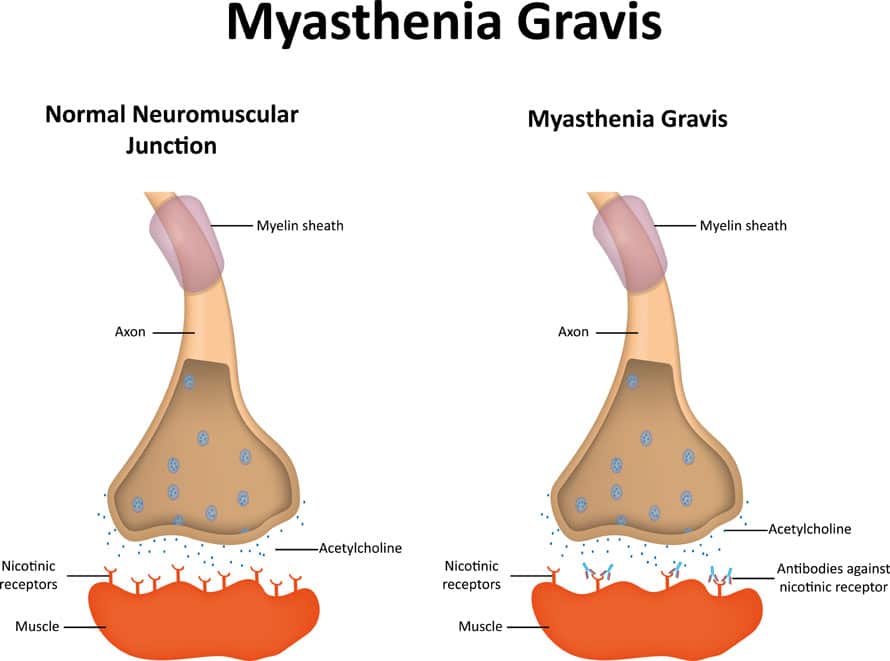
To understand Myasthenia Gravis, we need to learn about how nerves communicate with muscles. Your body is made up of cells, and muscles are specialized cells that contract when they receive signals from nerves. The place where a nerve connects to a muscle is called the neuromuscular junction. At the neuromuscular junction, the nerve releases a chemical messenger called acetylcholine. Acetylcholine travels across the tiny space between the nerve and muscle and binds to receptors on the muscle cell. When acetylcholine binds to these receptors, it causes the muscle to contract and move. In Myasthenia Gravis, the immune system makes antibodies that attack the acetylcholine receptors on the muscle cells. These antibodies either block acetylcholine from binding to its receptors or cause the receptors to be destroyed. Without enough working acetylcholine receptors, the muscles cannot respond properly to signals from the nerves. About eighty-five percent of people with generalized Myasthenia Gravis have antibodies against acetylcholine receptors. Some people have antibodies against a different protein at the neuromuscular junction called muscle-specific kinase, or MuSK. A small percentage of people with Myasthenia Gravis have neither type of antibody, a condition called seronegative MG. Interestingly, the thymus gland, which is located in the chest, plays a role in Myasthenia Gravis. The thymus gland is part of the immune system and produces immune cells. In people with Myasthenia Gravis, the thymus gland may be enlarged or may contain tumors in some cases. The thymus produces immune cells that attack the acetylcholine receptors. Removing the thymus gland, a procedure called thymectomy, can sometimes improve Myasthenia Gravis symptoms. Myasthenia Gravis is not inherited, meaning it is not passed down through families. However, some genetic factors may make someone more likely to develop autoimmune diseases including Myasthenia Gravis. Why the immune system starts attacking the neuromuscular junction is not completely understood, but it appears that some combination of genetic predisposition and environmental triggers causes the immune system to misbehave.
What Are the Main Symptoms and Signs of Myasthenia Gravis?
Myasthenia Gravis causes weakness and rapid fatigue of muscles, and the symptoms can vary greatly from person to person. Some people have very mild symptoms affecting only certain muscles, while others have severe symptoms affecting multiple muscle groups. The most characteristic feature is that symptoms worsen with activity and improve with rest. Eye muscle involvement is very common, occurring in about ninety percent of people with Myasthenia Gravis at some point. Drooping eyelids, called ptosis, may develop on one or both eyes. The eyes may appear tired or heavy. Double vision, called diplopia, may occur because the eye muscles cannot coordinate properly. These eye symptoms may be the first sign of Myasthenia Gravis and often bring people to the doctor. Some people have only eye muscle involvement, a condition called ocular myasthenia gravis. Others develop symptoms in other muscles as well, a condition called generalized myasthenia gravis. Facial muscle weakness may develop, causing difficulty with facial expressions. The face may appear expressionless. Smiling or chewing may become difficult. Speech may become slurred or nasal-sounding due to weakness of the muscles that control speech. Chewing may become difficult or impossible with prolonged chewing. Difficulty swallowing, called dysphagia, may develop due to weakness of throat muscles. The person may cough or choke when swallowing liquids. Difficulty with solid foods may develop. Arm and leg weakness may develop, though this is less common than facial or eye involvement. The arms and legs may feel heavy or weak, particularly later in the day or after activity. Climbing stairs may become difficult. Weakness in the neck may develop, making it difficult to hold the head up. The person may need to support the head with their hands. Respiratory muscle weakness is a serious complication that can occur in some cases. Shortness of breath may develop, particularly with exertion. Severe respiratory muscle weakness can lead to myasthenic crisis, a life-threatening condition where the person cannot breathe adequately without mechanical ventilation. Myasthenic crisis can be triggered by infection, stress, certain medications, or other factors. Symptoms typically worsen as the day progresses, becoming worse in the afternoon and evening. Morning symptoms may be mild with progressive worsening as the day goes on. Symptoms may fluctuate from day to day or even hour to hour. Some days symptoms are barely noticeable while other days symptoms are severe. Stress, infection, and some medications can make symptoms worse. Rest improves symptoms, which is a key characteristic that helps distinguish Myasthenia Gravis from other conditions.
How is Myasthenia Gravis Detected and Diagnosed?
Myasthenia Gravis is diagnosed through a combination of clinical findings and special tests that evaluate neuromuscular function. When a person develops progressive weakness that worsens with activity and improves with rest, particularly if there is eye involvement with drooping eyelids or double vision, doctors should suspect Myasthenia Gravis. Clinical examination looking for signs of muscle weakness, particularly eye muscle weakness, and observing how weakness changes with activity helps raise suspicion for MG. The Edrophonium test or ice pack test can be used to help confirm suspected MG. In the ice pack test, ice is applied to the affected eye, and if there is improvement in drooping eyelids within a few minutes, this suggests Myasthenia Gravis because cold can temporarily improve neuromuscular transmission. Antibody testing is an important diagnostic test. Blood tests looking for antibodies against acetylcholine receptors are positive in about eighty-five percent of people with generalized MG. Testing for antibodies against muscle-specific kinase, or MuSK, is positive in some people who are seronegative for acetylcholine receptor antibodies. Electromyography, or EMG, is a test that measures electrical activity in muscles. In Myasthenia Gravis, EMG shows a characteristic pattern of decreasing electrical responses with repeated stimulation, called decremental response. A test called repetitive nerve stimulation shows this decremental pattern that is characteristic of neuromuscular junction disease. This test can help confirm the diagnosis of Myasthenia Gravis. Single-fiber electromyography, or SFEMG, is a very sensitive test that can detect abnormalities in neuromuscular transmission. However, it is technically difficult and requires specialized equipment and expertise. CT or MRI imaging of the chest may be done to look for abnormalities of the thymus gland, since thymus pathology is common in Myasthenia Gravis. Thymoma, a tumor of the thymus, occurs in about ten to fifteen percent of people with MG. Thymic enlargement without tumor is more common. Pulmonary function testing may be done to assess respiratory muscle strength if respiratory involvement is suspected. Testing ability to produce vital capacity, the maximum amount of air that can be breathed out, helps assess risk of respiratory failure. Once diagnosed, regular monitoring helps assess disease severity and response to treatment. Some people with mild symptoms may not need immediate treatment but need monitoring in case symptoms worsen.
What Causes Myasthenia Gravis to Develop?
The exact cause of why the immune system in some people starts attacking the acetylcholine receptors at the neuromuscular junction is not completely understood, but scientists have identified several factors that may play a role. Genetic factors appear to increase susceptibility to Myasthenia Gravis. Certain genetic variations in immune system genes make some people more likely to develop autoimmune diseases including MG. However, genetics alone do not cause MG, since identical twins don’t always both have the disease. Environmental triggers may be important in initiating the disease in genetically susceptible people. Infections, particularly viral infections, may trigger the immune system to start attacking the neuromuscular junction. Medications can sometimes trigger Myasthenia Gravis in susceptible people. Certain antibiotics, beta-blockers, and other medications have been associated with causing or worsening MG. Physical or emotional stress may trigger the development of MG or worsen existing symptoms. Thymus gland abnormalities are associated with Myasthenia Gravis. The thymus gland is part of the immune system and produces immune cells. In about ten to fifteen percent of people with MG, there is a thymus tumor, called thymoma. In about fifty percent of people with MG, the thymus gland is enlarged even without a tumor. The abnormal thymus produces immune cells that attack the acetylcholine receptors. Why the thymus becomes abnormal and starts producing these attack cells is not completely understood. Hormonal factors may play a role, since Myasthenia Gravis is more common in women of childbearing age. Changes in hormone levels during pregnancy, after childbirth, or with menopause can affect MG symptoms. Some people develop Myasthenia Gravis after certain vaccines, though a direct causal relationship is controversial and not definitively proven. Autoimmune diseases tend to cluster in families, meaning if one family member has an autoimmune disease, other family members are more likely to develop autoimmune diseases, though not necessarily the same disease. This suggests genetic factors predispose to autoimmune disease in general. The combination of genetic predisposition and environmental triggers appears necessary for Myasthenia Gravis to develop. A person with genetic predisposition may never develop MG if they are not exposed to triggering environmental factors. A person without genetic predisposition is unlikely to develop MG even if exposed to potential triggers.
What Treatments Help People with Myasthenia Gravis?
Treatment for Myasthenia Gravis aims to improve neuromuscular transmission, suppress the autoimmune attack, and manage symptoms. Several different treatment approaches are available, and the choice of treatment depends on the severity and pattern of symptoms. Acetylcholinesterase inhibitors are medications that increase the amount of acetylcholine available at the neuromuscular junction. Pyridostigmine is the most commonly used medication in this class. These medications slow the breakdown of acetylcholine, allowing it to be available longer at the neuromuscular junction. This gives remaining acetylcholine receptors more opportunity to be activated. Pyridostigmine can improve symptoms, particularly eye and facial weakness, though it usually does not eliminate symptoms completely. It is often used as an initial treatment, particularly for mild disease. Immunosuppressive medications suppress the abnormal immune response that is attacking the acetylcholine receptors. Corticosteroids, particularly prednisone, are commonly used. Corticosteroids suppress immune cell activity and can reduce antibody production. They often significantly improve symptoms, though they work over weeks to months, not immediately. Corticosteroids have side effects with long-term use, so the goal is usually to use the lowest effective dose. Other immunosuppressive medications including azathioprine and mycophenolate mofetil are steroid-sparing agents that can be used alongside or instead of steroids to reduce the amount of steroids needed. Intravenous immunoglobulin, or IVIG, is a treatment where antibodies from many healthy donors are given intravenously. IVIG provides immune-modulating effects that can improve symptoms, particularly in acute situations or myasthenic crisis. IVIG is effective but expensive and requires repeated infusions every few weeks to months. Plasmapheresis is a procedure that removes antibodies from the blood. The blood is separated and the plasma, which contains antibodies, is removed and replaced with donor plasma or albumin. This temporarily reduces antibody levels and can improve symptoms acutely. Plasmapheresis is useful in myasthenic crisis but is not practical for long-term management. Thymectomy, surgical removal of the thymus gland, is used in selected patients. Since the thymus is often abnormal in MG and produces immune cells that attack the neuromuscular junction, removing it can improve symptoms in many people. Thymectomy is particularly beneficial in people who have a thymus tumor. The benefit may take weeks to months to appear after thymectomy. Newer biological therapies targeting specific immune pathways are being developed. Eculizumab, a complement inhibitor, has been approved for treatment of MG and reduces the immune attack at the neuromuscular junction. Other similar medications are in development. Physical therapy helps maintain muscle strength and function. Pacing of activities to avoid excessive fatigue is important. Adequate rest helps maintain strength. Avoiding triggers that worsen symptoms, including certain medications and stress, is important. Management of any respiratory muscle weakness is critical, including sleep studies and ventilatory support if needed. Treatment is individualized based on disease severity, pattern of symptoms, and response to treatment. Mild ocular disease may only require pyridostigmine. More severe disease typically requires immunosuppressive therapy. Some people achieve remission with treatment where symptoms disappear completely.
Living with Myasthenia Gravis
Living with Myasthenia Gravis requires ongoing medical care, careful symptom management, and adjustment to variable symptoms that fluctuate day to day. People with MG must learn to recognize their symptoms, understand what makes them worse or better, and adjust activities accordingly. Fatigue is a major feature of Myasthenia Gravis and is not the same as regular tiredness. Fatigue in MG is related to failure of neuromuscular transmission, not exhaustion from physical activity. People with MG must learn to pace themselves to avoid excessive fatigue. Breaking activities into smaller tasks with rest periods between helps maintain function. Avoiding activities that require sustained muscle use helps prevent severe weakness. Planning important activities for times of day when symptoms are better helps maintain productivity. For many people, morning is better than later in the day when symptoms worsen. Eye symptoms including drooping eyelids and double vision can significantly affect quality of life. Some people wear sunglasses or use tape to lift drooping eyelids. Patching one eye can help with double vision. Over-the-counter adhesive eyelid props can help keep eyes open. Speech and swallowing difficulties require modifications. Eating softer foods that require less chewing may help. Taking small bites and chewing thoroughly helps avoid choking. Drinking liquids with meals helps with swallowing. Speaking slowly and taking pauses while speaking helps combat speech difficulties. Work and school adjustments are often necessary. Some people with MG can work full-time with accommodations, while others need part-time work or cannot work due to severity of symptoms. Reasonable accommodations including flexible scheduling, modified duties, breaks, and accessible workspaces help people with MG maintain employment. School-age children with MG may need educational accommodations including modified physical education, extended time on tests, and breaks during the day. Medication management is important and requires understanding which medications can worsen MG. Certain antibiotics, beta-blockers, and other medications should be avoided. Regular communication with all healthcare providers is necessary to ensure safe medication use. Taking medications on schedule is important, as inconsistent medication timing can lead to worse symptoms. Infection can trigger worsening of MG symptoms, so preventing infections through good hygiene, vaccinations, and prompt treatment of infections is important. Stress management is important as stress can worsen symptoms. Relaxation techniques, counseling, and stress-reduction activities help manage stress. Adequate sleep helps maintain muscle function, though sleep apnea should be treated as it can worsen overall health. Social support from family, friends, and support groups helps people cope with the challenges of living with a chronic condition. Support groups provide community and practical advice from others with MG. Mental health support including counseling helps address depression and anxiety, which are common in people with chronic conditions. Pregnancy is possible in women with MG and requires special consideration. Symptoms may worsen, improve, or stay the same during pregnancy. Some MG medications are safe in pregnancy while others are not. Coordinated care with obstetricians and neurologists is important. Babies of mothers with MG may have neonatal myasthenia gravis temporarily due to transfer of maternal antibodies, but this is usually temporary. With proper medical care, symptom management, support systems, and adjustments to daily life, most people with Myasthenia Gravis can have good quality of life and achieve their goals.
Frequently Asked Questions About Myasthenia Gravis
FAQ 1: Is Myasthenia Gravis inherited and does it run in families? Myasthenia Gravis is not inherited in the traditional sense, meaning it is not passed down through families like genetic diseases. MG is an autoimmune disease where the body’s immune system mistakenly attacks the neuromuscular junction. However, genetic factors may influence susceptibility to developing autoimmune diseases in general. If one family member has an autoimmune disease, other family members are at slightly increased risk of developing autoimmune diseases, though not necessarily MG specifically. Identical twins do not always both develop MG, even though they have identical genetics, which shows that genetics alone do not cause MG. Environmental triggers and genetic predisposition together appear necessary for MG to develop. Neonatal myasthenia gravis can occur temporarily in babies born to mothers with MG because maternal antibodies against acetylcholine receptors cross the placenta and temporarily attack the baby’s neuromuscular junction. This usually resolves on its own within a few weeks as the maternal antibodies disappear. Most babies do not have long-term MG from this temporary neonatal myasthenia. Genetic counseling is not necessary for family members of people with MG since MG is not inherited, though family members may want to understand autoimmune disease risk.
FAQ 2: Can Myasthenia Gravis be cured? Myasthenia Gravis cannot be completely cured in most cases, but it can be effectively managed with treatment. Some people with mild MG may go into remission with treatment, where symptoms disappear completely and treatment can sometimes be discontinued. Remission may occur spontaneously or in response to treatment such as thymectomy or immunosuppressive therapy. However, remission is not guaranteed and some people experience relapse after remission. With appropriate treatment, most people with MG can control symptoms and have normal or near-normal quality of life. The goal of treatment is to suppress the abnormal immune response and improve neuromuscular transmission to the point where symptoms are manageable. Some people require lifelong treatment to maintain symptom control. Others may be able to reduce or discontinue treatment over time. Regular monitoring and adjustment of treatment is necessary to optimize symptom control while minimizing side effects of medications. Newer treatments being developed may offer better outcomes or even potential for cure in the future, but current treatments manage rather than cure MG.
FAQ 3: What is myasthenic crisis and when does it happen? Myasthenic crisis is a life-threatening complication of Myasthenia Gravis where respiratory muscles become severely weak and the person cannot breathe adequately without mechanical ventilation. In myasthenic crisis, weakness affects the diaphragm and other respiratory muscles, making it impossible to breathe in enough oxygen or exhale carbon dioxide. Myasthenic crisis requires emergency hospital admission and mechanical ventilation to maintain breathing. It can occur in people with severe generalized Myasthenia Gravis, particularly those with respiratory muscle involvement. Myasthenic crisis can be triggered by infections, particularly respiratory infections. Stress, surgery, emotional trauma, and certain medications can trigger crisis. Some medications including antibiotics, beta-blockers, and sedatives can worsen MG and trigger crisis. Pregnancy and the postpartum period increase risk of crisis. Inadequate treatment or sudden discontinuation of MG medications can trigger crisis. With prompt recognition and emergency treatment including mechanical ventilation, plasmapheresis, and IVIG, most people survive myasthenic crisis. However, it is a serious medical emergency with risk of death if not treated promptly. Prevention through adequate disease management, avoiding triggering medications, treating infections promptly, and regular monitoring is important.
FAQ 4: How does Myasthenia Gravis affect daily activities and quality of life? Myasthenia Gravis can significantly affect daily activities and quality of life, though the severity depends on disease severity and how well symptoms are controlled with treatment. Eye symptoms including drooping eyelids and double vision can affect vision and appearance, impacting confidence and social interactions. Facial weakness may affect the ability to eat, speak clearly, and maintain facial expressions. Arm and leg weakness may affect the ability to perform work, school, household, and recreational activities. Respiratory weakness can significantly limit exercise and activities. Fatigue from MG is not regular tiredness but is related to neuromuscular dysfunction and can be profound and disabling. With proper treatment and symptom management, most people with MG can maintain employment, pursue education, participate in hobbies, and enjoy social relationships. Accommodations at work and school help people with MG maintain productivity. Pacing activities to avoid excessive fatigue helps maintain function. Understanding personal limitations and adjusting expectations helps maintain psychological well-being. Social support from family, friends, and support groups helps people cope with the condition. Mental health support helps address depression and anxiety, which are common in people with chronic conditions. Most people with well-controlled MG report good quality of life despite having a chronic condition.
FAQ 5: Are there new treatments being developed for Myasthenia Gravis? Yes, there is ongoing research into new and improved treatments for Myasthenia Gravis that may offer better outcomes or fewer side effects than current treatments. Monoclonal antibodies that target specific components of the immune system are being developed. Eculizumab, a complement inhibitor, has been approved for MG and reduces the immune attack at the neuromuscular junction. Other complement inhibitors and monoclonal antibodies are in development. Gene therapy approaches are being researched to see if it might be possible to correct the underlying immune abnormality. Small molecule drugs that enhance neuromuscular transmission through different mechanisms than current medications are being studied. Immunomodulatory drugs that more specifically target the autoimmune response are in development. Stem cell therapy is being researched as a potential future treatment. As new treatments are developed and approved, people with MG will have more treatment options and potentially better outcomes. Clinical trials of new treatments are ongoing, and people with MG can discuss participation in clinical trials with their doctors. The goal of ongoing research is to develop more effective treatments with fewer side effects and potentially eventually a cure for Myasthenia Gravis.
References and Further Reading
For more information about Myasthenia Gravis, you can visit several trusted and authoritative sources that provide detailed information for patients and families dealing with this autoimmune neuromuscular disorder. The World Health Organization at WHO.int provides comprehensive information about autoimmune disorders and rare diseases including Myasthenia Gravis and how autoimmune disease develops. The Myasthenia Gravis Foundation of America at MGFA.org offers excellent patient education, family resources, support communities, information about treatments and research, and updates about new developments in MG care and research. MedlinePlus, a service of the National Library of Medicine at MedlinePlus.gov, has detailed medical information about Myasthenia Gravis written in language that patients and families can easily understand without specialized medical knowledge. The National Institutes of Health at NIH.gov provides scientific information about Myasthenia Gravis research, ongoing clinical trials seeking participants, and the latest discoveries being made by scientists studying autoimmune neuromuscular disease. The Genetic and Rare Diseases Information Center at GARD.NIH.gov provides reliable medical information about Myasthenia Gravis and helps connect patients and families to neurologists, immunologists, genetic counselors, support groups, and communities of others managing the condition. The five main reference links are: 1) WHO.int – Autoimmune Disorders, 2) Myasthenia Gravis Foundation of America, 3) MedlinePlus – Myasthenia Gravis, 4) National Institutes of Health, and 5) Genetic and Rare Diseases Information Center.
Disclaimer
This article adapts publicly available information from WHO’s Myasthenia Gravis and autoimmune disorder information pages. This content is for informational and educational purposes only and does not constitute medical advice. ObserverVoice.com is a news and information platform — not a healthcare provider. If you or someone you know has been diagnosed with Myasthenia Gravis or shows signs of this condition including drooping eyelids, double vision, facial weakness, fluctuating muscle weakness, or progressive fatigue with activity, please consult immediately with qualified healthcare professionals, neurologists, and immunologists for proper diagnosis, evaluation for treatment options, and ongoing comprehensive medical care. For more information, visit WHO.int and ObserverVoice.com.
Observer Voice is the one stop site for National, International news, Sports, Editor’s Choice, Art/culture contents, Quotes and much more. We also cover historical contents. Historical contents includes World History, Indian History, and what happened today. The website also covers Entertainment across the India and World.

