

Mixed Connective Tissue Disease: The Overlap Syndrome That Borrows From Multiple Conditions

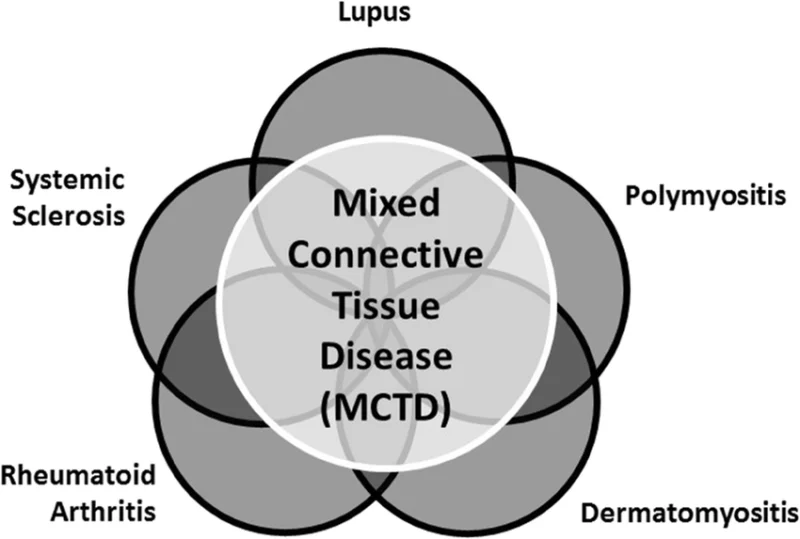
Imagine having symptoms of lupus one day, scleroderma the next, and polymyositis symptoms weeks later. Your joints ache like rheumatoid arthritis. Your fingers turn white from Raynaud’s phenomenon like scleroderma. Your muscles weaken like myositis. Your skin develops a rash like lupus. Yet when doctors test you, you do not fully fit any single autoimmune disease diagnosis. This confusing, overlapping presentation characterizes mixed connective tissue disease—an autoimmune condition that borrows features from multiple connective tissue diseases simultaneously. Mixed connective tissue disease, commonly abbreviated as MCTD, is a rare autoimmune disease characterized by overlapping features of systemic lupus erythematosus (SLE), systemic sclerosis (scleroderma), and polymyositis. The disease is distinguished by a specific autoantibody—anti-RNP (anti-ribonucleoprotein) antibody—found in nearly all MCTD patients. This distinctive antibody makes MCTD recognizable as a separate disease entity despite its overlapping features. Mixed connective tissue disease affects approximately 1 to 2 per million people worldwide. Women are eight times more likely than men to develop MCTD. The disease typically develops in young to middle-aged adults, though it can appear at any age. What makes MCTD particularly challenging is its unpredictable disease course. Some patients experience relatively mild disease with excellent prognosis. Others develop serious organ involvement including pulmonary fibrosis, pulmonary hypertension, and renal disease. The variable disease severity makes prognostication difficult—doctors cannot reliably predict which patients will develop severe disease and which will remain relatively stable. However, modern treatments have improved outcomes. Corticosteroids and immunosuppressive medications suppress inflammation and prevent organ complications. Early aggressive treatment prevents serious complications in many patients. Understanding mixed connective tissue disease is crucial because early recognition allows early treatment preventing serious organ damage. In this comprehensive article, we will explore what MCTD is, understand how it combines features from multiple autoimmune diseases, recognize overlapping symptoms, learn about serious complications, understand diagnosis methods, explore available treatments, and discover management strategies for living with this complex overlap syndrome.
Understanding Connective Tissue Diseases and Overlap
Before we explore mixed connective tissue disease, we need to understand connective tissue diseases and why overlapping features develop. Connective tissue diseases are a group of autoimmune conditions affecting connective tissues—structures providing support and structure to the body. Connective tissues include skin, blood vessels, joints, tendons, ligaments, and internal organs. Several primary connective tissue diseases are recognized: systemic lupus erythematosus (SLE), rheumatoid arthritis (RA), systemic sclerosis (scleroderma), polymyositis, and Sjögren’s syndrome. Each disease has characteristic clinical features and autoantibody patterns. However, patients sometimes develop features of multiple diseases simultaneously. This overlapping presentation is called overlap syndrome. Overlap syndromes occur when patients meet diagnostic criteria for multiple different autoimmune diseases. The overlap can involve any combination of connective tissue diseases. Some patients have features of lupus and scleroderma (lupus-sclerosis overlap). Others have features of scleroderma and polymyositis (scleromyositis). Still others have features of lupus and polymyositis (lupus-myositis overlap). Mixed connective tissue disease is a specific overlap syndrome characterized by features from SLE, scleroderma, and polymyositis, with the distinguishing feature being the presence of anti-RNP antibodies. What causes overlap syndromes is incompletely understood. One theory is that multiple autoimmune processes develop in the same person. The person is genetically predisposed to autoimmunity, and multiple environmental triggers activate different autoimmune mechanisms. Another theory is that some diseases like MCTD are actually single diseases with variable presentation mimicking multiple diseases. The overlapping features might represent different manifestations of one underlying disease process rather than truly separate diseases occurring together. The distinction is important because it affects understanding of disease pathogenesis and potentially affects treatment. Whatever the mechanism, overlap syndromes present unique diagnostic and therapeutic challenges. Patients do not fit neatly into established diagnostic criteria for single diseases. Treatment must address features from multiple diseases. The clinical course can be unpredictable as disease activity waxes and wanes affecting different organ systems at different times.
What is Mixed Connective Tissue Disease?
Mixed connective tissue disease is a rare autoimmune disease characterized by overlapping clinical features of systemic lupus erythematosus, systemic sclerosis, and polymyositis, with the distinguishing feature being a specific autoantibody pattern. MCTD was first described in 1972 by Dr. Gordon Sharp who identified patients with overlapping autoimmune features and a distinctive antibody against ribonucleoproteins. The anti-RNP antibody is found in nearly all MCTD patients (approximately 95 to 99 percent). In MCTD, the body’s immune system becomes dysregulated. Autoantibodies against ribonucleoproteins—proteins involved in RNA processing—are produced. These autoantibodies bind to ribonucleoprotein complexes triggering immune attack. Additionally, T lymphocytes and other immune cells attack connective tissue cells throughout the body. The inflammatory attack causes symptoms and tissue damage characteristic of the overlapping diseases. Different patients with MCTD develop different combinations of features. Some patients predominantly have features resembling SLE—malar rash, photosensitivity, arthritis, kidney involvement. Other patients predominantly have scleroderma-like features—Raynaud’s phenomenon, skin thickening, pulmonary fibrosis. Still others predominantly have myositis features—muscle weakness and muscle enzyme elevation. The variable presentation makes MCTD heterogeneous—different patients appear to have different diseases even though they all have MCTD diagnosed by anti-RNP antibodies. MCTD can be divided into different presentations. Early MCTD or undifferentiated MCTD refers to early disease when features are mild and the diagnosis is not yet clear. Fully expressed MCTD refers to disease with multiple distinct features meeting criteria for MCTD. Some patients have mild disease that never fully expresses into clear MCTD. What causes MCTD is not completely understood. Genetic factors are important—MCTD runs in families. Specific genetic markers including HLA gene types increase susceptibility. However, genetics alone does not cause MCTD. Environmental factors are also necessary. Infections have been suspected as potential triggers. Viral infections including Epstein-Barr virus might trigger autoimmune response in genetically predisposed individuals. However, the specific infectious trigger, if any, remains unknown. MCTD typically develops suddenly with acute onset of symptoms. Patients often remember the exact week or month symptoms began. The acute onset distinguishes MCTD from gradual onset of single autoimmune diseases. The acute onset suggests a triggering event activating multiple autoimmune mechanisms simultaneously.
Overlapping Features: Understanding MCTD Symptom Diversity
MCTD presents with overlapping features from multiple autoimmune diseases. Understanding these features helps recognize MCTD and appreciate its complexity. Raynaud’s phenomenon is one of the most common features. Fingers turn white (pallor) during cold exposure or emotional stress. Blood vessels constrict excessively, reducing blood flow to fingers. Fingers become numb and painful. As fingers warm, they turn red from reactive hyperemia. Raynaud’s in MCTD is often severe with episodes lasting hours. Finger ulcers sometimes develop from repeated ischemia. Raynaud’s phenomenon is the most common early symptom in MCTD. Puffy hands develop in many MCTD patients. Hands swell, particularly in the morning. The swelling sometimes precedes skin changes. The puffy hands distinguishing early MCTD might resemble early lupus or early scleroderma. Hand edema can be pronounced in early MCTD. Skin thickening resembling scleroderma develops in many MCTD patients. The skin on hands becomes thick and shiny. Skin on forearms, face, and trunk sometimes thickens. However, the skin thickening in MCTD is typically less severe than in true systemic sclerosis. Sclerodactyl—tight skin on fingers limiting motion—develops in some patients. Joint pain and arthritis develop in most MCTD patients. Hands, wrists, knees, and other joints become painful and swollen. The arthritis mimics rheumatoid arthritis. However, unlike RA, the arthritis in MCTD typically does not cause permanent joint deformities. Morning stiffness lasting hours can occur. Muscle weakness resembling myositis develops in many MCTD patients. Proximal muscles (shoulders, hips, thighs) become weak. Patients have difficulty raising arms or climbing stairs. The muscle weakness might not be as severe as in true polymyositis. Muscle pain (myalgia) sometimes accompanies weakness. Muscle enzymes (CK) are sometimes elevated indicating muscle involvement. Malar rash resembling lupus develops in some MCTD patients. A butterfly-shaped rash appears across the cheeks. The rash is often photosensitive—sun exposure worsens it. However, the rash in MCTD is typically less severe than in lupus. Photosensitivity causes skin reactions to sunlight. Sun exposure triggers rash or worsens existing rash. Patients must use sunscreen and sun protection. Oral ulcers develop in some MCTD patients. Painful sores develop in the mouth. The ulcers are painless and tend to heal without scarring. Dry eyes and dry mouth (sicca syndrome) develop in some patients. Lacrimal and salivary glands become involved. Sjögren’s syndrome sometimes coexists with MCTD. Lung involvement develops in many MCTD patients. Pulmonary fibrosis (scarring) develops in approximately 50 percent. Interstitial lung disease causes progressive shortness of breath. Pulmonary hypertension develops in some patients. These lung complications are serious and can be life-threatening. Kidney involvement develops in some MCTD patients. Lupus-like nephritis occurs. Kidney function deteriorates. Renal disease is less common in MCTD than in lupus but still serious when it develops. Cardiac involvement sometimes occurs. Myocarditis (heart muscle inflammation) develops in some patients. Pericarditis (inflammation of heart lining) develops in some. Arrhythmias sometimes develop. Esophageal involvement develops in some MCTD patients. Reflux from lower esophageal sphincter dysfunction develops. Dysphagia from esophageal fibrosis occurs. These gastrointestinal manifestations can cause malnutrition and weight loss.
Distinguishing MCTD From Other Autoimmune Diseases
Distinguishing MCTD from single autoimmune diseases is important for diagnosis and treatment planning. The presence of anti-RNP antibodies is the key distinguishing feature. Anti-RNP antibodies are found in nearly all MCTD patients but are uncommon in other diseases. High titers of anti-RNP without other characteristic autoantibodies strongly suggest MCTD. In contrast, SLE typically has anti-dsDNA and anti-Sm antibodies in addition to or instead of anti-RNP. Systemic sclerosis typically has anti-centromere or anti-Scl-70 antibodies rather than anti-RNP. Polymyositis typically has anti-Jo-1 or other myositis-specific antibodies rather than anti-RNP. The specific autoantibody pattern helps distinguish MCTD from other diseases. Clinical features also help distinguish MCTD. MCTD typically presents with less severe kidney disease than SLE. Lupus nephritis is less common in MCTD than in SLE. MCTD typically has less severe skin manifestations than SLE—severe photosensitivity and discoid rashes are uncommon in MCTD. MCTD typically has less severe skin thickening than systemic sclerosis. The skin thickening in MCTD usually spares the trunk and is less extensive than in true scleroderma. MCTD typically has milder muscle involvement than polymyositis. Muscle enzyme elevations are usually less dramatic. Muscle biopsy might show different patterns than true myositis. MCTD disease course is typically more favorable than severe forms of the diseases it resembles. MCTD patients typically have better prognosis than SLE patients with severe organ involvement. However, MCTD can cause serious organ damage in some patients. The overlap nature of MCTD makes it distinct from single autoimmune diseases despite sharing features.
Serious Complications: Understanding Organ Involvement
While many MCTD patients have relatively mild disease, others develop serious organ complications requiring aggressive treatment. Understanding these complications is crucial for recognizing disease severity. Pulmonary fibrosis is one of the most serious complications. Approximately 50 percent of MCTD patients develop pulmonary fibrosis. The lungs become scarred and stiff from excessive collagen deposition. Fibrosis impairs gas exchange causing progressive shortness of breath. The fibrosis is progressive without treatment. Advanced fibrosis causes respiratory failure requiring oxygen therapy. Pulmonary fibrosis is the most common cause of death in MCTD. Pulmonary hypertension develops in approximately 14 percent of MCTD patients. Blood pressure in lung arteries becomes elevated. The right heart must work harder against elevated pressure. Eventually, right heart failure develops. Pulmonary hypertension sometimes occurs without pulmonary fibrosis—pure pulmonary hypertension is a serious complication. Cardiac involvement causes serious complications. Myocarditis causes heart muscle inflammation impairing function. Arrhythmias develop from cardiac involvement. Pericarditis causes inflammation of the heart lining with possible effusion. Heart failure sometimes develops. Kidney disease develops in approximately 10 to 15 percent of MCTD patients. Lupus-like glomerulonephritis causes kidney damage. Kidney function deteriorates progressively. Advanced kidney disease requires dialysis or transplantation. Kidney disease in MCTD is typically less severe than in lupus but still serious when it develops. Trigeminal neuralgia develops in some MCTD patients. Severe facial pain from trigeminal nerve involvement is extremely disabling. Aspiration pneumonia develops from esophageal dysfunction. Swallowing difficulty allows food and saliva to enter lungs instead of stomach. Aspiration causes pneumonia with potential for serious complications. Severe aspiration risk requires feeding tube placement. Joint damage rarely develops despite severe arthritis in some patients. Most MCTD arthritis does not cause permanent deformities unlike rheumatoid arthritis. However, some patients experience progressive joint destruction. These serious complications emphasize the importance of early aggressive treatment preventing or slowing disease progression.
Diagnosis: Recognizing Mixed Connective Tissue Disease
Diagnosing MCTD requires combining clinical findings, autoantibody testing, and sometimes additional tests. The anti-RNP antibody is the key diagnostic finding. Clinical history is crucial. Doctors ask about symptom onset and pattern. Acute onset of multiple autoimmune-like symptoms suggests MCTD. They ask about Raynaud’s phenomenon, joint pain, muscle weakness, and skin changes. Family history of autoimmune disease is important. Physical examination documents clinical features. Doctors assess for puffy hands, Raynaud’s phenomenon, skin changes, and muscle weakness. Doctors test joint motion and assess for contractures. Doctors examine skin for rashes. Autoantibody testing is crucial. Anti-RNP antibodies are found in nearly all MCTD patients. High titers of anti-RNP with low titers of other autoantibodies strongly suggest MCTD. Anti-centromere, anti-Scl-70, anti-dsDNA, and other autoantibodies are typically absent or low. ANA (antinuclear antibody) is usually positive, typically with a speckled pattern. Complete blood count sometimes shows anemia. Platelet counts sometimes decrease. White blood cell counts sometimes decrease. These cytopenias can occur in MCTD. Complement levels (C3 and C4) sometimes decrease. Inflammatory markers (ESR and CRP) are sometimes elevated. Muscle enzymes (CK) are sometimes elevated if myositis is present. Kidney function tests assess for renal involvement. Urinalysis screens for kidney disease. Pulmonary function testing assesses lung involvement. Reduced FVC or DLCO indicates pulmonary disease. High-resolution CT of lungs detects pulmonary fibrosis. Echocardiography assesses cardiac function. Elevated pulmonary pressure indicates pulmonary hypertension. Electromyography (EMG) shows myopathic changes if myositis is present. Muscle biopsy sometimes shows inflammatory changes. Chest X-ray detects pulmonary fibrosis or other lung abnormalities. The diagnosis of MCTD is typically made when a patient presents with overlapping features of multiple connective tissue diseases combined with anti-RNP antibody positivity. No single diagnostic test confirms MCTD, but the characteristic clinical and serologic pattern is highly suggestive.
Treatment: Managing the Overlap Syndrome
MCTD treatment aims to suppress inflammation, prevent organ complications, manage symptoms, and maintain quality of life. Different disease manifestations require different treatment approaches. Corticosteroids are the mainstay of treatment. Prednisone at moderate doses (0.5 to 1 mg/kg/day or typically 20 to 40 mg daily) suppresses inflammation. Patients receiving appropriate doses experience symptom improvement within days to weeks. The corticosteroid dose is gradually tapered over months. Too-rapid tapering causes flares. Many patients require ongoing low-dose corticosteroids (5 to 10 mg daily) for years. Immunosuppressive medications reduce corticosteroid requirements. Methotrexate suppresses immune activity. Mycophenolate mofetil helps prevent progression. Azathioprine is sometimes used. Cyclophosphamide is reserved for severe disease particularly with lung or kidney involvement. These medications allow lower corticosteroid doses reducing long-term steroid side effects. Biologic therapies show promise. TNF inhibitors might help some patients. Rituximab (B-cell depletion) is being studied. Other biologic agents targeting specific immune pathways are being researched. NSAIDs reduce joint pain and inflammation. However, NSAIDs alone are insufficient for MCTD. NSAIDs are used alongside corticosteroids and immunosuppressive drugs. Hydroxychloroquine (Plaquenil) helps some MCTD patients particularly those with lupus-like features. This antimalarial drug reduces inflammation and helps prevent flares. Raynaud’s management includes vasodilators. Calcium channel blockers like nifedipine reduce vasospasm. Nitrates improve blood flow. Endothelin receptor antagonists reduce Raynaud’s. Pulmonary fibrosis treatment includes antifibrotic drugs. Nintedanib and pirfenidone slow lung disease progression. Early antifibrotic therapy in patients developing pulmonary fibrosis might prevent or slow progression. Pulmonary hypertension treatment includes vasodilators and oxygen therapy. Calcium channel blockers, nitrates, and endothelin receptor antagonists improve blood flow. Phosphodiesterase inhibitors like sildenafil reduce pulmonary hypertension. Lung transplantation is considered in end-stage pulmonary disease. Kidney disease management includes ACE inhibitors and corticosteroids. NSAIDs are avoided due to kidney risk. Kidney function requires regular monitoring. Severe kidney disease might require dialysis or transplantation. Physical therapy maintains joint mobility. Gentle stretching prevents contractures. Range-of-motion exercises maintain flexibility. Occupational therapy teaches adaptive techniques for daily living. Gastrointestinal management includes proton pump inhibitors for reflux. Dietary modifications help with swallowing. Esophageal dilatation might be necessary if strictures develop. Calcium and vitamin D supplementation is important as corticosteroids increase bone loss. Bone density monitoring detects osteoporosis. Bone density medications might be prescribed. Pain management addresses arthralgia and other pain sources.
Living with Mixed Connective Tissue Disease: Daily Management
Living with MCTD requires ongoing medication management, monitoring for complications, activity adaptation, and psychological adjustment. Taking medications exactly as prescribed is essential. Missing doses allows inflammation to rebound causing flares. Regular dosing maintains disease suppression. Immunosuppressive medications require regular blood monitoring for side effects. Attending rheumatology appointments regularly ensures disease monitoring. Blood tests assess disease activity. Imaging periodically assesses organ involvement. PFTs monitor lung function. Echocardiography monitors cardiac function. Treatment adjustments are made based on disease progression. Monitoring for organ complications is crucial. Any respiratory symptoms require assessment. Any new cardiac symptoms require evaluation. Any swallowing difficulty requires attention. Any new kidney function changes require investigation. Regular PFTs screen for pulmonary fibrosis development. Regular echocardiography monitors for pulmonary hypertension. Raynaud’s management includes avoiding cold exposure. Wearing gloves and warm clothing prevents vasospastic episodes. Avoiding smoking reduces Raynaud’s severity. Stress management reduces emotional stress-triggered episodes. Keeping hands warm and dry minimizes symptoms. Joint protection helps manage arthritis. Joint supports and splints reduce pain. Activity modification prevents joint stress. Pacing helps balance activity and rest. Physical activity appropriate for current limitations maintains function. Gentle stretching prevents contractures. Range-of-motion exercises maintain joint mobility. Walking and swimming are often well-tolerated. Rest is important—adequate sleep supports healing. Sleep disruption from pain or symptoms requires addressing. Dietary management facilitates eating. Low-fiber, soft foods are tolerated better if esophageal involvement. Adequate nutrition supports healing. Adequate hydration is important. Skin care with sunscreen prevents photosensitivity reactions. Protective clothing reduces UV exposure. Moisturizers help dry skin. Mental health support helps adapt to chronic disease. Counseling addresses depression and anxiety. Support groups provide understanding from others with MCTD. Antidepressants help some patients. Family and social support is invaluable. Educating loved ones about MCTD helps understanding. Open communication about limitations helps relationships navigate changes. Career and work modifications might be necessary. Some patients require reduced work hours or modified duties. Disability support becomes necessary for some. Financial planning is important—ongoing medical care creates significant financial burden. Financial counseling helps navigate costs.
Frequently Asked Questions (FAQs)
Q1: Can mixed connective tissue disease progress to other autoimmune diseases?
Some MCTD patients develop features of a single autoimmune disease as disease evolves. For example, some patients develop features more consistent with systemic sclerosis or lupus over time. This evolution from MCTD to a single disease diagnosis occurs in a minority of patients. However, most MCTD patients maintain the overlapping disease pattern. The evolution reflects the natural history of the disease—some patients’ autoimmune mechanisms change over time resulting in different clinical presentation.
Q2: Is mixed connective tissue disease life-threatening?
Some MCTD patients have relatively mild disease with excellent prognosis and near-normal life expectancy. However, other MCTD patients develop serious organ complications including pulmonary fibrosis, pulmonary hypertension, kidney disease, or cardiac involvement that can be life-threatening. Early aggressive treatment prevents or slows organ damage in many patients. With appropriate monitoring and treatment, life expectancy has improved dramatically.
Q3: Why is anti-RNP antibody important in MCTD diagnosis?
Anti-RNP antibodies are found in nearly all MCTD patients and are relatively specific for MCTD. This antibody distinguishes MCTD from other overlap syndromes and single autoimmune diseases. Anti-RNP titers do not reliably correlate with disease activity, so the antibody is not used for monitoring disease progression. However, high anti-RNP titers are part of the diagnostic criteria for MCTD.
Q4: Can someone with MCTD have a normal life expectancy?
Yes, many MCTD patients have normal or near-normal life expectancy. Those with mild disease and no significant organ involvement have excellent prognosis. However, patients developing pulmonary fibrosis, pulmonary hypertension, or other serious organ complications have reduced life expectancy. Early diagnosis and aggressive treatment prevent or delay serious organ complications in many patients.
Q5: Is MCTD hereditary?
MCTD has genetic components—it runs in families. Specific genetic markers increase susceptibility. However, genetics alone does not cause MCTD. Environmental factors are also necessary. If family members have MCTD or other autoimmune diseases, their risk is higher. Family members can watch for early symptoms allowing prompt diagnosis if disease develops.
References
- World Health Organization (WHO). “Mixed Connective Tissue Disease and Overlap Syndromes.” Retrieved from https://www.who.int/
- American College of Rheumatology. “Mixed Connective Tissue Disease: Clinical Guidelines.” Retrieved from https://www.rheumatology.org/
- Mayo Clinic. “Mixed Connective Tissue Disease: Causes and Treatment.” Retrieved from https://www.mayoclinic.org/
- Cleveland Clinic. “Mixed Connective Tissue Disease: Complete Information.” Retrieved from https://my.clevelandclinic.org/
- National Institute of Arthritis and Musculoskeletal and Skin Diseases. “Mixed Connective Tissue Disease.” Retrieved from https://www.niams.nih.gov/
- American Academy of Rheumatology. “MCTD Patient Resources and Support.” Retrieved from https://www.aard.org/
Related Articles on ObserverVoice.com
Explore more health and science topics on our platform:
- Understanding Autoimmune Diseases: When Your Immune System Attacks Itself
- Systemic Lupus Erythematosus: The Great Imitator Among Autoimmune Diseases
- Systemic Sclerosis (Scleroderma): When the Immune System Turns Tissue to Scar
- Connective Tissue Diseases: Understanding Systemic Health Conditions
- Living with Chronic Illness: Adaptation and Support Strategies
- Pulmonary Fibrosis: Understanding Lung Scarring Disease
Disclaimer
This article adapts publicly available information from WHO sources. This content is for informational and educational purposes only and does not constitute medical advice. [ObserverVoice.com] is a news and information platform — not a healthcare provider. If you suspect you have mixed connective tissue disease, experiencing overlapping autoimmune symptoms, consult a qualified rheumatologist for proper evaluation. Early diagnosis is crucial for preventing organ damage. Always seek guidance from licensed healthcare specialists for diagnosis and treatment.
Observer Voice is the one stop site for National, International news, Sports, Editor’s Choice, Art/culture contents, Quotes and much more. We also cover historical contents. Historical contents includes World History, Indian History, and what happened today. The website also covers Entertainment across the India and World.

