

Middle East Conflict: Exploring Opportunities for India to Strengthen Supply Chains in Energy, Fertilizers, and Defence

The ongoing conflict in the Middle East is prompting India to bolster its domestic investments in key sectors such as energy, fertilizers, and defense, according to a recent report by Morgan Stanley. The report highlights the need for a robust policy response to address supply-side challenges and enhance resilience against global uncertainties. As India navigates these geopolitical tensions, it aims to strengthen its economic foundations and reduce reliance on imports, particularly in critical areas that impact national security and food security.
Energy: Cornerstone of Reducing Vulnerability
Morgan Stanley’s report emphasizes the importance of energy security for India, particularly in light of its heavy dependence on imported crude oil and natural gas. As of early 2026, India is projected to import approximately 85% of its crude oil and around 50% of its natural gas, making the economy vulnerable to price fluctuations and supply disruptions caused by geopolitical conflicts. To mitigate these risks, the report advocates for a multi-faceted approach that includes expanding coal and renewable energy sources, enhancing strategic petroleum reserves, and advancing nuclear energy programs.
The brokerage notes that India has made progress in building coal stocks, which reached around 210 million tonnes by March 2026, providing a buffer against external supply shocks. However, the reliance on hydrocarbons remains a significant external vulnerability. The government is also focusing on coal gasification as part of its broader energy strategy, drawing inspiration from China’s successful model of using coal to produce oil and gas. The report concludes that a comprehensive strategy involving the expansion of strategic reserves, increased coal gasification, and accelerated renewable energy initiatives is essential for achieving energy independence.
Fertilizers: Crucial for Food Security
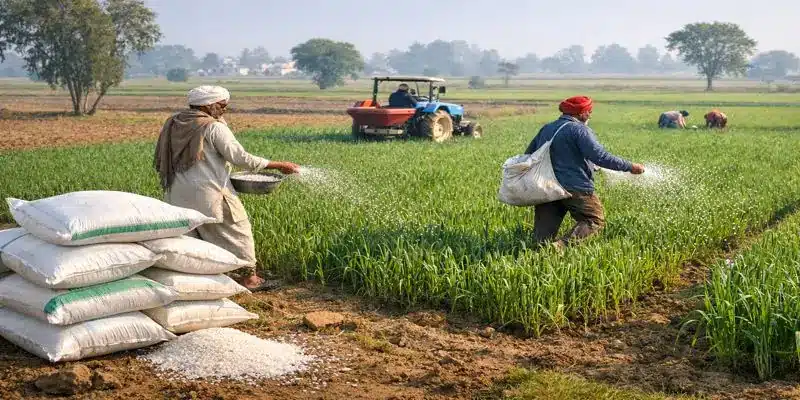
The fertilizer sector is vital for India’s food security, as the country heavily relies on imports, particularly from the Middle East. The ongoing conflict has disrupted supply chains and driven up prices, prompting Morgan Stanley to recommend a three-pronged strategy for the medium term. This strategy includes diversifying supply sources, expanding domestic production capacity, and improving nutrient efficiency through better agronomy practices.
India’s fertilizer consumption has increased from approximately 53 million tonnes in 2018-19 to around 60 million tonnes in 2023-24. Despite this growth, the country still faces significant risks due to its reliance on imports, particularly in phosphatic and potassic fertilizers. The report highlights the need for India to achieve self-sufficiency in fertilizer production to stabilize food prices and maintain agricultural output. It calls for long-term agreements with reliable exporting nations and the establishment of stock buffers to mitigate the impact of global disruptions on domestic food security.
Defence: The Need for Indigenisation
The report underscores the necessity for India to increase its defense spending in response to the ongoing conflict in the Middle East. Morgan Stanley suggests that heightened defense expenditure will not only support the modernization of India’s military capabilities but also foster the growth of the domestic defense industry. This shift aims to reduce external vulnerabilities and enhance the country’s security supply chain.
India is currently among the top five military spenders globally, and the government plans to raise defense spending to 2.5% of GDP over the next five years. Initiatives such as “Make in India” and “Aatmanirbhar Bharat” are central to building an indigenous defense manufacturing base. The report notes that reforms aimed at increasing foreign direct investment and promoting local production are already yielding results, with indigenous defense production reaching ₹1.54 trillion in FY 2025. However, the surge in global defense orders poses challenges for India’s military modernization timeline, necessitating a careful balance between increased spending and fiscal responsibility.
Policy Direction, Boost to Capex
Morgan Stanley anticipates that India will continue to prioritize self-reliance in response to ongoing global shocks, leading to increased capital expenditure in sectors that are critical for economic growth. The report highlights that efforts to reduce import dependence across energy, fertilizers, and defense will require substantial investments in domestic production capacity and infrastructure.
The brokerage projects that India’s capital expenditure will rise significantly, estimating a growth of 1.6 times to $2.2 trillion by FY2031, with an incremental cumulative capex of $800 billion over the next five years. Approximately 60% of this investment is expected to flow into emerging industries, including energy transition, data centers, and defense. The report concludes that India’s strategy to diversify its procurement sources and enhance domestic manufacturing capabilities will support a robust economic growth trajectory, with real GDP growth projected at around 6.5-7% in the medium term.
Observer Voice is the one stop site for National, International news, Sports, Editor’s Choice, Art/culture contents, Quotes and much more. We also cover historical contents. Historical contents includes World History, Indian History, and what happened today. The website also covers Entertainment across the India and World.
Follow Us on Twitter, Instagram, Facebook, & LinkedIn

