

Jal Jeevan Mission: Government Strengthens Rural Water Supply Initiative

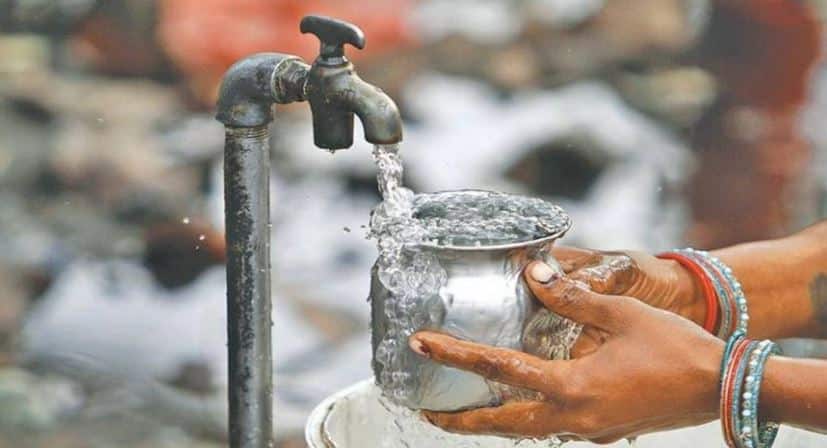
Since August 2019, the Government of India has been actively implementing the Jal Jeevan Mission (JJM) to provide safe drinking water through tap connections to every rural household in the country. This initiative, which translates to ‘Har Ghar Jal’ meaning ‘water in every home’, is executed in collaboration with various State and Union Territory governments, which hold the responsibility for the planning, execution, and maintenance of drinking water supply systems. The central government plays a supportive role by offering technical and financial assistance.
To facilitate effective planning and execution of JJM, the Government of India has issued comprehensive operational guidelines. These guidelines cover all key aspects, including planning, execution, quality assurance, monitoring, and ensuring the sustainability of the infrastructure established under the mission.
Ensuring Transparency through Technology
The Government is committed to maintaining transparency and accountability within the JJM framework. Progress reports on physical and financial metrics are documented through the JJM–Integrated Management Information Systems (IMIS). Additionally, each household’s tap water connection is linked with the Aadhar number of the head of the family to enhance tracking. Geo-tagging of assets created under the mission has also been implemented.
Quality Control Measures
To ensure high-quality standards under JJM, third-party inspections are now mandatory before any payments are processed. States and Union Territories have been empowered to select third-party inspection agencies (TPIAs) to verify the quality of the work conducted, including the materials used for construction and the machinery installed.
Strengthening Monitoring Mechanisms
As part of ongoing enhancements to monitoring under the JJM, since April 2025, states have been conducting monthly inspections of four randomly assigned schemes. These inspections aim to strengthen field-level oversight and to evaluate construction quality, adherence to deadlines, service accessibility, and resolution of any issues that arise.
Additionally, the monitoring framework has been bolstered by National WASH Experts (NWEs) utilizing a comprehensive checklist that emphasizes quality execution. The Terms of Reference for TPIAs have also been revised to ensure effective oversight.
Addressing Irregularities Promptly
The Government is proactively addressing any reported irregularities, whether related to quality or financial aspects, during regular review meetings with the states and UTs. A zero-tolerance policy toward any form of violation has been strongly advocated. All states have been urged to investigate each complaint thoroughly and to take all necessary disciplinary, contractual, and legal actions to uphold the mission’s transparency and accountability.
According to reports from 32 states and UTs, a total of 17,036 complaints have been received from various sources, including media, public representatives, and grievance portals, concerning financial irregularities and poor-quality work related to the JJM. Actions have been reported against 621 departmental officials, 969 contractors, and 153 TPIAs for violations.
Observer Voice is the one stop site for National, International news, Sports, Editor’s Choice, Art/culture contents, Quotes and much more. We also cover historical contents. Historical contents includes World History, Indian History, and what happened today. The website also covers Entertainment across the India and World.

