

India’s Wheat Production Remains Steady Amid Challenges, According to Government Report

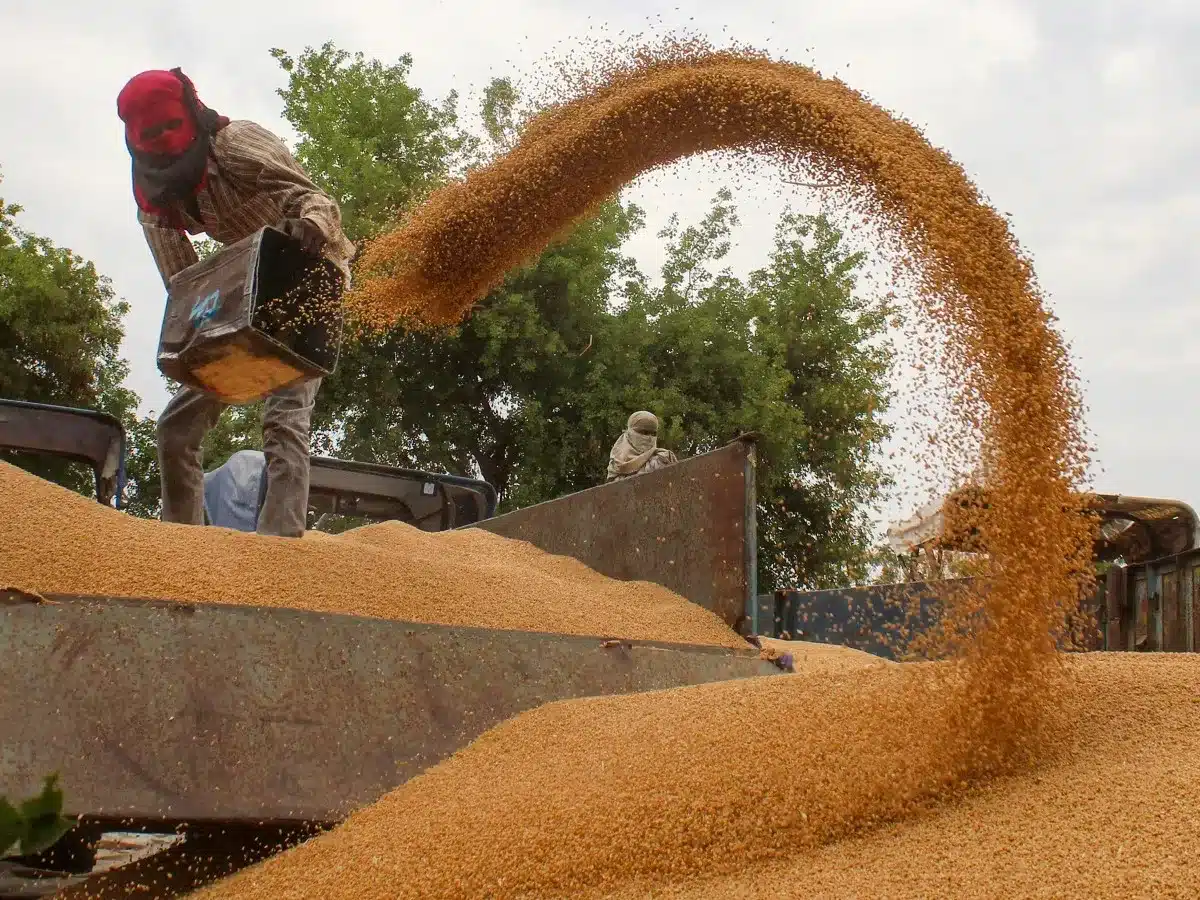
India’s agriculture ministry has projected that the country’s wheat output for the 2025-26 crop year will remain stable, despite facing challenges from unseasonal weather events. While an industry estimate suggests a lower production figure, the ministry maintains that the crop is resilient and capable of withstanding localized damage. The ministry’s assessment highlights a mixed season influenced by both adverse weather and farmers’ adaptive responses, indicating that the final production numbers may fall between the government’s earlier estimates and industry predictions.
Wheat Production Estimates
The Roller Flour Millers’ Federation of India (RFFI) recently estimated that wheat production for the 2025-26 crop year will reach approximately 110.65 million tonnes. This figure represents a slight increase from the 109.63 million tonnes produced in the previous year but is significantly lower than the agriculture ministry’s earlier projection of 120.21 million tonnes. Last year’s output was recorded at 117.94 million tonnes. Food Secretary Sanjeev Chopra noted that the actual production figure is likely to fall somewhere between the RFFI’s estimate and the ministry’s initial forecast, suggesting a realistic expectation of wheat production between 110 and 120 million tonnes.
Impact of Weather Conditions
The wheat crop was sown across 33.4 million hectares this year, with no significant reports of pest or disease infestations. However, weather conditions have posed challenges at critical growth stages. High temperatures in February led to heat stress, which shortened the grain-filling period and negatively impacted yields. Additionally, untimely rainfall and hailstorms during the maturity phase caused localized damage, affecting both yield and grain quality. Despite these setbacks, the ministry indicated that several factors could mitigate the losses, including an increase in the area planted and the adoption of improved seed varieties that are more resilient to heat and other stresses.
Regional Production Insights
Data from various states indicates a steady production trend. In Haryana, wheat arrivals at mandis have surpassed the procurement target of 75 lakh tonnes, with 56.13 lakh tonnes already purchased—about 9 lakh tonnes more than the same period last year. Madhya Pradesh has also increased its procurement target from 78 lakh tonnes to 100 lakh tonnes due to higher-than-expected production. Meanwhile, Maharashtra’s wheat output is estimated at around 22.90 lakh tonnes, reflecting a consistent upward trend. Arrivals from the Marathwada and Vidarbha regions have remained stable as the end of April approaches.
Outlook for Wheat Production
The agriculture ministry remains optimistic about the overall wheat production scenario for the 2025-26 crop year. It asserts that while localized weather-related impacts have been observed, the overall production remains stable and resilient. This stability is attributed to increased acreage, improved agronomic practices, and enhanced varietal adoption among farmers. The ministry’s assessment suggests that these factors will help offset the adverse effects of weather anomalies, supporting a robust national wheat production outlook compared to the previous crop season.
Observer Voice is the one stop site for National, International news, Sports, Editor’s Choice, Art/culture contents, Quotes and much more. We also cover historical contents. Historical contents includes World History, Indian History, and what happened today. The website also covers Entertainment across the India and World.
Follow Us on Twitter, Instagram, Facebook, & LinkedIn

