

Indian Railways Targets 35 Hydrogen Trains, Exploring Cost-Effective Green Fuel Options

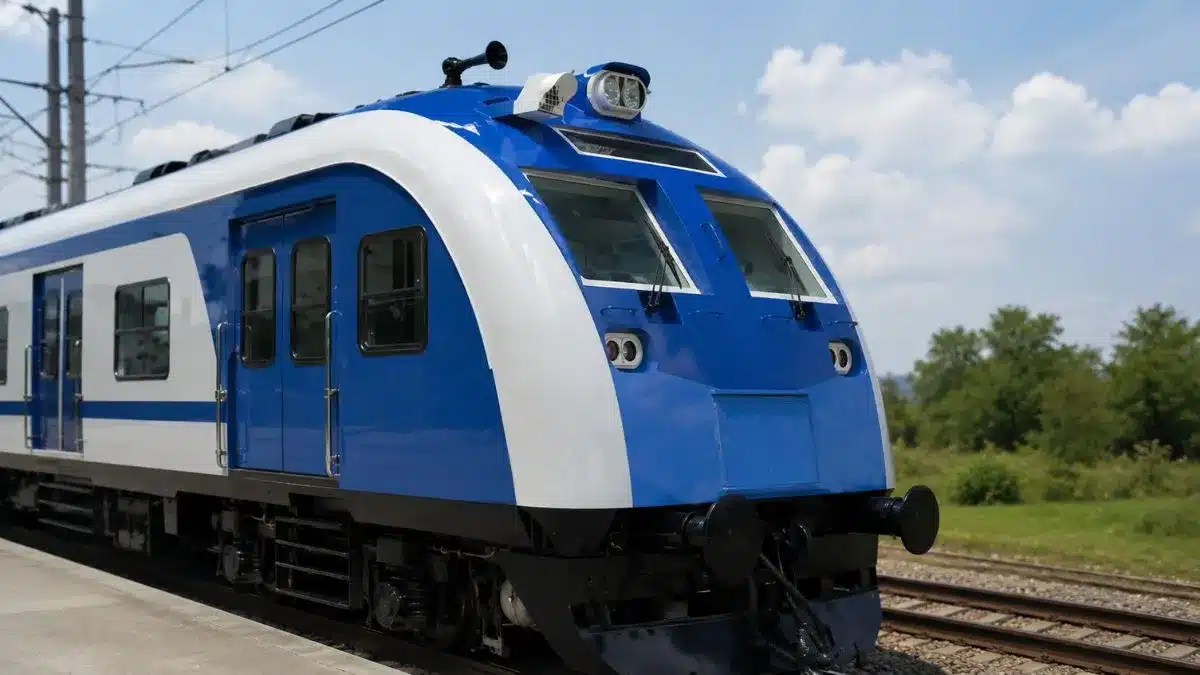
Within a month of launching its first hydrogen-powered train, Indian Railways is actively seeking more affordable green hydrogen options to enhance its operations. The initiative aims to expand the pool of green hydrogen suppliers and reduce procurement costs. Measures under consideration include providing manufacturers with offtake assurances to stimulate supply.
By early August, hydrogen trains had completed over 2,500 kilometers of commercial operations since their introduction in mid-July. India is home to the world’s most powerful hydrogen train and has established a dedicated facility for hydrogen production and supply. The initial goal is to deploy 35 hydrogen-powered trains on heritage routes, particularly in hilly areas where railway electrification is not feasible.
Cheaper green hydrogen in focus
A senior official stated that reducing the supply costs of green hydrogen is crucial for the broader adoption of hydrogen trains. The government is already incentivizing electrolyser manufacturing and green hydrogen production through a dedicated program. The National Green Hydrogen Mission, with an allocation of Rs 17,490 crore until 2029-30, aims to create export opportunities as well.
India targets an annual domestic green hydrogen production capacity of 5 million metric tonnes by 2030. In February, the country recorded its lowest-ever green hydrogen price at Rs 279 (approximately $3.08) per kilogram in a tender for supplying 10,000 tonnes to Numaligarh Refinery in Assam. Former Niti Aayog CEO Amitabh Kant noted that government incentives and lower-cost renewable energy are contributing to price reductions, suggesting that green hydrogen at $2 per kilogram is increasingly attainable.
India’s first hydrogen-powered train
Prime Minister Narendra Modi inaugurated India’s first hydrogen-powered train last month. This train utilizes hydrogen fuel cell technology to generate power, combining hydrogen stored in onboard cylinders with oxygen from the air in a Proton Exchange Membrane (PEM) fuel cell. This process produces electricity to power the train’s traction motors without combustion, smoke, or direct carbon emissions, with water vapor as the only by-product.
The train is equipped with two hydrogen driving power cars, each generating 1,200 kW, and is supported by lithium iron phosphate batteries and onboard hydrogen storage cylinders. While only a few countries currently operate or test hydrogen trains, India’s version stands out with 10 coaches, making it the world’s longest hydrogen train. With a propulsion system of 3,200 HP, it ranks among the most powerful hydrogen-powered trainsets globally.
Observer Voice is the one stop site for National, International news, Sports, Editor’s Choice, Art/culture contents, Quotes and much more. We also cover historical contents. Historical contents includes World History, Indian History, and what happened today. The website also covers Entertainment across the India and World.

