

India Urged to Speed Up FTA Negotiations with US and Diversify Exports

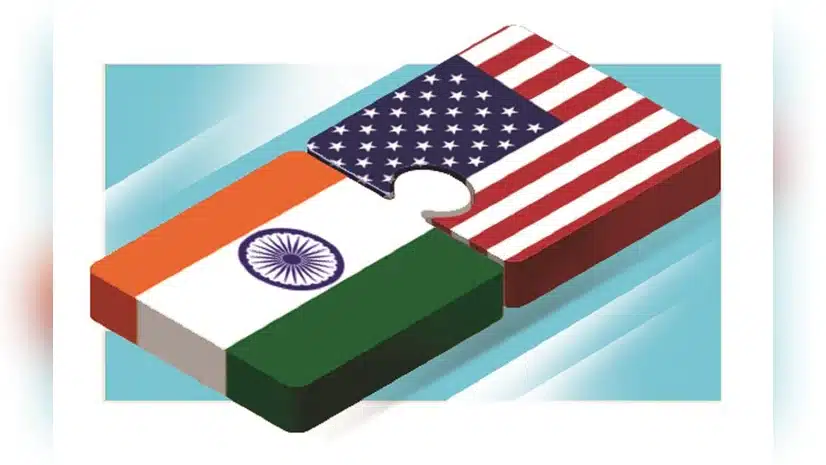
India’s Economic Advisory Council (EAC-PM) Chairman S. Mahendra Dev has urged the nation to accelerate negotiations for free trade agreements (FTAs) and broaden its export horizons beyond traditional markets. Speaking at the First ISID@40 Distinguished Person Lecture, Dev emphasized the need for India to engage actively with the United States to finalize a Bilateral Trade Agreement (BTA). He highlighted that despite global protectionist trends, India’s export potential remains largely untapped, and a robust trade policy is essential for the country’s economic growth.
Call for Expanding Trade Agreements
During his lecture, Dev stressed the importance of diversifying India’s export markets to include countries in Asia, Latin America, and Africa, as well as some developed nations. He pointed out that India’s trade policy should focus on expediting FTAs and maintaining an ongoing dialogue with the US. Dev’s comments come in light of recent tensions between India and the US, particularly following the US’s decision to impose sanctions on Russian oil producers, which has led to increased tariffs on Indian exports. He argued that a rule-based global trade framework under the World Trade Organization (WTO) is preferable to the rising tide of protectionism that has characterized recent years.
Impact of US Sanctions on Indian Exports
The sanctions imposed by the US on major Russian oil producers, Rosneft and Lukoil, have resulted in a significant tariff burden on Indian exports, amounting to nearly 50%. This includes a 25% duty on oil imports from Russia and a reciprocal 25% levy on Indian goods entering the US market. New Delhi has condemned these measures as “unfair, unjustified, and unreasonable.” Dev’s remarks highlight the challenges faced by Indian exporters in the current geopolitical climate and the need for strategic trade policies to mitigate these impacts.
Growth Potential and Manufacturing Base
Dev also discussed the critical link between sustained economic growth and strong export performance. He noted that no emerging market of India’s size has achieved consistent growth rates of 7% or 8% for an extended period without robust export growth. To enhance its manufacturing sector, India needs to develop a stronger base of medium-sized firms, which currently employ between 200 and 500 workers. Most Indian enterprises are small, with fewer than 10 employees. Dev emphasized that higher investment levels and productivity improvements are essential for India to reclaim a significant share of global GDP, which was once 25% in 1700 AD.
Investment and Economic Resilience
Dev highlighted that India’s average annual growth rate has remained between 6% and 6.5% over the past three decades. To sustain a growth rate of 7%, investment levels must increase from the current 31-32% of GDP to 34-35%. He expressed optimism that private sector investment would rise, especially as the government increases capital expenditure, which is expected to have a multiplier effect on the economy. Dev also reflected on India’s journey from being labeled one of the “Fragile Five” economies in 2013 to becoming one of the fastest-growing economies in the world today, showcasing the resilience of the Indian economy in overcoming past challenges.
Observer Voice is the one stop site for National, International news, Sports, Editor’s Choice, Art/culture contents, Quotes and much more. We also cover historical contents. Historical contents includes World History, Indian History, and what happened today. The website also covers Entertainment across the India and World.
Follow Us on Twitter, Instagram, Facebook, & LinkedIn

