

India Pioneers Comprehensive Marine Resource Management Report

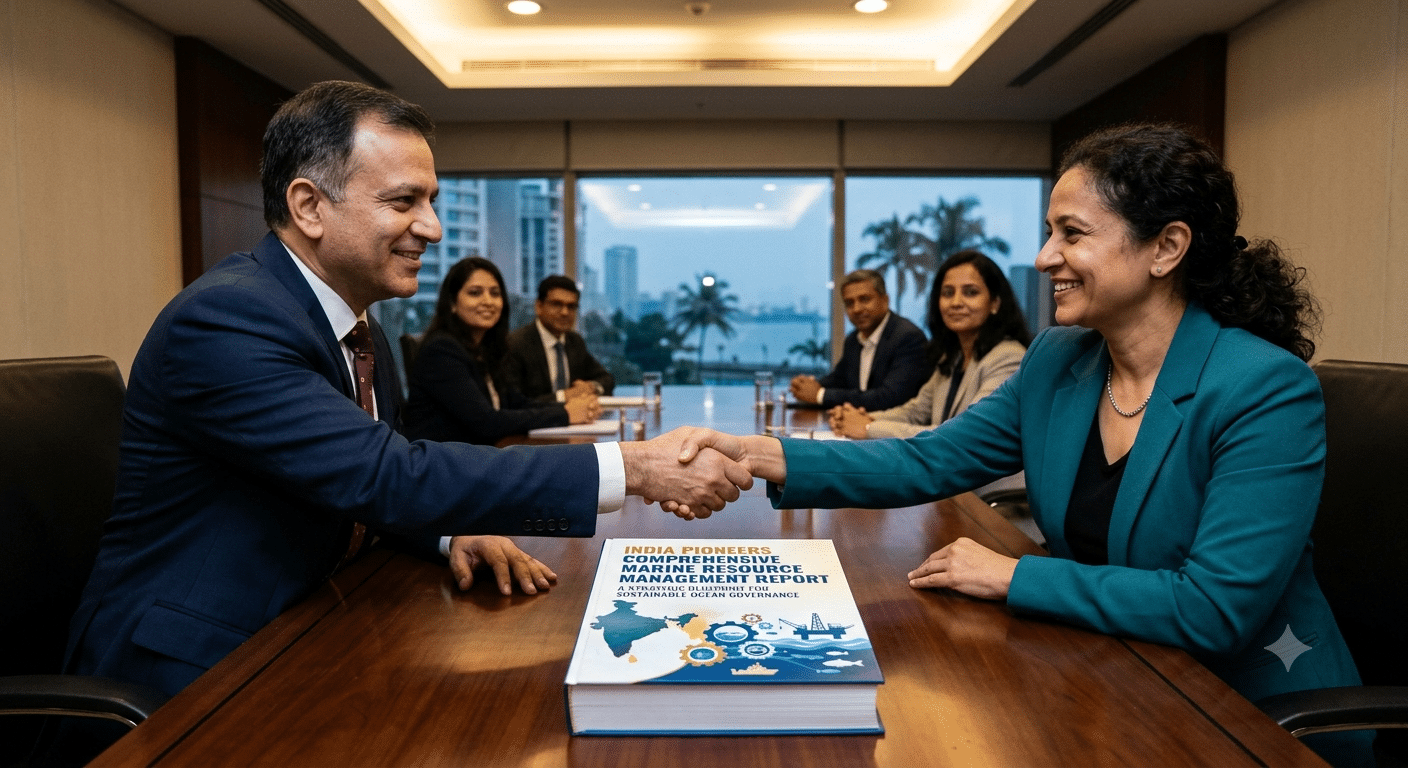
NEW DELHI — In a significant move towards enhancing ocean-driven food security and climate action, India has unveiled a crucial report aimed at mapping and managing its extensive marine territories. The Ministry of Earth Sciences (MoES) introduced the detailed “National Report on Deep-Sea and Distant-Water Fishery Resources of the Indian EEZ” during the Silver Jubilee celebrations of the Centre for Marine Living Resources & Ecology (CMLRE).
This milestone report encapsulates nearly 40 years of groundbreaking oceanographic research and 30 years of systematic surveys across India’s vast 2.37 million square kilometer Exclusive Economic Zone (EEZ). The document serves as more than just a scientific record; it outlines a strategic framework for the sustainable development of India’s Blue Economy, harmonizing resource exploration with biodiversity conservation.
Decades of Exploration Aboard a Floating Laboratory
The findings highlighted in the report reflect a monumental collaborative scientific effort, involving over 400 oceanographic cruises since the early 1990s as part of the Marine Living Resources Programme (MLRP). Central to this expansive initiative is India’s top-tier research vessel, the Fishery and Oceanographic Research Vessel (FORV) Sagar Sampada, functioning as a sophisticated floating laboratory.
The vessel has enabled multidisciplinary teams of scientists to embark on challenging, weeks-long journeys across the Arabian Sea, Bay of Bengal, Lakshadweep waters, Andaman Sea, and even the Southern Ocean near Antarctica. These expeditions aimed to map species distributions, estimate fish populations, and gather essential environmental data.
Key Highlights from the Deep-Sea Frontier
The report unveils numerous critical insights regarding India’s marine resources:
- Unlocking the “Twilight Zone”: This mesopelagic layer, spanning 200 to 1,000 meters deep, is teeming with lanternfishes, deep-sea shrimps, and cephalopods. Their nightly migrations play a vital role in the ocean’s biological carbon pump, aiding climate regulation.
- Deep-Sea Demersal Resources: The publication assesses living resources beyond the 200-meter mark, identifying significant stocks of underutilized species like deep-sea shrimps, perches, scombroids, flatfishes, and eels.
- Distant-Water Fisheries: It compiles extensive data on high-value open-ocean species, including tunas, billfishes, sharks, and Antarctic krill.
- Marine Biodiversity Hotspots: The report also emphasizes ecologically crucial regions serving as nurseries for at-risk ecosystems, such as Kollam Bank, Angria Bank, and the Lakshadweep and Andaman-Nicobar Islands.
A Tech-Driven Vision for 2047
In its forward-looking approach, the report showcases how emerging technologies are revolutionizing Indian oceanography. By fusing historical data with advanced tools like fisheries acoustics, environmental DNA (eDNA), autonomous platforms, satellite observations, artificial intelligence, and ecosystem modeling, India is establishing a cutting-edge framework for marine spatial planning.
This solid scientific base aligns with India’s Vision 2047, which places the Blue Economy at the heart of national development while underlining India’s commitment to the UN Sustainable Development Goal 14 (Life Below Water) and the UN Decade of Ocean Science for Sustainable Development.
Dr. M. Ravichandran, former secretary of MoES, emphasized that sustainable prosperity hinges on not just discovering new marine resources but on understanding and respecting the ecosystems that support them.
Observer Voice is the one stop site for National, International news, Sports, Editor’s Choice, Art/culture contents, Quotes and much more. We also cover historical contents. Historical contents includes World History, Indian History, and what happened today. The website also covers Entertainment across the India and World.

