

India Hosts Roundtable on AI Governance Ahead of Major Summit

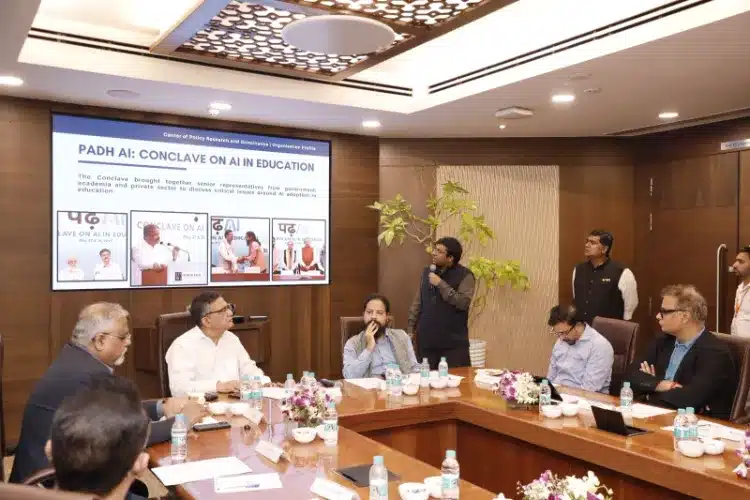
The Office of the Principal Scientific Adviser (OPSA) to the Government of India, in collaboration with the iSPIRT Foundation and the Centre for Responsible AI at IIT Madras, held a high-level roundtable on December 22, 2026. Titled ‘Techno-Legal Regulation for Responsible, Innovation-Aligned AI Governance’, this roundtable served as a vital pre-summit event leading up to the India AI Impact Summit 2026, with Prof. Ajay Kumar Sood chairing the discussions.
Key Participants and Discussions
The event brought together an impressive roster of experts, including Dr. Preeti Banzal, Adviser/Scientist ‘G’ from the Office of the PSA; Ms. Kavita Bhatia from the Ministry of Electronics and Information Technology; and other notable figures like Mr. Hari Subramanian of the iSPIRT Foundation and Prof. Balaraman Ravindran from IIT Madras. These senior stakeholders engaged in a dialogue that revolved around establishing a responsible governance framework for AI technology.
Focus on Practical Implementation
Dr. Banzal laid the groundwork for the discussions, emphasizing India’s proactive approach to techno-legal regulation in AI and the critical need for practical implementation mechanisms. She highlighted the importance of creating exemplary pathways for AI governance that foster policy mechanisms, capacity building, and global cooperation.
In his keynote, Prof. Sood underscored India’s readiness to adopt a techno-legal framework for AI governance. He accentuated the necessity of incorporating legal and regulatory principles into AI systems to ensure accountability, transparency, data privacy, and cybersecurity from the start. Prof. Sood encouraged participants to explore various avenues for developing this governance framework effectively.
Addressing Challenges in AI Governance
The roundtable co-moderators, Mr. Subramanian and Prof. Ravindran, took a closer look at challenges such as data protection, risks of data leakage, and maintaining differential privacy. They pointed out the balance required between privacy and system performance, as well as the importance of fostering equitable access and data sovereignty in the evolving AI landscape.
Experts cast a spotlight on the necessity for strong data privacy mechanisms throughout the entire AI process—training, inference, and deployment. They discussed the convergence with the Digital Economy Partnership Agreement (DEPA) framework and the need for compliance-by-design approaches that can scale globally, contributing to AI governance models.
Future Directions and Conclusions
As discussions progressed, participants emphasized the need to create a standardized evaluation framework for responsible AI. This framework would ensure safety and governance measures are embedded within AI technology while translating insights into effective policy measures. The goal is to mitigate risks while promoting equal access to AI technology.
Dr. Banzal concluded the roundtable by thanking participants for their valuable insights, which will inform the ‘Safe and Trusted AI Chakra’ initiative at the upcoming India AI Impact Summit. The OPSA plans to release an explanatory white paper on techno-legal regulation for AI governance, incorporating all the recommendations discussed during the event, ultimately aiming to strengthen India’s role in global AI governance.
Observer Voice is the one stop site for National, International news, Sports, Editor’s Choice, Art/culture contents, Quotes and much more. We also cover historical contents. Historical contents includes World History, Indian History, and what happened today. The website also covers Entertainment across the India and World.

