

India Aims to Finalize Initial US Trade Deal by Year-End, Encourages Both Sides to Identify Optimal Agreement

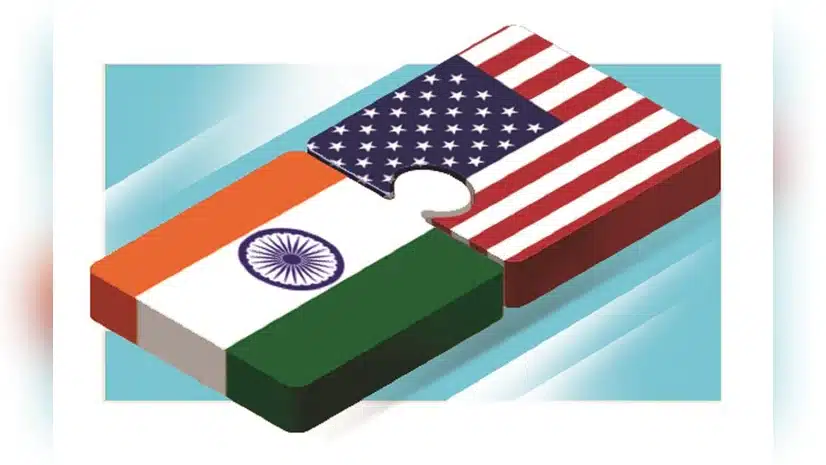
India is making significant strides toward finalizing the first phase of its Bilateral Trade Agreement (BTA) with the United States by the end of this year. Commerce Secretary Rajesh Agarwal announced that negotiations have progressed well, despite recent shifts in global trade dynamics. He expressed optimism about reaching an agreement, although he cautioned that trade talks often face last-minute challenges that could affect deadlines.
Progress in Negotiations
During a speech at the FICCI Annual General Meeting, Agarwal highlighted the advancements made in discussions between India and the US. He noted that both countries are hopeful about concluding the first tranche of the BTA within the current calendar year. The original target for completing this phase was set for autumn 2025, but recent changes in US trade policies, including the introduction of new reciprocal tariffs, have necessitated a reevaluation of timelines. Agarwal emphasized that while progress has been made, the unpredictable nature of trade negotiations means that final agreements can be delayed by unresolved issues.
Parallel Negotiations Underway
In light of the evolving trade landscape, India and the US are currently engaged in two parallel negotiations. The first is the long-term Bilateral Trade Agreement, while the second is a more immediate Framework Trade Deal aimed at addressing the high tariffs imposed on Indian goods. Agarwal stated that discussions regarding the framework are nearing completion, with most issues resolved. He mentioned that both sides are working to find the “right landing zone” for an announcement, which is expected soon. The ultimate goal is to eliminate reciprocal tariffs entirely, a process that Agarwal acknowledged would take time.
Impact of US Tariffs
The US has recently imposed tariffs of up to 50% on Indian imports, which has added complexity to ongoing negotiations. These tariffs were enacted in late August, coinciding with the continuation of trade talks. President Donald Trump has urged India to reduce its tariffs in sensitive sectors, such as agriculture, and to limit its purchases of Russian oil. Despite these challenges, Agarwal remains confident that the outstanding issues can be addressed at a political level, and he believes an agreement can be reached in the near future.
Future Trade Goals
The Bilateral Trade Agreement, proposed in February and supported by leaders from both nations, aims to significantly increase bilateral trade from $191 billion to $500 billion by 2030. However, the recent imposition of a 25% tariff on Indian goods has contributed to a widening trade deficit, which reached a record $41.68 billion in October. Agarwal downplayed concerns about the deficit, stating that it is not in a “worrying zone.” As negotiations continue, both countries remain focused on achieving a mutually beneficial agreement that will enhance trade relations.
Observer Voice is the one stop site for National, International news, Sports, Editor’s Choice, Art/culture contents, Quotes and much more. We also cover historical contents. Historical contents includes World History, Indian History, and what happened today. The website also covers Entertainment across the India and World.
Follow Us on Twitter, Instagram, Facebook, & LinkedIn

