

India Advances Small Modular Reactor Development for Clean Energy

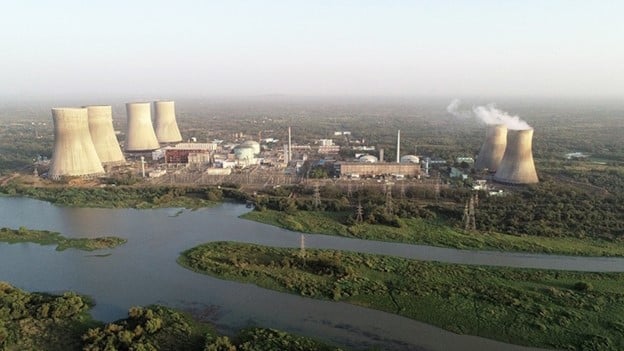
The Indian government is taking significant strides in the energy sector with the design and development of Small Modular Reactors (SMRs). These compact nuclear power plants are aimed at serving as captive power plants for energy-intensive industries, repurposing outdated fossil fuel plants, and providing energy solutions to remote areas lacking grid connectivity. As part of its Nuclear Energy Mission, funds have been allocated for the research and development of indigenous SMRs by the year 2033.
Recently, the Department of Atomic Energy (DAE) has commenced plans for two landmark projects: the 220 MWe Bharat Small Modular Reactor (BSMR-200) and the 55 MWe Small Modular Reactor (SMR-55). The lead unit for both reactors is set to be established at the Tarapur Atomic Power Station in Maharashtra. Furthermore, a high-temperature gas-cooled reactor with a capacity of 5 MWth is also in the pipeline, intended for hydrogen generation and proposed to be built at BARC in Visakhapatnam, Andhra Pradesh.
The Bhabha Atomic Research Centre (BARC) is at the forefront of this initiative, focusing on constructing demonstration units at DAE sites to showcase the technology. The estimated cost for the demonstration unit of the BSMR-200 is approximately 27 crores per megawatt electrical (MWe). Following a successful demonstration, it is anticipated that the costs will decrease due to design standardization and economies of scale.
In ensuring safety in nuclear operations, the Atomic Energy Regulatory Board (AERB) plays a critical role. Established under a statutory order in 1962, AERB enforces safety regulations for Nuclear Power Plants (NPPs) and ensures compliance through its licensing, safety reviews, and regulatory inspections. Their safety mandates incorporate international standards set by the International Atomic Energy Agency (IAEA) and align with best practices worldwide.
AERB oversees various phases of NPPs, including siting, construction, commissioning, and decommissioning. Following thorough evaluations, licenses are issued for operational periods lasting up to five years. During this period, the safety performance of the reactors is closely monitored through regular inspections, and a comprehensive Periodic Safety Review (PSR) is mandated every ten years to assess the plants’ safety against aging and operational changes.
Recognizing advancements in SMR technology, AERB has reviewed its regulatory framework and has determined that existing regulations can largely apply to these new reactors. Where necessary, adjustments will be made for specific technologies. AERB is also active in international discussions to stay updated on SMR regulation practices globally.
Observer Voice is the one stop site for National, International news, Sports, Editor’s Choice, Art/culture contents, Quotes and much more. We also cover historical contents. Historical contents includes World History, Indian History, and what happened today. The website also covers Entertainment across the India and World.

