

Government Revamps Tribal Development Strategies in National Review Meeting

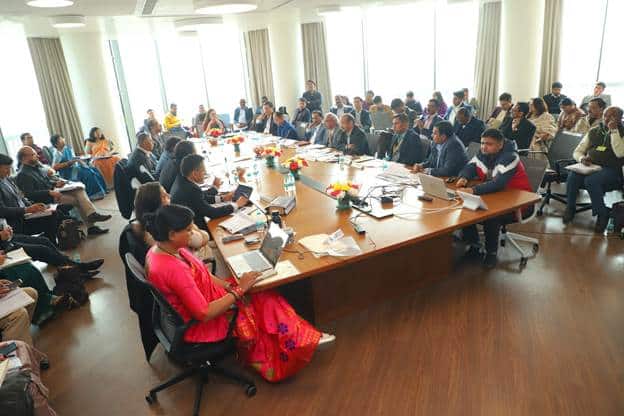
In a significant move towards enhancing last-mile governance, the Ministry of Tribal Affairs (MoTA) convened a National Review Meeting today at Kartavya Bhawan-1 in New Delhi. Under the leadership of the Hon’ble Minister of Tribal Affairs, this meeting focused on rethinking the planning and delivery of tribal development initiatives by bringing together States, Union Territories, and multiple central ministries. This full-day conference marks a pivotal step in the Government of India’s commitment to fostering integrated, evidence-driven, and community-centered tribal development.
A Strong Turnout for Collective Action
The meeting saw participation from senior officials representing over 30 States and Union Territories, alongside representatives from a diverse array of Central line Ministries and national institutions. This high level of engagement demonstrates a growing national consensus on the urgent need for collaborative efforts to tackle the multifaceted challenges facing tribal communities, particularly those belonging to the Particularly Vulnerable Tribal Groups (PVTGs).
Progress and Innovative Initiatives Highlighted
During the conference, participants reviewed the progress and future direction of flagship programs such as PM-JANMAN and the Dharti Aaba Janjatiya Gram Utkarsh Abhiyan (DAJGUA). Discussions also introduced groundbreaking pilot initiatives spearheaded by MoTA aimed at improving health and livelihoods in tribal regions. Initiatives discussed included the targeted elimination of diseases like tuberculosis, malaria, and leprosy in tribal areas, and the establishment of India’s first National Tribal Health Observatory. Other impactful suggestions included community-managed creches for PVTG children, and support for eco-tourism and cultural preservation projects.
Emphasizing Community and Cultural Sensitivity
MoTA is positioning itself as a national convener that integrates various sectors such as health, nutrition, housing, and cultural heritage within a unified framework for tribal development. The discussions highlighted the importance of district ownership, participation from local Gram Sabhas, and a culturally sensitive approach, alongside the utilization of disaggregated data to inform planning and actions.
A Commitment to Make Change Happen
Despite the progress made under existing schemes, the meeting recognized that substantial work remains to ensure quality outcomes in hard-to-reach tribal areas. Participants committed to translating discussions into actionable, time-bound plans fortified by strong monitoring and convergence mechanisms. The conference concluded with a roadmap aimed at scaling successful pilot interventions and fortifying State and district institutions, ensuring that tribal development efforts lead to tangible improvements for households while respecting cultural identities and ecological heritage.
The Ministry of Tribal Affairs reiterated its dedication to collaborating with all stakeholders, including States, Union Territories, line Ministries, research organizations, and development partners to ensure an inclusive and culturally enriching journey for tribal development in India.
Observer Voice is the one stop site for National, International news, Sports, Editor’s Choice, Art/culture contents, Quotes and much more. We also cover historical contents. Historical contents includes World History, Indian History, and what happened today. The website also covers Entertainment across the India and World.

