

Government Reinforces Fight Against Crop Residue Burning in Delhi NCR

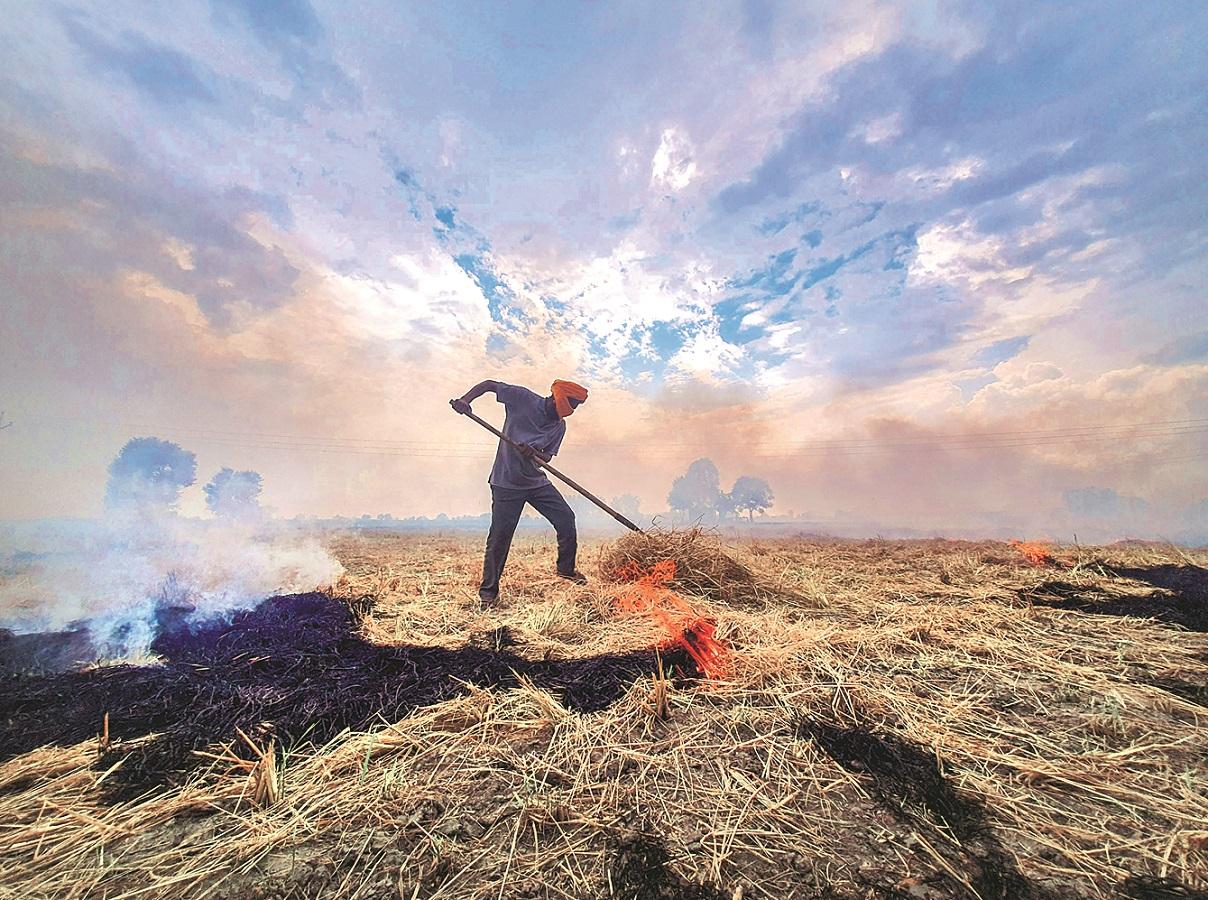
In recent efforts to combat the persistent air quality issues plaguing North India, particularly in the Delhi National Capital Region (NCR), the government has implemented a series of measures to discourage crop residue burning. This practice significantly worsens air pollution during the winter months, following the harvest of crops.
Key initiatives have been set in motion to address this environmental challenge. The government utilizes satellite remote sensing to monitor instances of crop residue burning, adhering to protocols established by the Consortium for Research on Agroecosystem Monitoring and Modeling from Space (CREAMS). This technological approach enables better tracking of fire events related to agricultural practices.
Support for Farmers
To assist farmers in adopting sustainable practices, the government has introduced alternative measures for crop residue management. These include in-situ mulching and the use of machinery to incorporate paddy straw back into the fields. A Central Sector Scheme on Crop Residue Management (CRM), launched by the Ministry of Agriculture & Farmers Welfare in 2018-19, provides substantial financial support. This includes 50% assistance for farmers purchasing residue management equipment, and up to 80% for rural entrepreneurs and cooperatives establishing Custom Hiring Centres for crop management machinery.
Since the inception of this scheme, over Rs. 4,237 crores have been allocated, resulting in the distribution of more than 353,000 machines to farmers and the establishment of over 43,500 Custom Hiring Centres.
Regulatory Actions
The Commission for Air Quality Management (CAQM) was set up under the CAQM Act in 2021 to focus on air quality issues in the NCR. In July 2022, CAQM laid out a comprehensive policy detailing specific actions and timelines to tackle air pollution, including crop residue burning. Recent directives from CAQM advocate for the rental availability of residue management machines, especially for small and marginal farmers, and mandate the use of paddy straw-based biomass in brick kilns.
Furthermore, thermal power plants within a 300-kilometer radius of Delhi are now required to utilize biomass pellets alongside coal to promote the use of crop residue. Non-compliance may result in environmental compensation charges, as outlined in a recent ruling by the Ministry of Environment, Forest and Climate Change.
Positive Results in Reducing Fires
In an encouraging development, the collective measures taken by the states of Punjab and Haryana have led to a more than 90% reduction in crop-burning incidents during the 2025 paddy harvesting season compared to 2022. This significant drop shows the effectiveness of government initiatives and the importance of collaboration between state and federal entities in addressing air quality issues.
Observer Voice is the one stop site for National, International news, Sports, Editor’s Choice, Art/culture contents, Quotes and much more. We also cover historical contents. Historical contents includes World History, Indian History, and what happened today. The website also covers Entertainment across the India and World.

