

General Assembly Appoints Artificial Intelligence Panel and Names Joint Inspection Unit Members

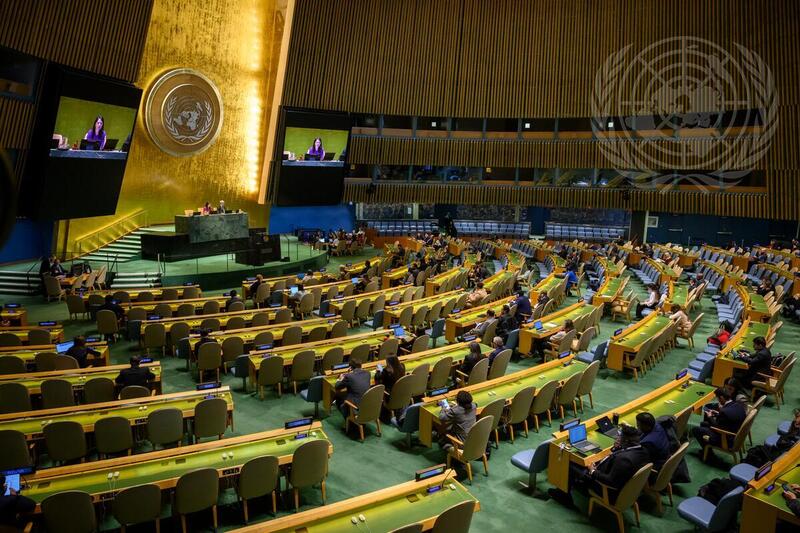
The United Nations General Assembly has appointed 40 members to the newly established Independent International Scientific Panel on Artificial Intelligence (AI), following a request from the United States for a recorded vote. This panel, created by a resolution in 2025, aims to unite experts to evaluate the transformative effects of AI on society. It will produce annual reports that synthesize research on the opportunities and risks associated with this rapidly evolving technology.
Concerns Over UN Mandate and AI Regulation
During the assembly, the United States expressed strong objections to the formation of the AI panel, arguing that it represents an overreach of the UN’s mandate. A representative from the U.S. emphasized the need for the organization to concentrate on its core missions, such as international peace and security, rather than regulating advanced technologies that are crucial for economic and strategic competition in the 21st century. The U.S. delegate requested a recorded vote on the panel’s establishment, highlighting concerns about the implications of the panel’s governance on national sovereignty.
Despite these objections, the assembly proceeded with the vote, resulting in 117 in favor, 2 against, and 2 abstentions. The representative of Spain, speaking on behalf of Costa Rica, welcomed the establishment of the panel, emphasizing the necessity for governance frameworks that can address the complexities of AI. He reiterated a sentiment from Spain’s Prime Minister, stating that while AI may be unstoppable, it must not be ungovernable.
Advocating for Inclusion of Developing Nations
Uruguay’s representative, speaking for the Group of 77 and China, underscored the importance of including developing countries in AI governance discussions. She noted that, if managed effectively, AI could enhance public services, education, and health, thereby contributing to the achievement of the 2030 Agenda for Sustainable Development. The representative expressed disappointment over the need for a vote on such a critical issue, advocating for comprehensive international frameworks that ensure equitable participation from all nations.
Following the vote, the assembly appointed the 40 panel members, whose terms will run from February 12, 2026, to February 11, 2029. The representative of El Salvador, co-chairing the Global Dialogue on AI Governance, expressed optimism that the new appointments would bolster the UN’s capacity to foster cooperation based on evidence and inclusivity.
Emphasizing Trust and Independence in AI Governance
The legitimacy of the newly formed panel hinges on trust, as highlighted by the representative of the United Kingdom. He stressed that the panel must demonstrate independence, scientific rigor, and integrity to gain widespread acceptance of its findings. The UK delegate urged the appointed members to establish clear procedures for report writing and evidence utilization, ensuring transparency in their operations.
China’s representative called for the panel to prioritize capacity-building and to consider the diverse experiences of countries at various developmental stages in its work. Similarly, Iran’s delegate emphasized the need for the voices of developing nations to be heard in the panel’s deliberations. Concerns were also raised by Ukraine regarding potential conflicts of interest related to one of the appointed experts from Russia, citing close ties to state institutions.
Additional Appointments and Financial Updates
In addition to the AI panel appointments, the General Assembly appointed Carolina Fernández Opazo from Mexico and Paul Hanna from the United States to the Joint Inspection Unit (JIU) for five-year terms starting January 1, 2027. The JIU serves as an independent oversight body, conducting evaluations and promoting efficiency within the UN system.
The assembly also acknowledged communications from the Secretary-General regarding Ghana, Saint Vincent and the Grenadines, and Togo, which have successfully reduced their arrears below the threshold specified in Article 19 of the UN Charter. This article stipulates that a member state loses its voting rights in the General Assembly if its financial contributions are significantly overdue.
Observer Voice is the one stop site for National, International news, Sports, Editor’s Choice, Art/culture contents, Quotes and much more. We also cover historical contents. Historical contents includes World History, Indian History, and what happened today. The website also covers Entertainment across the India and World.
Follow Us on Twitter, Instagram, Facebook, & LinkedIn

