

Emirates Airlines Faces Decline in Passenger Numbers as Travelers Evacuate Amid Iran Conflict

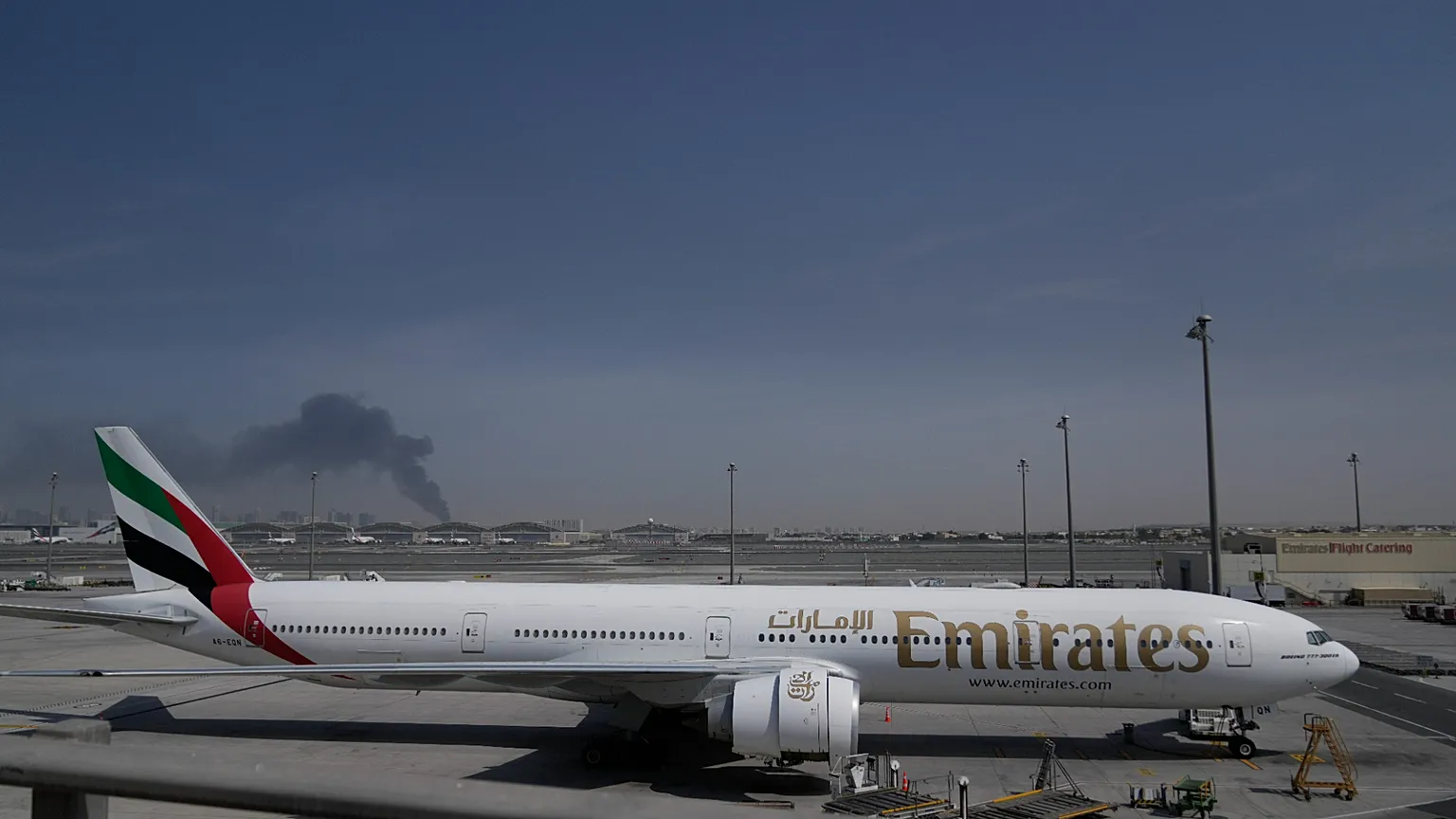
The ongoing conflict in the Middle East is significantly impacting Dubai’s travel industry, leading to a sharp decline in passenger numbers for Emirates, the world’s largest international airline. Many flights from the US and Europe are operating with low occupancy, as travelers are increasingly avoiding the Persian Gulf region. Data reveals that some flights are departing with as few as 5% of their seats filled, prompting Emirates to adapt its operations and offer flexible travel options to passengers.
Declining Passenger Numbers
Emirates is facing a dramatic drop in passenger numbers, particularly on routes from the United States and continental Europe. Recent data shows that flights returning from cities like Prague and Budapest are carrying only 5% to 10% of their usual passengers. In New York, some flights have seen ticket sales plummet to just 20% of capacity, while an Airbus A380, which can typically accommodate nearly 500 passengers, departed with fewer than 35 on board. Departures from Chicago have also been affected, with many flights operating with half-empty cabins. The airline is grappling with thousands of no-shows each day, complicating its efforts to maintain a robust flight schedule.
Operational Adjustments and Cargo Services
In response to the declining passenger demand, Emirates has implemented several operational adjustments. The airline is offering refunds and flexible rescheduling options for flights through the end of the month. Despite the challenges in passenger travel, Emirates continues to transport cargo, including perishable goods, which helps generate revenue. The airline is prioritizing its Boeing 777 aircraft for cargo operations due to their optimal capacity compared to the Airbus A380. With the Strait of Hormuz effectively closed, Emirates flights have become a crucial means of importing supplies into the region.
Safety Concerns and Flight Operations
The safety of operations has also been a concern, with Iranian missile threats and drone incidents near Dubai International Airport causing disruptions. Recently, Emirates suspended operations for over seven hours due to a fuel-tank fire caused by a drone, although flights resumed later the same day. Other Gulf carriers, such as Etihad Airways and Qatar Airways, have resumed limited services primarily focused on evacuating stranded passengers. However, Emirates is operating at a faster pace than its competitors, offering significantly more flights than Qatar Airways, despite some aircraft being out of position in Europe and China.
Future Outlook and Booking Trends
While the current situation presents challenges, Emirates is committed to restoring its flight network as conditions allow. However, forward bookings for inbound flights remain unusually low, with only about a third of capacity filled, particularly concerning as the busy Easter season approaches. On a recent Paris-Dubai flight, an Airbus A380 designed for high-density seating carried only around 25 passengers, nearly matching the number of crew members required for the flight. Departures from London Heathrow have shown slightly better occupancy, with around 20% of tickets sold, but this is still far below the airline’s typical near-full occupancy rates.
Observer Voice is the one stop site for National, International news, Sports, Editor’s Choice, Art/culture contents, Quotes and much more. We also cover historical contents. Historical contents includes World History, Indian History, and what happened today. The website also covers Entertainment across the India and World.
Follow Us on Twitter, Instagram, Facebook, & LinkedIn

