

Elon Musk’s Compensation Plan: Tesla CEO’s Potential Earnings Without Meeting Key Targets, Insights from Experts

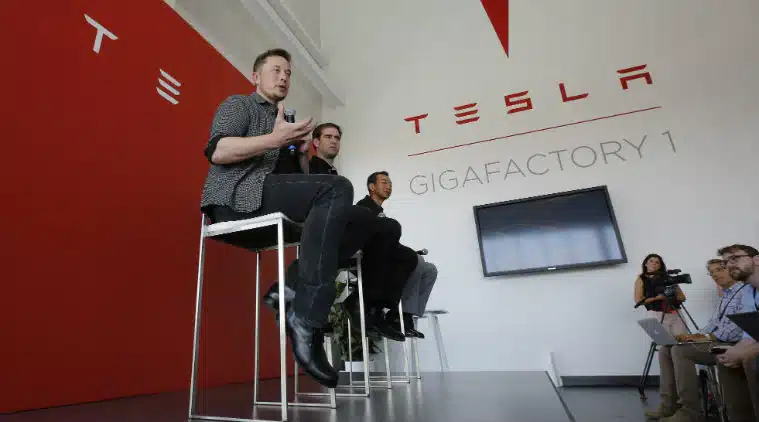
Elon Musk stands to gain a staggering amount from Tesla’s newly approved executive pay package, potentially reaching up to $878 billion over the next decade. However, a recent analysis by Reuters suggests that Musk could secure tens of billions without fully meeting the ambitious performance goals set by Tesla’s board. While the board has outlined transformative objectives for Musk, including advancements in robotics and autonomous driving, the criteria may allow for substantial payouts even if only a fraction of these goals are achieved.
Performance Criteria and Potential Earnings
Tesla’s board has established a series of ambitious targets that Musk must meet to unlock the full value of his compensation package. These goals include a complete transformation of Tesla’s operations and significant advancements in technology and profitability. However, the analysis indicates that Musk could earn over $50 billion by achieving just a few of the easier objectives. For instance, hitting only two of the simpler targets, combined with modest stock growth, could yield $26 billion—more than the total lifetime compensation of the next eight highest-paid CEOs, including leaders from Meta, Oracle, and Apple.
Experts in the automotive industry have pointed out that the vehicle sales targets set for Musk are relatively attainable. For example, selling 1.2 million cars annually over the next decade would result in a stock payout of $8.2 billion, which is below the long-term market average. Additionally, some product development goals are described in vague terms, allowing for large payouts without necessarily enhancing Tesla’s profitability. One such goal involves achieving 10 million subscriptions to Tesla’s “Full Self-Driving” software, which currently does not operate fully autonomously.
Vague Goals and Their Implications
The ambiguity surrounding some of the performance targets raises questions about the feasibility of achieving them. For instance, one goal requires the operation of one million robotaxis without a human driver, but experts suggest that this could be interpreted to include remote human control or a passenger-seat operator. Similarly, a target related to Tesla’s humanoid robot project lacks specificity, as it broadly defines “bot” to include any robot with mobility powered by artificial intelligence.
Achieving any two of the product goals, alongside a market valuation of $2.5 trillion, could result in a payout of $26.4 billion for Musk. If he meets three goals and the valuation reaches $3 trillion, the payout could soar to $54.6 billion. Notably, these achievements do not necessarily require the production of fully autonomous vehicles, which has been a key promise of Tesla.
Challenges in Meeting Profit Goals
While some targets may be easier to achieve, the most challenging goals relate to profitability. Tesla’s board has set eight profit targets ranging from $50 billion to $400 billion in earnings before interest, tax, depreciation, and amortization. This is a significant increase from Tesla’s earnings of $16.6 billion in 2024. The electric vehicle market is becoming increasingly competitive, and Tesla faces challenges with aging models and production issues, particularly with the Cybertruck.
Despite the ambitious profit goals, Musk could still receive substantial stock payouts without meeting any of them. The structure of the compensation package allows for equivalent stock awards for achieving easier vehicle and subscription targets compared to ambitious profit targets. Analysts suggest that while the valuation goals may be attainable, shareholders are likely to focus on the more challenging profit objectives, believing that Musk is uniquely positioned to deliver on them.
Corporate Governance Concerns
The Tesla board’s decision to tie the company’s future to Musk raises significant corporate governance concerns. Experts warn that granting Musk such extensive control over the company’s direction could pose risks. The board has described Musk as motivated by more than just traditional compensation, emphasizing his unique capability to lead Tesla into the future of artificial intelligence. However, critics argue that good governance requires a competitive environment for executive leadership, and Musk’s dominance in the role could hinder accountability.
As Tesla navigates these ambitious goals and the challenges of a competitive market, the implications of Musk’s compensation package will be closely monitored by investors and analysts alike. The balance between achieving transformative objectives and ensuring robust corporate governance will be crucial for the company’s future success.
Observer Voice is the one stop site for National, International news, Sports, Editor’s Choice, Art/culture contents, Quotes and much more. We also cover historical contents. Historical contents includes World History, Indian History, and what happened today. The website also covers Entertainment across the India and World.
Follow Us on Twitter, Instagram, Facebook, & LinkedIn

