

El Nino Concerns: The Potential Impact of a Weak Monsoon on India Compared to the US-Iran Conflict

The Indian economy has largely weathered the US-Iran conflict without significant damage. Economists believe that if peace talks succeed and the Strait of Hormuz reopens, the war’s impact will be temporary. However, concerns are growing over the potential effects of El Niño on the monsoon, which could adversely affect domestic demand.
Monsoon Progress Raises Concerns
As of June 21, 2026, cumulative rainfall across India was 42% below the long-term average, significantly worse than the India Meteorological Department’s (IMD) forecast of an 8% deficit. The southwest monsoon, which reached Kerala on June 4—three days later than usual—has started weakly amid El Niño conditions. This year’s rainfall performance is among the weakest in recent years, with comparisons to 2019 and 2023 showing similar early deficits.
In 2019, despite a poor start with rainfall 43% below normal, the season ended with a surplus due to stronger rainfall in August and September. In 2023, a similar early deficit was mitigated by improved rainfall later in June, resulting in a final shortfall of only 6%. QuantEco Research notes that early deficits do not reliably predict seasonal outcomes, as the monsoon’s performance depends on rainfall evolution during the core months.
Reservoir Levels Decline
The sluggish monsoon has led to a noticeable drop in reservoir storage levels. As of June 18, 2026, water storage was at 27.7% of total capacity, down from 34.3% at the end of May and below last year’s 31.8%. This year has seen the steepest reduction in reservoir levels since 2020, particularly in Southern India. Major agricultural states such as Andhra Pradesh, Jharkhand, and Maharashtra have reported lower reservoir storage compared to last year.
Kharif Sowing Starts Slowly
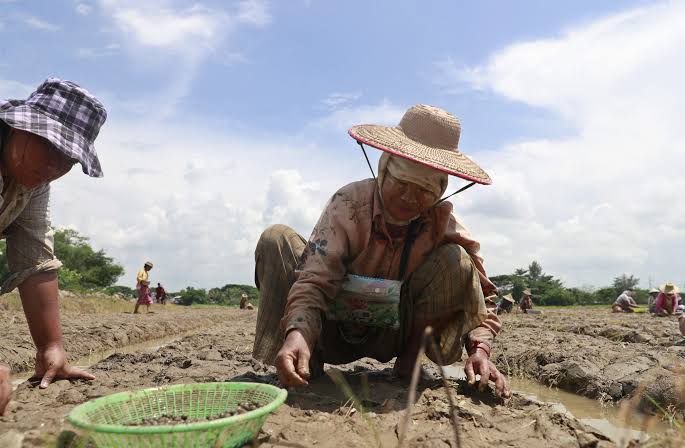
Kharif crop sowing has begun on a weak note, with total area sown by June 12, 2026, down 3.9% from the same period last year. However, this is not the slowest start in recent years, as both 2022 and 2024 saw even lower early sowing figures. Farmers are reportedly delaying pre-monsoon sowing due to uncertainty, a guideline reinforced by agricultural officials.
While irrigation coverage for foodgrain cultivation has improved to 62.6% by FY24, significant disparities exist across regions and crops. High water-requirement crops like sugarcane have nearly complete irrigation coverage, while coarse cereals and pulses remain vulnerable due to limited irrigation.
Agricultural GVA and CPI Inflation Risks
QuantEco’s preliminary estimates suggest that crop Gross Value Added (GVA) could contract by around 1% in FY27 if the anticipated 10% rainfall deficit occurs. Historically, there is a strong correlation between agricultural GVA and monsoon performance, with each 1% shortfall in rainfall potentially sacrificing 40 basis points of GVA growth. Despite this, growth in agricultural allied sectors may cushion the overall impact.
The relationship between monsoon outcomes and Consumer Price Index (CPI) food inflation is relatively weak. However, a 10% rainfall deficit could increase food inflation by approximately 250-300 basis points, contributing around 100 basis points to headline CPI inflation in FY27. QuantEco forecasts FY26 CPI inflation at 5.1%, assuming global crude prices stabilize between $80-85 per barrel following the US-Iran deal.
Observer Voice is the one stop site for National, International news, Sports, Editor’s Choice, Art/culture contents, Quotes and much more. We also cover historical contents. Historical contents includes World History, Indian History, and what happened today. The website also covers Entertainment across the India and World.

