

Cystic Fibrosis: How a Single Gene Mutation Affects the Lungs, Gut, and More

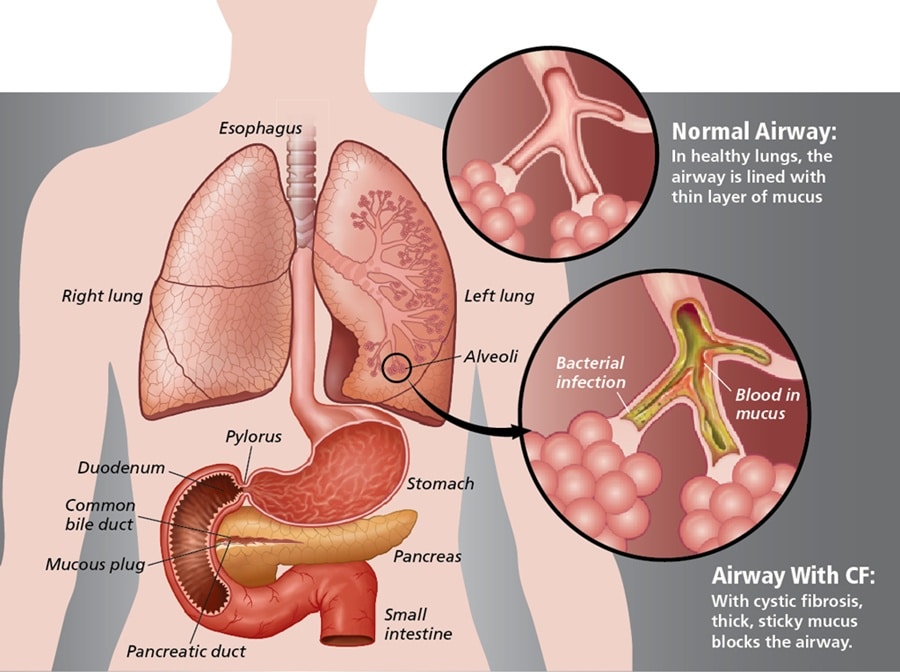
Cystic fibrosis is a serious inherited genetic disorder caused by mutations in the cystic fibrosis transmembrane conductance regulator gene, abbreviated CFTR. This single gene mutation produces defective CFTR protein, which normally regulates salt and water movement across cell membranes, keeping mucus thin and slippery. Without functional CFTR protein, mucus becomes abnormally thick and sticky, accumulating in airways, pancreas, liver, intestines, and reproductive systems. The thickened mucus clogs lungs causing progressive breathing difficulties, chronic infections, and permanent scarring called bronchiectasis. Pancreatic damage impairs digestion and nutrient absorption. Liver complications develop in some individuals. Despite being a single gene disorder, cystic fibrosis affects multiple organ systems creating complex medical needs requiring multidisciplinary care. The condition affects approximately one in every 2,500 to 3,500 newborns of European descent, though rates vary by ancestry with lower prevalence in African and Asian populations. Cystic fibrosis is the most common life-threatening inherited disorder in these populations. Survival has improved dramatically over recent decades, with median lifespan now exceeding 50 years due to intensive treatments including airway clearance, antibiotics, pancreatic enzymes, and newer targeted therapies. However, the disease remains serious, requiring daily time-consuming treatments and frequent hospitalizations. Understanding cystic fibrosis genetics, pathophysiology, and modern management options helps families navigate this challenging condition while enabling individuals to live longer, healthier lives than previous generations.
The CFTR Gene and Protein Function
The CFTR gene located on chromosome 7 encodes a protein responsible for transporting chloride ions across cell membranes, particularly in epithelial cells lining airways, sweat glands, pancreas, intestines, and reproductive organs. Normal CFTR protein forms a channel allowing chloride ions and water to flow through cell membranes, maintaining appropriate fluid balance and mucus consistency. The protein’s function depends on proper three-dimensional folding, positioning in the cell membrane, and activation by phosphorylation and other cellular signals. Over 2,000 different CFTR mutations have been identified, ranging from severe to mild effects on protein function. The most common mutation, F508del, accounts for approximately 70 percent of cases in North American Caucasian populations. This deletion removes three nucleotides coding for phenylalanine at position 508, causing the protein to misfold. Misfolded CFTR cannot reach the cell surface, remaining trapped inside cells where it cannot function. Other common mutations include G551D affecting protein activation and A455E affecting chloride channel function. The severity of individual mutations determines disease phenotype. Class I mutations produce no CFTR protein. Class II mutations like F508del produce misfolded protein unable to reach the cell surface. Class III mutations produce nonfunctional protein at the membrane. Class IV and V mutations produce partially functional protein with reduced activity.
When functional CFTR protein is absent or severely reduced, chloride ions cannot exit cells properly, and water follows osmotically remaining inside cells. This abnormal ion and water distribution causes mucus to become concentrated, thick, and sticky. Normally thin mucus flows easily through airways allowing mucociliary clearance where millions of microscopic hairs called cilia beat coordinated rhythms propelling mucus upward toward the mouth. Thick, sticky cystic fibrosis mucus cannot flow effectively, accumulating in airways and providing ideal breeding ground for bacterial infections. Chronic infections trigger intense inflammatory responses where white blood cells release enzymes and reactive molecules damaging lung tissue. Repeated infection-inflammation cycles gradually destroy airways, causing bronchiectasis where airways become permanently dilated and scarred. Pancreatic damage occurs because pancreatic ducts become blocked with thick mucus, preventing digestive enzymes from reaching the intestines where they normally break down food. Trapped enzymes within the pancreas activate prematurely, literally digesting the pancreas itself in a process called autodigestion. Progressive pancreatic destruction impairs both digestive enzyme and insulin production. Approximately 85 percent of cystic fibrosis patients develop pancreatic insufficiency requiring supplemental digestive enzyme replacement. Approximately 30 to 40 percent develop cystic fibrosis-related diabetes from insulin deficiency.
Genetic Inheritance and Risk
Cystic fibrosis follows autosomal recessive inheritance, meaning affected individuals inherit two defective CFTR gene copies, one from each parent. Parents are typically carriers with one normal and one mutated copy, remaining unaffected since one functional gene copy produces sufficient protein for normal function. When both parents are carriers, each child faces a 25 percent chance of inheriting two mutant copies developing cystic fibrosis, 50 percent chance of being a carrier like parents, and 25 percent chance of inheriting two normal copies. Cystic fibrosis does not skip generations since carriers have no symptoms and may be unaware of carrier status. Some couples discover they are both carriers only after a child develops cystic fibrosis. Unrelated individuals carrying the same rare mutations can have cystic fibrosis children if both are carriers, though this remains uncommon except in isolated communities where mutation frequencies run higher. Carrier screening in populations with high cystic fibrosis prevalence identifies couples at risk before conception, enabling reproductive decision-making. Genetic counseling informs prospective parents about risks, inheritance patterns, and available options including prenatal diagnosis through amniocentesis or chorionic villus sampling, preimplantation genetic testing during in vitro fertilization enabling selection of unaffected embryos, or accepting the 25 percent risk of having affected children.
New mutations occur occasionally when one parent is a carrier or affected and the other is homozygous normal, a combination producing all affected children if parent is homozygous for recessive disease or a mixture of carriers and affected if parent is a carrier. Prenatal diagnosis can determine fetal CFTR genotype allowing informed decision-making regarding pregnancy continuation. Newborn screening programs now universally test for cystic fibrosis using immunoreactive trypsinogen measurement and CFTR genetic testing on blood spots obtained through routine newborn screening. This enables diagnosis in the first weeks of life before symptoms develop, enabling early aggressive treatment improving long-term outcomes. Approximately 95 percent of cystic fibrosis patients in developed countries are now diagnosed through newborn screening compared to historical presentations with failure to thrive and lung disease in infancy. The dramatic improvement in survival rates strongly correlates with earlier diagnosis and treatment initiation through screening programs. Individuals with cystic fibrosis should pursue genetic testing identifying their specific mutations, enabling genetic counseling regarding inheritance, carrier identification in relatives, reproductive planning, and eligibility for emerging targeted therapies. Understanding one’s specific mutations helps predict disease severity since certain mutations cause milder phenotypes including pancreatic sufficiency and minimal lung disease, while others produce severe early-onset progressive disease.
Pathophysiology and Organ Involvement
The lungs represent the most severely affected organ system in cystic fibrosis, where thickened mucus accumulation and chronic infections drive progressive damage. Ciliary dysfunction from mucus plugging reduces mucociliary clearance, allowing bacteria to establish persistent infections. Pseudomonas aeruginosa, Burkholderia cepacia complex, and Staphylococcus aureus commonly colonize airways. Chronic infections trigger intense inflammatory responses with excessive production of inflammatory mediators like TNF-alpha and IL-8 recruiting white blood cells that release destructive enzymes including proteases. These enzymes digest structural proteins in lung tissue, causing progressive airway destruction and parenchymal damage. Bronchiectasis develops with dilated airways showing loss of normal tapered architecture. Airway wall thickening occurs from chronic inflammation and remodeling. Small airways become plugged with inflammatory exudate and bacteria. Recurrent and chronic bronchitis cause cough, sputum production, and hemoptysis, coughing up blood. Bronchospasm causes wheezing and airflow obstruction. Progressive lung disease leads to respiratory failure, cor pulmonale from right heart strain, and death in severe cases without lung transplantation.
Pancreatic involvement results from duct obstruction preventing digestive enzyme and bicarbonate secretion. Pancreatic enzymes cannot reach the small intestine, impairing fat, protein, and carbohydrate digestion. Malabsorption causes steatorrhea, fatty stools, and deficiency of fat-soluble vitamins A, D, E, and K. Vitamin E deficiency impairs neurological function. Vitamin K deficiency causes bleeding disorders. Vitamin A deficiency affects vision. Vitamin D deficiency worsens bone disease. Progressive pancreatic damage destroys insulin-secreting beta cells. Cystic fibrosis-related diabetes initially develops when insulin secretion becomes insufficient to control blood glucose during illness or stress, progressing to permanent diabetes requiring insulin therapy. Pancreatic inflammation causes abdominal pain. Pancreatic cancer risk increases with chronic inflammation. Approximately 85 percent of cystic fibrosis patients require pancreatic enzyme supplementation. Liver involvement occurs when thickened bile becomes stagnant in small bile ducts, causing focal cirrhosis in 5 to 10 percent of patients. Severe liver disease with portal hypertension and varices develops in about 5 percent, potentially requiring liver transplantation. Gastrointestinal complications include meconium ileus in newborns where thick meconium plugs bowels causing obstruction, distal intestinal obstruction syndrome in older patients, and increased constipation risk.
Reproductive issues affect both males and females. Approximately 95 to 98 percent of males with cystic fibrosis are infertile due to absent or obstructed vas deferens, though testicular function producing sperm remains normal. Sperm collection through testicular biopsy or electroejaculation enables biological fatherhood using assisted reproduction. Females develop reduced fertility from abnormal cervical mucus and malnutrition effects on reproductive function, though many women with cystic fibrosis conceive successfully and carry pregnancies. Cystic fibrosis in pregnancy poses increased risks including respiratory decompensation from increased physiologic demands, gestational diabetes from pancreatic stress, and prematurity risks. Careful multidisciplinary obstetric and pulmonary management enables successful pregnancies in women with adequate lung function. Bone disease develops from vitamin D deficiency, reduced weight-bearing activity from lung disease, corticosteroid use, and chronic inflammation. Approximately 40 to 50 percent develop osteoporosis by adulthood. Bone fractures increase, requiring vigilant calcium, vitamin D supplementation, and exercise. Sinusitis and nasal polyps develop from thick secretions obstructing sinus ostia. Approximately 25 percent develop nasal polyps. Chronic sinusitis causes facial pain, headaches, and post-nasal drip worsening lung disease. Some polyps require surgical removal. Hearing loss occasionally develops from aminoglycoside antibiotic use. Sweat gland dysfunction in cystic fibrosis produces abnormally salty sweat, causing salt depletion during hot weather or exercise.
Clinical Presentation and Diagnosis
Symptoms of cystic fibrosis become apparent in infancy or early childhood though some mild cases escape detection until adolescence or adulthood. Newborn screening through immunoreactive trypsinogen and CFTR genetic mutation testing now identifies most cases in early infancy before symptoms develop. The most obvious initial symptom involves persistent cough, initially dry then progressing to productive cough with sputum. Recurrent respiratory infections develop as bacterial colonization establishes. Wheezing and respiratory distress may occur. Failure to thrive manifests as poor weight gain and growth despite adequate nutrition, resulting from malabsorption due to pancreatic insufficiency. Fatty, bulky, foul-smelling stools indicate steatorrhea from undigested fat. Meconium ileus causes bowel obstruction in newborns. Abdominal distension, pain, and constipation develop. Salt depletion can occur in hot climates without adequate salt replacement. Older children and adolescents present with progressive cough, hemoptysis, sinus disease, pancreatic disease manifestations, and diabetes symptoms. Some individuals remain asymptomatic until adulthood when discovered incidentally during screening or workup for other conditions.
Diagnosis requires demonstration of CFTR dysfunction combined with clinical features. The sweat chloride test remains the gold standard, measuring chloride concentration in sweat collected through pilocarpine stimulation. Chloride greater than 60 millimoles per liter confirms cystic fibrosis diagnosis. Genetic testing identifies specific CFTR mutations, with identification of two disease-causing mutations confirming diagnosis. However, even after identifying two mutations, CFTR function can be measured directly. Patch clamp electrophysiology measures ion channel activity in tissue samples. Intestinal organoid models derived from rectal biopsies assess CFTR function. Nasal potential difference measurement determines whether epithelial cells show abnormal ion transport characteristic of cystic fibrosis. These functional tests prove particularly useful for diagnosing individuals with atypical presentations or rare mutations. Newborn screening identifies cystic fibrosis in the first weeks of life before clinical symptoms manifest. The transition from clinician-diagnosed disease to screening-identified asymptomatic infants has revolutionized cystic fibrosis management, enabling early aggressive treatment preventing or delaying serious complications. Prenatal diagnosis through genetic testing identifies affected fetuses enabling informed reproductive decision-making.
Multidisciplinary Treatment and Management
Cystic fibrosis management requires intensive multidisciplinary care addressing lung, pancreatic, nutritional, and other organ system needs. Airway clearance through chest physiotherapy, postural drainage, and mechanical vibration devices mobilizes and helps expectorate thick secretions daily. Patients typically spend 30 minutes to several hours daily on airway clearance maneuvers. High-frequency chest wall oscillation vests shake the chest wall vibrating secretions loose. Oscillating positive expiratory pressure devices provide resistance during expiration, keeping airways open and dislodging secretions. Inhaled mucolytics including dornase alpha, which breaks down DNA in thick secretions, dramatically improve lung function. Hypertonic saline inhalation draws water into airways thinning secretions. Bronchodilators open airways improving airflow. These aerosolized medications require 45 minutes to over an hour daily for optimal administration.
Antibiotics form a crucial cornerstone, addressing chronic bacterial colonization and infections. Chronic inhaled tobramycin suppresses Pseudomonas aeruginosa growth. Some patients receive nebulized colistin or other antibiotics. Oral and intravenous antibiotics treat acute exacerbations. Azithromycin, a macrolide antibiotic with immune-modulating properties, reduces inflammation and improves lung function even without active infection. Anti-inflammatory medications including corticosteroids reduce lung inflammation, though long-term systemic corticosteroids carry side effects. Ibuprofen, a nonsteroidal anti-inflammatory, shows modest benefit in some studies. Pancreatic enzyme replacement therapy with microbead formulations allows food to be digested normally when pancreatic enzymes cannot reach the intestine. Fat-soluble vitamin supplementation prevents deficiencies from malabsorption. Insulin therapy manages cystic fibrosis-related diabetes. Nutritional support including high-calorie diet and sometimes overnight nasogastric feeding or gastrostomy feeding maintains adequate growth and energy for fighting infections.
CFTR modulator medications represent breakthrough targeted therapies directly correcting CFTR dysfunction. Ivacaftor activates mutant CFTR channels like G551D allowing increased chloride transport. Lumacaftor helps F508del CFTR protein fold properly and reach the cell surface. Elexacaftor further improves F508del protein processing. Combination therapy with elexacaftor, tezacaftor, and ivacaftor provides dramatic benefits for those carrying F508del mutations, improving lung function, reducing hospitalizations, and improving quality of life. More CFTR modifiers currently in development target additional mutation classes. These medications represent the first disease-modifying therapies directly addressing underlying cystic fibrosis pathology rather than just treating symptoms. Lung transplantation becomes necessary when lung function declines to critical levels despite optimal medical therapy. Double lung transplants are typical, with approximately 500 to 600 performed annually in the United States in cystic fibrosis patients. Median survival after transplantation approximates seven to nine years, longer than expected natural survival in severe disease, though transplantation carries risks including rejection requiring lifetime immunosuppression and fungal infections.
Prognosis and Quality of Life
Median survival with cystic fibrosis has improved dramatically, now exceeding 50 years compared to median survival of just a few years in the 1970s. The oldest cystic fibrosis patient exceeded 90 years of age. However, outcomes vary tremendously based on mutation severity, lung function at diagnosis, access to specialized centers, treatment adherence, and socioeconomic factors. Patients with CFTR modulating therapy show superior outcomes. Those with pancreatic-sufficient disease and minimal lung involvement may have near-normal lifespan. Those with severe lung disease and pancreatic insufficiency face higher mortality risks despite improved treatments. Life expectancy correlates most strongly with lung function, measured by forced expiratory volume in one second. Patients maintaining FEV1 above 80 percent predicted have excellent prognosis. Those with FEV1 below 30 percent face significantly shortened lifespan without lung transplantation. Disease progression remains variable, with some patients experiencing rapid decline while others maintain stable function for years.
Quality of life with cystic fibrosis requires significant time commitment to medical treatments. Airway clearance, medication administration, nutritional support, and physician visits consume one to three hours daily for many patients. Frequent hospitalizations for respiratory exacerbations disrupt work and school. Physical limitations from respiratory disease restrict activities. Dietary restrictions due to pancreatic disease limit food choices. Chronic pain from sinus and abdominal conditions affects wellbeing. Despite these challenges, many individuals with cystic fibrosis complete high school, attend college, pursue careers, marry, and build families. Psychological support helps patients adjust to chronic disease burden and manage depression and anxiety which occur frequently. Multidisciplinary cystic fibrosis centers provide comprehensive coordinated care with pulmonologists, gastroenterologists, nutritionists, respiratory therapists, social workers, and psychologists. These specialized centers demonstrate superior outcomes compared to care in general medical settings. Organizations like the Cystic Fibrosis Foundation provide patient and family support, research funding, and advocacy. Online communities connect patients and families sharing experiences and practical advice. Summer camps for children with cystic fibrosis provide peer support and normalizing experiences. Research continues advancing understanding of CFTR function, developing additional modulator medications for remaining mutation classes, exploring gene therapy approaches, and investigating anti-inflammatory and anti-infective strategies. The dramatic improvements in cystic fibrosis outcomes over recent decades demonstrate how targeted understanding of underlying disease mechanisms enables development of transformative treatments. Organizations like ObserverVoice.com help spread awareness that cystic fibrosis, while serious, is increasingly manageable through modern treatments enabling people to live longer healthier lives than previous generations.
Frequently Asked Questions
Can cystic fibrosis be cured?
Currently, no cure exists for cystic fibrosis. Treatment focuses on managing symptoms and slowing disease progression. However, CFTR modulator medications directly correct underlying CFTR dysfunction, producing dramatic improvements in lung function and quality of life. Gene therapy approaches potentially curing cystic fibrosis by replacing defective genes remain experimental though show promise. Additionally, new CFTR modulators continue entering development for remaining mutation classes.
Can people with cystic fibrosis have children?
Most males with cystic fibrosis are infertile due to absent or blocked vas deferens, though testicular sperm retrieval combined with in vitro fertilization enables biological fatherhood. Many females with cystic fibrosis can conceive naturally though pregnancy risks increase with advanced lung disease. Genetic counseling informs reproductive decisions. All children of an affected individual will be carriers if the other parent is unaffected.
How often do people with cystic fibrosis need treatment?
Daily treatment typically requires 1 to 3 hours including airway clearance, medication administration, nutritional support, and enzyme replacement. Frequency increases during respiratory exacerbations requiring more intensive therapy. Regular physician visits, pulmonary function testing, imaging, and hospitalizations for acute complications add additional medical time requirements. Treatment intensity varies by individual disease severity and medication regimens.
What causes death in cystic fibrosis?
Respiratory failure from progressive lung disease causes the majority of cystic fibrosis deaths. Chronic infections and inflammation gradually destroy lung tissue beyond functional compensation. Acute respiratory exacerbations can rapidly worsen lung function. Hemoptysis from bronchiectasis can occasionally be catastrophic. Complications including pneumothorax, sepsis, and liver failure contribute to mortality. Lung transplantation becomes necessary when lung function declines to terminal levels.
Are there any foods cystic fibrosis patients should avoid?
Cystic fibrosis patients generally require high-calorie high-fat diet to maintain adequate nutrition despite malabsorption. Pancreatic enzyme replacement allows normal food digestion. Salt supplementation becomes necessary in hot climates. There are no specific foods to universally avoid, though individual tolerance varies. High-fiber foods sometimes cause intestinal obstruction in distal intestinal obstruction syndrome. Multidisciplinary dietitians provide individualized nutritional guidance.
Disclaimer:
This article adapts publicly available information from medical literature and genetic research. This content is for informational and educational purposes only and does not constitute medical advice. ObserverVoice.com is a news and information platform — not a healthcare provider. For diagnosis, treatment, or medical advice regarding cystic fibrosis, consult qualified healthcare professionals.
References
- Cystic Fibrosis Foundation: https://www.cff.org
- National Institute of Diabetes and Digestive and Kidney Diseases – Cystic Fibrosis: https://www.niddk.nih.gov/health-information/digestive-diseases/cystic-fibrosis
- Mayo Clinic – Cystic Fibrosis: https://www.mayoclinic.org/diseases-conditions/cystic-fibrosis/symptoms-causes/syc-20353700
- National Organization for Rare Disorders – Cystic Fibrosis: https://rarediseases.org/rare-diseases/cystic-fibrosis/
- Johns Hopkins Medicine – Cystic Fibrosis: https://www.hopkinsmedicine.org/health/conditions-and-diseases/cystic-fibrosis
- Cleveland Clinic – Cystic Fibrosis: https://my.clevelandclinic.org/health/diseases/4565-cystic-fibrosis
Observer Voice is the one stop site for National, International news, Sports, Editor’s Choice, Art/culture contents, Quotes and much more. We also cover historical contents. Historical contents includes World History, Indian History, and what happened today. The website also covers Entertainment across the India and World.

