

China Revamps Xinjiang, Sparking a Surge in Tourism to the Region

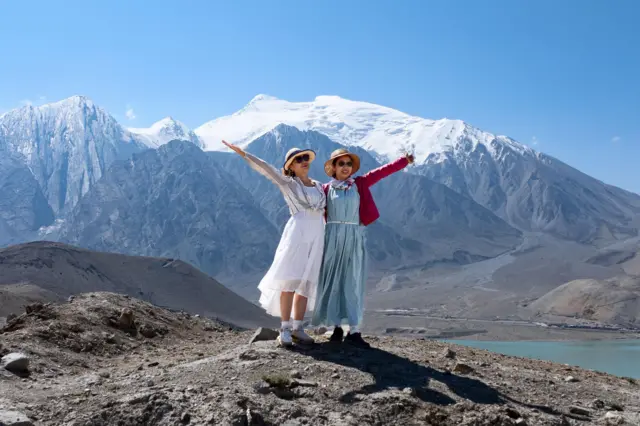
In 2024, Xinjiang has transformed into a bustling tourist hotspot, attracting approximately 300 million visitors, a remarkable increase from 2018. This surge comes despite the region’s troubled history, marked by allegations of human rights abuses and strict government control. Travelers like Anna, who first visited in 2015, have noted the dramatic changes, with the region’s natural beauty now accompanied by a significant influx of tourists. As Xinjiang continues to develop its tourism infrastructure, it faces a complex narrative shaped by both its scenic landscapes and ongoing human rights concerns.
Tourism Boom Amid Controversy
Xinjiang, once viewed as one of China’s most dangerous regions, has seen a remarkable turnaround in its tourism sector. Years of unrest and allegations of severe human rights violations, including the detention of over a million Uyghur Muslims, had previously deterred many domestic tourists. However, recent investments by the Chinese government have aimed to reshape Xinjiang’s image, promoting it as a vibrant travel destination. With billions of dollars poured into infrastructure and marketing, the region has become increasingly accessible to both domestic and international tourists. In 2024 alone, tourism revenue surged to 360 billion yuan (approximately $51 billion), reflecting a 40% increase since 2018. The Chinese government has ambitious plans to attract over 400 million visitors annually by 2030, further solidifying Xinjiang’s status as a key player in China’s tourism landscape.
Experiences of Recent Visitors
Recent travelers to Xinjiang have shared mixed experiences. For instance, Singaporean Sun Shengyao, who visited in May 2024, described the breathtaking landscapes as reminiscent of New Zealand and Switzerland combined. However, he noted that many of his friends were initially hesitant to visit due to safety concerns. During their journey, they encountered a heavy police presence, which included checkpoints and surveillance cameras. Despite this, Sun found the local Uyghurs they interacted with to be welcoming. In contrast, other visitors, like Thenmoli Silvadorie from Singapore, expressed disappointment in their attempts to engage with Uyghur culture, citing restrictions on visiting mosques and limited interactions with locals. These varied experiences highlight the complexities of tourism in a region grappling with its identity amidst ongoing political tensions.
Government Promotion and Cultural Representation
The Chinese government has actively promoted Xinjiang as an “exotic” destination, emphasizing its unique cultural and natural attractions. Travel agencies market the region as a place where visitors can experience a “magical fusion of nature and culture.” Tours often include visits to picturesque locations like Kanas National Park and the historic city of Kashgar, known for its rich Silk Road heritage. However, critics argue that this portrayal is a sanitized version of reality, designed to distract from serious human rights issues. Uyghur-American activist Irade Kashgary warns that tourists may encounter a curated experience that overlooks the region’s darker aspects. She urges visitors to recognize the complexities of Xinjiang and the ongoing struggles faced by its people, emphasizing the need for awareness beyond the picturesque landscapes.
The Future of Xinjiang Tourism
As Xinjiang continues to attract tourists, the region’s future remains uncertain. While the influx of visitors brings economic benefits, it also raises questions about the authenticity of the experiences being offered. The Chinese government’s efforts to reshape Xinjiang’s image may obscure the ongoing human rights violations reported by international organizations. Despite the allure of its natural beauty and cultural richness, the region’s complex history cannot be ignored. As more travelers venture into Xinjiang, the challenge will be balancing the promotion of tourism with the need for transparency regarding the realities faced by its inhabitants. The evolving narrative of Xinjiang serves as a reminder of the intricate relationship between tourism, culture, and human rights in a rapidly changing world.
Observer Voice is the one stop site for National, International news, Sports, Editor’s Choice, Art/culture contents, Quotes and much more. We also cover historical contents. Historical contents includes World History, Indian History, and what happened today. The website also covers Entertainment across the India and World.
Follow Us on Twitter, Instagram, Facebook, & LinkedIn

