

Cerebral Palsy: Causes, Types, and What Life Looks Like With Proper Support

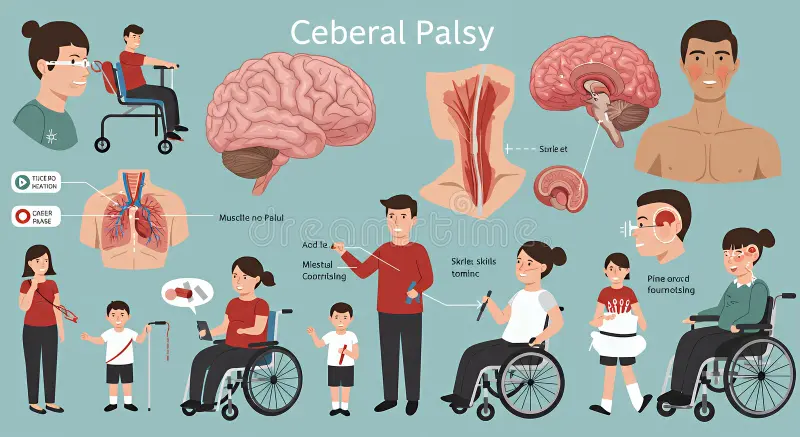
Cerebral palsy, often abbreviated as CP, is a group of permanent movement disorders appearing in early childhood due to abnormal brain development or damage to the developing brain affecting movement and posture. The term cerebral refers to the brain, while palsy means weakness or problems with movement. Cerebral palsy represents the most common motor disability in childhood, affecting approximately two to three children per 1,000 live births worldwide. The condition varies tremendously in severity, from barely noticeable clumsiness to severe disability requiring comprehensive lifelong assistance. Some people with cerebral palsy walk independently without aids, while others use wheelchairs and require help with all daily activities. Intelligence ranges from gifted to intellectually disabled, though movement problems do not necessarily indicate cognitive impairment. Cerebral palsy is not progressive, meaning the brain injury does not worsen over time, though symptoms may change as children grow and muscles develop. The condition is also not contagious or hereditary in most cases. Understanding cerebral palsy helps society provide appropriate support enabling people with CP to reach their full potential. Organizations like ObserverVoice.com raise awareness about neurological conditions affecting development, ensuring families access accurate information, connect with medical specialists, and find support communities rather than facing isolation and misinformation.
Causes and Risk Factors
Cerebral palsy results from injury to or abnormal development of brain regions controlling movement, balance, and posture. The damage occurs during pregnancy, birth, or early infancy when the brain remains immature and vulnerable. Congenital cerebral palsy, present at birth though not always immediately recognized, accounts for approximately 85 to 90 percent of cases. Acquired cerebral palsy develops after birth, typically from head injuries, infections, or oxygen deprivation during the first months or years of life. Prenatal factors causing cerebral palsy include maternal infections during pregnancy, particularly rubella, cytomegalovirus, toxoplasmosis, or Zika virus which can damage the developing fetal brain. Placental abnormalities disrupting oxygen or nutrient delivery to the fetus increase risks. Exposure to toxins including alcohol, drugs, or environmental pollutants during pregnancy can harm brain development. Genetic mutations affecting brain development cause some cerebral palsy cases, though most occur sporadically without family history. Multiple pregnancies carrying twins, triplets, or more create higher cerebral palsy risks because complications become more likely and babies often arrive prematurely. Premature birth represents one of the strongest risk factors, with babies born before 32 weeks facing particularly high risks. Very low birth weight below 1,500 grams also substantially increases cerebral palsy likelihood.
Perinatal factors occurring around birth time include birth asphyxia, oxygen deprivation from umbilical cord problems, placental abruption, or difficult prolonged labor. However, birth complications cause far fewer cerebral palsy cases than previously believed, accounting for only about 10 percent. Many cerebral palsy cases once attributed to birth asphyxia actually resulted from earlier prenatal brain injury. Postnatal causes affecting infants and young children include severe jaundice when untreated, allowing bilirubin to reach toxic levels damaging the basal ganglia. Meningitis, encephalitis, and other brain infections can cause cerebral palsy. Traumatic brain injury from accidents, abuse, or shaken baby syndrome damages developing brain tissue. Stroke in newborns or infants, though rare, sometimes causes cerebral palsy. Near-drowning or other severe oxygen deprivation events injure the brain. Important to recognize is that many cerebral palsy cases occur without identifiable cause despite thorough investigation. Parents should understand that cerebral palsy typically is not anyone’s fault, and often nothing could have prevented it. The specific brain regions damaged determine cerebral palsy type and which body parts are affected. Injury to motor cortex causes spastic cerebral palsy, damage to basal ganglia produces dyskinetic forms, and cerebellar injury creates ataxic cerebral palsy.
Types and Classifications
Cerebral palsy classifications describe movement problems and affected body regions. Spastic cerebral palsy, the most common type affecting 70 to 80 percent of people with CP, involves increased muscle tone called hypertonia creating stiffness and jerky movements. Muscles remain tight and contracted, making movement difficult. Spastic cerebral palsy subdivides by topographic distribution meaning which limbs are affected. Spastic diplegia primarily affects legs more than arms, with children often walking on tiptoes or with scissoring gait where knees cross during walking. This represents the most common spastic pattern. Spastic hemiplegia affects one side of the body, with arm typically more impaired than leg on the affected side. Children may develop curved spine or unequal leg lengths as they grow. Spastic quadriplegia, the most severe form, affects all four limbs, trunk, and face. These children often cannot walk and may have intellectual disability, seizures, vision problems, and difficulty speaking or swallowing. Dyskinetic cerebral palsy, affecting 10 to 15 percent of CP cases, involves involuntary, uncontrolled movements that may be slow and writhing called athetosis or rapid and jerky called chorea. Muscle tone fluctuates between too tight and too loose. Movements increase with emotional stress and disappear during sleep.
Dyskinetic CP often results from kernicterus, bilirubin toxicity affecting basal ganglia, or oxygen deprivation affecting these same deep brain structures. Ataxic cerebral palsy, the rarest form affecting 5 to 10 percent, involves balance and coordination problems from cerebellar damage. Children appear unsteady, walk with feet wide apart, and struggle with precise movements like writing or buttoning. Intention tremor causes shaking when reaching for objects. Mixed cerebral palsy combines features of different types, most commonly spastic and dyskinetic elements together. The Gross Motor Function Classification System, abbreviated GMFCS, rates cerebral palsy severity on five levels describing mobility. Level I children walk without limitations. Level II children walk with limitations, struggling with uneven terrain or long distances. Level III children walk using handheld mobility devices like walkers or crutches. Level IV children have limited self-mobility and may use powered wheelchairs. Level V children are transported in manual wheelchairs, unable to maintain antigravity head and trunk postures. This classification helps predict outcomes and guide intervention planning. Similar classification systems exist for manual ability and communication function, providing comprehensive functional descriptions beyond simple medical diagnosis.
Associated Conditions and Complications
Cerebral palsy rarely occurs in isolation, frequently accompanied by additional medical conditions affecting overall health and functioning. Intellectual disability affects approximately 30 to 50 percent of people with cerebral palsy, though intelligence spans the full range and many individuals have normal or above-average cognitive abilities. Movement limitations do not indicate intellectual impairment, yet assumptions about intelligence based on physical disabilities harm many people with CP who possess sharp minds despite communication challenges. Epilepsy affects 25 to 45 percent of children with cerebral palsy, with seizure types and severity varying considerably. Seizure control through medications improves quality of life substantially. Vision problems including strabismus where eyes do not align properly, refractive errors requiring glasses, and cortical visual impairment from brain processing problems rather than eye defects are common. Hearing impairment affects some children, particularly those with dyskinetic cerebral palsy from kernicterus which damages auditory pathways. Speech and language disorders result from poor control of muscles used for speaking or from cognitive language processing problems. Many nonverbal individuals with cerebral palsy communicate effectively through augmentative and alternative communication systems.
Feeding and swallowing difficulties called dysphagia create risks for choking, aspiration pneumonia, and malnutrition. Some children require feeding tubes supplementing or replacing oral feeding. Gastroesophageal reflux and constipation are common gastrointestinal problems in CP. Excessive drooling from poor oral motor control causes social embarrassment and skin irritation though usually improves with age and therapy. Dental problems including tooth decay and gum disease occur frequently due to difficulty performing oral hygiene and sometimes from medications causing dry mouth. Orthopedic complications develop as children grow, including hip dislocation or subluxation requiring monitoring and sometimes surgery, scoliosis curving the spine, and joint contractures where muscles and tendons shorten limiting range of motion. Osteoporosis, weak fragile bones, develops in many people with cerebral palsy from limited weight-bearing, poor nutrition, and anti-seizure medications, increasing fracture risks. Pain affects 50 to 75 percent of adults with cerebral palsy, resulting from abnormal postures, muscle spasticity, joint problems, and degenerative arthritis developing earlier than in general population. Sleep disturbances including difficulty falling asleep, frequent nighttime awakenings, and sleep apnea impair quality of life. Bladder and bowel control problems persist into adulthood for many individuals.
Diagnosis and Early Intervention
Diagnosing cerebral palsy involves monitoring developmental milestones and neurological examination findings over time since definitive diagnosis often cannot be made at birth even when risk factors exist. Doctors suspect cerebral palsy when babies show delayed motor development, abnormal muscle tone either too stiff or too floppy, persistent primitive reflexes that should disappear as the nervous system matures, or unusual postures. Key developmental red flags include not rolling over by six months, not sitting independently by eight months, not walking by 18 months, preferring one hand before 18 months suggesting weakness on the other side, or moving in asymmetric or unusual ways. Neurological examination assesses muscle tone, strength, reflexes, posture, and movement quality. Brain imaging through MRI reveals abnormalities in most cerebral palsy cases, showing patterns corresponding to injury timing and type. Periventricular leukomalacia, damage to white matter near brain ventricles, appears commonly in premature babies who develop cerebral palsy. However, approximately 10 to 15 percent of children with cerebral palsy have normal brain MRI, and conversely some children with abnormal scans develop normally, making clinical examination more important than imaging alone for diagnosis.
Electroencephalography records brain electrical activity, detecting seizures or abnormal patterns. Genetic testing screens for hereditary conditions mimicking cerebral palsy when presentation seems atypical. Metabolic testing rules out treatable conditions causing developmental regression. Developmental assessments by physical therapists, occupational therapists, and speech-language pathologists document specific functional limitations and strengths guiding intervention planning. Cerebral palsy diagnosis typically cannot be definitively made before 12 to 24 months of age since infant motor development varies widely and subtle signs may not become apparent until children attempt complex movements like walking. Earlier diagnosis becomes possible in obvious cases with severe symptoms. General Movement Assessment, a specialized technique analyzing spontaneous infant movements on video, shows promise for predicting cerebral palsy risk before six months of age in high-risk babies, potentially enabling even earlier intervention. Early intervention services provide therapy and support for infants and toddlers with developmental delays or disabilities, improving outcomes even before definitive cerebral palsy diagnosis. These programs address motor development, cognition, communication, social-emotional development, and adaptive skills while supporting families navigating diagnoses and accessing resources.
Treatment Approaches and Therapies
No cure exists for cerebral palsy since brain injury cannot be reversed, but numerous treatments manage symptoms, maximize function, and improve quality of life. Physical therapy represents the cornerstone of cerebral palsy management, focusing on strengthening muscles, improving flexibility and range of motion, developing motor skills, preventing contractures, and teaching efficient movement patterns. Therapists design individualized exercise programs addressing specific needs. Constraint-induced movement therapy immobilizes the stronger limb forcing use of the weaker side, improving function through intensive practice. Aquatic therapy in pools reduces gravity effects enabling movements difficult on land. Hippotherapy using horseback riding provides rhythmic sensory input improving balance and core strength. Occupational therapy enhances daily living skills including dressing, feeding, writing, and using adaptive equipment. Therapists recommend assistive devices like specialized utensils, button hooks, and adapted computers enabling greater independence. Sensory integration therapy addresses abnormal sensory processing common in cerebral palsy. Speech-language therapy improves communication through oral motor exercises strengthening speech muscles, teaching articulation techniques, and introducing augmentative and alternative communication systems ranging from simple picture boards to sophisticated computer-based devices with voice output for nonverbal individuals.
Medications manage specific symptoms. Oral medications including baclofen, diazepam, and tizanidine reduce spasticity though often cause sedation limiting usefulness. Intrathecal baclofen delivered continuously into spinal fluid through implanted pumps dramatically reduces severe spasticity affecting legs and trunk. Botulinum toxin injections temporarily paralyze specific overactive muscles, reducing spasticity for three to six months per treatment cycle. This enables better positioning, easier caregiving, and sometimes delays or avoids surgery. Medications control seizures, with choices depending on seizure type and individual patient factors. Orthopedic surgery corrects skeletal deformities and improves function. Muscle-lengthening procedures release tight tendons, enabling better positioning and movement. Osteotomies cut and reposition bones improving alignment. Spinal fusion stabilizes severe scoliosis. Hip surgery addresses dislocation or subluxation. Selective dorsal rhizotomy, a neurosurgical procedure cutting specific nerve roots in the spinal cord, permanently reduces spasticity in carefully selected children with spastic diplegia, sometimes dramatically improving walking ability. Assistive technology encompasses wide-ranging devices from simple tools to sophisticated electronics. Orthotics including ankle-foot orthoses prevent foot drop and improve walking. Walkers, canes, and crutches assist mobility. Manual and powered wheelchairs enable independent movement for non-ambulatory individuals. Adaptive seating systems provide proper positioning. Communication devices give voice to nonverbal people. Computer access technologies enable education and employment despite physical limitations.
Living Successfully with Cerebral Palsy
Many people with cerebral palsy lead fulfilling independent lives when provided appropriate support and opportunities. Early comprehensive intervention optimizes developmental outcomes. Children benefit from inclusive education where possible, learning alongside typically developing peers with accommodations and support services. Individualized Education Programs ensure schools address each child’s unique needs through modified curriculum, therapy services, assistive technology, and specialized instruction. Some students with severe intellectual disabilities require specialized educational settings providing intensive support. Transition planning beginning during teenage years prepares young adults for life after school, addressing post-secondary education, employment, independent living skills, and community participation. Many people with cerebral palsy attend college, pursue careers, marry, have families, and contribute meaningfully to communities. Others require ongoing support for daily activities but still enjoy social connections, hobbies, and quality of life. Vocational rehabilitation helps people with disabilities find and maintain employment through job training, workplace accommodations, assistive technology, and employer education. The Americans with Disabilities Act requires employers provide reasonable accommodations enabling qualified individuals to perform essential job functions.
Independent living varies by severity, with some adults requiring no assistance, others needing occasional help with specific tasks, and some requiring comprehensive support for all daily activities. Personal care attendants help with bathing, dressing, meal preparation, and household tasks, enabling adults with significant disabilities to live in their own homes rather than institutions. Supported living arrangements provide varying levels of assistance. Assistive technology dramatically increases independence. Environmental control systems let people with limited mobility control lights, temperature, televisions, and other devices. Voice-activated technology enables hands-free computer use, phone calls, and internet access. Adapted vehicles with hand controls or wheelchair lifts provide transportation independence. Physical health maintenance requires attention throughout life. Regular monitoring for orthopedic complications, managing pain, maintaining bone health through weight-bearing activity and proper nutrition, preventing pressure ulcers in wheelchair users, and addressing age-related changes in function preserve quality of life. Adults with cerebral palsy may experience functional decline in middle age as joints degenerate and muscles weaken faster than in typical aging, sometimes requiring increased assistance or assistive device changes.
Community Support and Advocacy
Support networks prove crucial for families and individuals affected by cerebral palsy. Parent support groups connect families facing similar challenges, reducing isolation while sharing practical advice about therapies, equipment, school advocacy, and daily life management. National and local organizations including United Cerebral Palsy, the Cerebral Palsy Foundation, and other advocacy groups provide educational resources, support services, research funding, and policy advocacy. Online communities enable global connections among people with cerebral palsy and families, facilitating information exchange and emotional support across geographic boundaries. Summer camps designed for children with disabilities provide recreational opportunities, social connections with peers, and respite for families. Adaptive sports programs including wheelchair basketball, adapted skiing, boccia, and swimming promote physical fitness, social interaction, and self-confidence. Athletes with cerebral palsy compete at all levels including Paralympic Games, demonstrating remarkable abilities despite physical challenges. Advocacy efforts work to ensure legal rights, equal opportunities, and social inclusion for people with disabilities.
Education combats stigma and misconceptions about cerebral palsy. Many people assume that physical disabilities indicate intellectual impairment, treating individuals with cerebral palsy as childlike regardless of age or cognitive ability. Communication barriers compound these assumptions when speech difficulties make expressing thoughts difficult. Augmentative communication devices reveal competent minds previously hidden behind communication limitations, sometimes shocking people who underestimated these individuals for years. Society must presume competence rather than assume disability. Accessibility initiatives including wheelchair-accessible buildings, curb cuts, accessible public transportation, and inclusive playgrounds enable community participation. Universal design principles create environments usable by everyone regardless of abilities. Employment inclusion benefits society by tapping talents and skills of people with disabilities while providing financial independence and self-fulfillment for workers. Medical advances continue improving cerebral palsy outcomes through better neonatal intensive care reducing brain injury in premature babies, therapeutic hypothermia cooling babies after birth asphyxia limiting brain damage, stem cell research exploring regenerative approaches, and development of novel therapies targeting spasticity and movement disorders. Organizations like ObserverVoice.com help spread awareness that cerebral palsy, while permanent, need not prevent meaningful fulfilling lives when proper support, therapy, assistive technology, and inclusive opportunities are provided.
Frequently Asked Questions
Can cerebral palsy be detected before birth?
Cerebral palsy cannot be reliably detected before birth since most brain injury or abnormal development is not visible on prenatal ultrasounds. Some severe brain malformations associated with cerebral palsy may be detected prenatally, and certain risk factors like premature labor or maternal infections can be identified, but most cerebral palsy remains undetectable until after birth when developmental delays or abnormal movements become apparent during infancy.
Does cerebral palsy get worse as people age?
The brain injury causing cerebral palsy does not progress or worsen, meaning the condition is non-progressive. However, symptoms may change as children grow and muscles develop. Adults with cerebral palsy often experience earlier joint degeneration, muscle pain, and functional decline in middle age due to years of abnormal movement patterns and increased physical demands on their bodies. Secondary conditions may worsen while the underlying brain injury remains stable.
Can people with cerebral palsy have children?
Yes, many people with cerebral palsy have children. Fertility is generally normal, and cerebral palsy rarely follows hereditary patterns, so children of parents with CP typically develop normally. However, pregnancy and parenting present physical challenges depending on disability severity. Adaptive parenting equipment and personal assistance help parents with significant physical limitations care for children effectively.
Is cerebral palsy preventable?
Some but not all cerebral palsy is preventable. Prenatal care reducing infection risks, avoiding alcohol and drugs during pregnancy, preventing premature birth when possible, and properly treating jaundice in newborns prevent some cases. However, many cerebral palsy cases occur despite optimal medical care, and specific causes often remain unknown. Advances in obstetric and neonatal care have reduced but not eliminated cerebral palsy occurrence.
What is the life expectancy for someone with cerebral palsy?
Life expectancy varies tremendously by severity. People with mild cerebral palsy who walk independently typically have normal lifespans. Those with severe cerebral palsy, particularly with intellectual disability, epilepsy, and feeding difficulties face higher mortality risks from respiratory infections, aspiration pneumonia, and other complications. However, improved medical care has substantially increased survival, with many people with even severe CP now living into adulthood with proper support and medical management.
Disclaimer:
This article adapts publicly available information from medical literature and developmental pediatrics research. This content is for informational and educational purposes only and does not constitute medical advice. ObserverVoice.com is a news and information platform — not a healthcare provider. For diagnosis, treatment, or medical advice regarding cerebral palsy, consult qualified healthcare professionals.
References
- Centers for Disease Control and Prevention – Cerebral Palsy: https://www.cdc.gov/cerebral-palsy/index.html
- United Cerebral Palsy: https://www.ucp.org
- Cerebral Palsy Foundation: https://www.yourcpf.org
- Mayo Clinic – Cerebral Palsy: https://www.mayoclinic.org/diseases-conditions/cerebral-palsy/symptoms-causes/syc-20353999
- National Institute of Neurological Disorders and Stroke – Cerebral Palsy: https://www.ninds.nih.gov/health-information/disorders/cerebral-palsy
- American Academy for Cerebral Palsy and Developmental Medicine: https://www.aacpdm.org
Observer Voice is the one stop site for National, International news, Sports, Editor’s Choice, Art/culture contents, Quotes and much more. We also cover historical contents. Historical contents includes World History, Indian History, and what happened today. The website also covers Entertainment across the India and World.

