

Brahmaputra ‘Rail-Road Twin Tunnel’ Receives Cabinet Approval to Enhance Connectivity in North-East

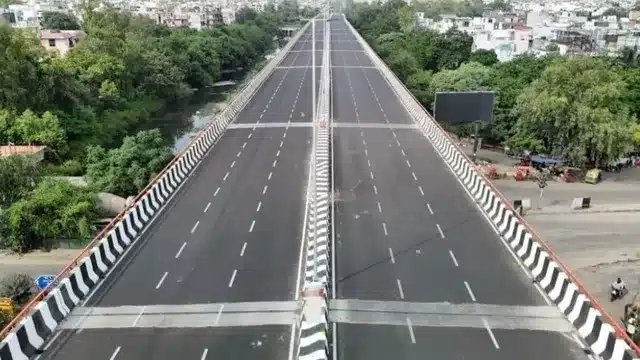
The Union Cabinet has given the green light for a significant infrastructure project that will enhance connectivity in Assam and the Northeast region of India. The initiative involves the construction of a 4-lane access-controlled greenfield corridor linking Gohpur (NH-15) to Numaligarh (NH-715), featuring a groundbreaking 15.79-km underwater tunnel beneath the Brahmaputra River. With an estimated capital cost of Rs 18,662 crore, this ambitious project aims to reduce travel time and logistics costs while improving freight movement efficiency across the region.
Project Overview and Features
The total length of the new corridor will be approximately 33.7 kilometers and will be executed using the Engineering, Procurement, and Construction (EPC) model. This project is poised to become India’s first underwater road-cum-rail tunnel and the second of its kind globally. Currently, the journey between Numaligarh and Gohpur spans about 240 kilometers and takes nearly six hours, as it passes through scenic but time-consuming routes, including Kaziranga National Park and Biswanath Town. The new corridor is expected to significantly cut down travel time, making it a vital link for both passengers and freight.
The underwater tunnel will consist of twin tubes, with one designated for rail traffic and the other for road vehicles. Additionally, the project will include a 1.26-km road cut-and-cover section and a 4-km rail cut-and-cover section. This innovative infrastructure is designed to facilitate smoother and quicker transportation across the region.
Enhancing Multimodal Connectivity
The corridor will serve as a crucial link between two major national highways—NH-15 and NH-715—and will connect with two important railway sections: the Rangia–Mukongselek railway section on the Gohpur side and the Furkating–Mariani loop line on the Numaligarh side. This integration is expected to enhance multimodal connectivity by linking 11 economic nodes, three social nodes, two tourist nodes, and eight logistics nodes.
Moreover, the project will improve access to four major railway stations, two airports, and two inland waterway terminals. This comprehensive connectivity will enable faster movement of goods and passengers, thereby bolstering economic activities in the region. The enhanced infrastructure is anticipated to attract investment and promote tourism, particularly in areas like Kaziranga National Park.
Strategic and Economic Implications
The government emphasizes that this project will play a pivotal role in enhancing strategic connectivity and fostering regional economic growth. It is expected to generate approximately 80 lakh person-days of direct and indirect employment, thereby supporting economic development in surrounding areas. The corridor will connect key economic zones, industrial hubs, and urban centers, including Numaligarh, Tezpur, Gohpur, Dibrugarh, and Itanagar.
By strengthening links between major economic centers, the project aims to facilitate trade expansion and improve the overall quality of life for residents in the Northeast. The government is optimistic that the new corridor will not only streamline transportation but also contribute to the region’s long-term economic sustainability and growth.
Observer Voice is the one stop site for National, International news, Sports, Editor’s Choice, Art/culture contents, Quotes and much more. We also cover historical contents. Historical contents includes World History, Indian History, and what happened today. The website also covers Entertainment across the India and World.

