

Ancient Cave Art Discovery May Transform Understanding of Human Creativity’s Origins

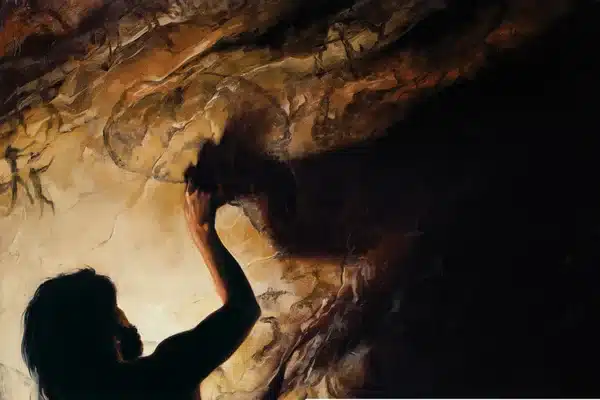
A remarkable discovery on the Indonesian island of Sulawesi has unveiled what researchers claim to be the world’s oldest known cave painting. This ancient artwork, a red outline of a hand, has been dated to at least 67,800 years ago, predating the previous record holder in Spain by over a thousand years. The findings not only challenge existing narratives about the origins of human creativity but also suggest that Homo sapiens may have reached the Australia-New Guinea landmass, known as Sahul, much earlier than previously thought.
Significance of the Discovery
The hand stencil found in a limestone cave called Liang Metanduno is a groundbreaking find that reshapes our understanding of early human artistic expression. Researchers have noted that the hand’s fingers were intentionally altered to create a claw-like motif, indicating a significant leap in symbolic thinking. This discovery adds to a growing body of evidence suggesting that the capacity for abstract thought and creativity was not confined to Ice Age Europe but was present in early humans much earlier and in different parts of the world. Professor Adam Brumm from Griffith University, who co-led the research, emphasized that this finding supports the view that creativity is an innate trait of Homo sapiens, with roots tracing back to Africa.
Challenging Eurocentric Narratives
For decades, the prevailing theory suggested that the emergence of art and abstract thinking occurred suddenly in Ice Age Europe, with subsequent diffusion to other regions. However, recent discoveries in Sulawesi have overturned this notion. The cave art found in Indonesia, including hand stencils and animal figures dating back at least 40,000 years, demonstrates that sophisticated artistic expression existed far earlier than previously believed. This challenges the Eurocentric perspective and highlights the importance of recognizing the diverse cultural developments of early humans across the globe. The evidence from Sulawesi suggests that the roots of human creativity extend well beyond Europe, making it difficult to sustain the argument for a singular “creative explosion” in that region.
Implications for Human Migration
The implications of this discovery extend beyond art; they also impact our understanding of human migration patterns. Traditionally, it was believed that Homo sapiens first arrived in Sahul around 50,000 years ago. However, the new evidence from Sulawesi indicates that humans were creating complex symbolic art at least 67,800 years ago. This timeline supports controversial archaeological findings suggesting that humans may have reached northern Australia as early as 65,000 years ago. Adhi Agus Oktaviana from Indonesia’s national research and innovation agency noted that the artists behind the Sulawesi paintings were likely part of a broader population that migrated throughout the region, ultimately reaching Australia.
Broader Context of Human Creativity
The discovery of the ancient hand stencil in Sulawesi contributes to a broader understanding of human creativity and symbolic behavior. While Ice Age Europe has long been celebrated for its cave art, evidence from Africa and now Indonesia suggests that the capacity for symbolic thought was established much earlier. The findings from Sulawesi, along with other ancient artworks, indicate that humans possessed the ability to create and communicate through art long before the emergence of complex societies. This evolving narrative highlights the need to reconsider the timeline of human creativity and the cultural achievements of our ancestors across different regions. As researchers continue to uncover new evidence, a more nuanced understanding of the origins of human artistic expression is emerging, suggesting that creativity has been an integral part of human existence for tens of thousands of years.
Observer Voice is the one stop site for National, International news, Sports, Editor’s Choice, Art/culture contents, Quotes and much more. We also cover historical contents. Historical contents includes World History, Indian History, and what happened today. The website also covers Entertainment across the India and World.
Follow Us on Twitter, Instagram, Facebook, & LinkedIn

