

Addison’s Disease: The Adrenal Insufficiency That Caused JFK’s Famous Health Struggles

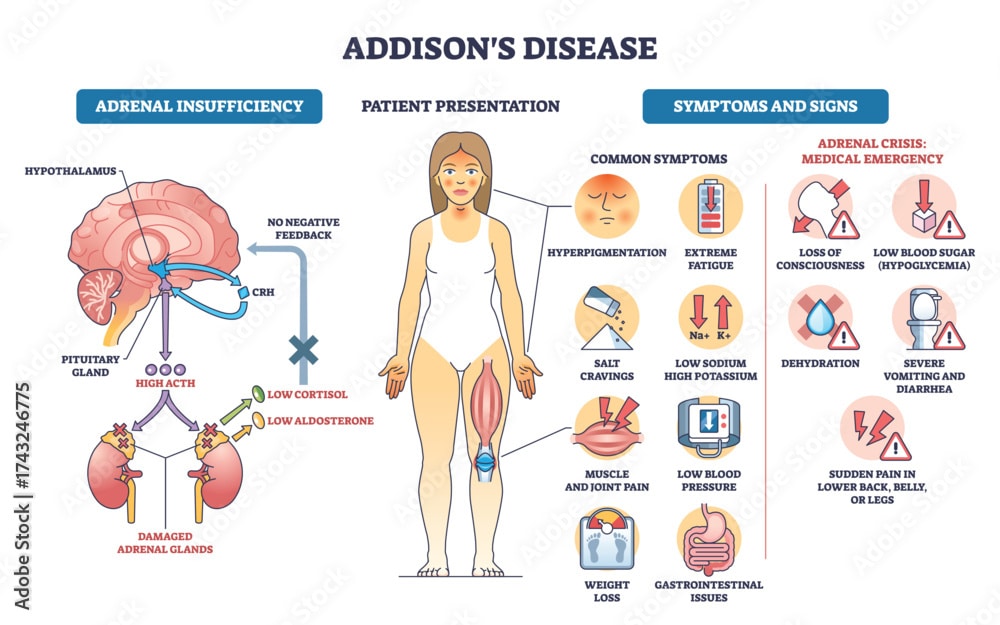
Imagine your body’s control room suddenly stops sending out important commands that keep everything running smoothly. Your heart slows down, your blood pressure drops dangerously, you feel exhausted beyond normal tiredness, and your skin turns a strange brownish color. This is what happens when someone develops Addison’s disease, a rare but serious medical condition where the adrenal glands stop producing enough of critical hormones. Addison’s disease is named after Dr. Thomas Addison, a British physician who first described this condition in 1855. Today, most people have never heard of Addison’s disease, but it affected one of the most famous people in history—President John F. Kennedy (JFK). Yes, the dynamic and energetic president who led America during the Cold War actually suffered from this serious illness throughout his life. Kennedy kept his Addison’s disease secret from the public and even from most of his staff, managing the condition while handling some of the most stressful situations in American history. His story shows us that people with Addison’s disease can achieve extraordinary things with proper medical management. In this article, we will explore what Addison’s disease is, how it develops, what symptoms it causes, how it is diagnosed and treated, and discover how JFK managed this condition while serving as president.
Understanding Your Adrenal Glands and How They Work
To understand Addison’s disease, we first need to understand the adrenal glands and the hormones they produce. Your adrenal glands are two small, triangular-shaped glands that sit on top of your kidneys, deep inside your abdomen. Despite being tiny—about the size of a grape each—these glands produce several crucial hormones that control many important body functions. The adrenal glands have two main parts: the outer layer called the cortex and the inner part called the medulla. The adrenal cortex produces three main types of hormones. First are glucocorticoids, with cortisol being the most important one. Cortisol helps regulate blood sugar, manages stress responses, maintains blood pressure, and controls inflammation throughout your body. Second are mineralocorticoids, particularly aldosterone, which controls salt and water balance in your body to maintain proper blood pressure and electrolyte levels. Third are androgens, which are male hormones that help develop male characteristics during puberty. The adrenal medulla produces adrenaline and noradrenaline, hormones that prepare your body for fight-or-flight responses during stress or danger. In healthy people, these glands work perfectly, producing just the right amount of hormones needed for survival and thriving. However, when the adrenal glands become damaged or stop functioning properly, they cannot produce enough of these essential hormones. This is where Addison’s disease develops.
What is Addison’s Disease and What Causes It?
Addison’s disease occurs when the adrenal glands produce less than 10 percent of the cortisol and aldosterone hormones your body needs. This severe deficiency of these critical hormones creates life-threatening imbalances throughout the body. The condition is also called primary adrenal insufficiency because the problem originates in the adrenal glands themselves, unlike secondary adrenal insufficiency where the pituitary gland fails to send proper signals. Addison’s disease is rare, affecting about one to two people per million worldwide. However, it is important to recognize because without treatment, it can be fatal. Several conditions can cause the adrenal glands to fail. The most common cause today is autoimmune disease, where the body’s immune system mistakenly attacks its own adrenal gland cells, destroying them gradually over time. This accounts for about 80 percent of cases in developed countries. Tuberculosis, a serious infection caused by bacteria, can destroy the adrenal glands and was historically the leading cause of Addison’s disease. Other infections like fungal infections can also damage the adrenal glands. Cancer can spread to the adrenal glands or the pituitary gland controlling them. Certain medicines, particularly those used to treat fungal infections, can damage adrenal function. Bleeding into the adrenal glands from severe shock or blood-clotting disorders can destroy the glands suddenly. Genetic disorders affecting adrenal development can cause Addison’s disease from birth or early childhood. In Kennedy’s case, historians and medical experts have debated the exact cause. Some believe he had autoimmune Addison’s disease, while others suggest possible tuberculosis or another infection during his youth. Regardless of the cause, Kennedy’s adrenal glands failed to produce adequate hormones, and he required lifelong hormone replacement therapy.
JFK’s Addison’s Disease: A President’s Secret Struggle
President John F. Kennedy was born in 1917 and began experiencing health problems in his twenties. By the time he was in his mid-thirties, doctors diagnosed him with Addison’s disease. This diagnosis was shocking and frightening because Addison’s disease was often fatal before modern treatments became available. During Kennedy’s youth, hormone replacement therapy was new and not yet refined. Kennedy had to travel to specialists, including a famous endocrinologist, to receive treatment. He took daily doses of cortisone, the synthetic replacement for cortisol, and other medications to manage his condition. Kennedy also had to deal with severe pain in his back, a condition that may have been worsened by his Addison’s disease and stress on his spine. He took numerous medications daily to manage both his Addison’s disease and his back pain. Despite his serious medical condition, Kennedy became a U.S. Senator and then campaigned to become President. During his 1960 presidential campaign, his Addison’s disease was largely unknown to the American public. Political opponents knew about it and considered it a serious liability, but Kennedy’s team kept the condition confidential. Kennedy won the presidency and served as the 35th President of the United States from 1961 until his assassination in 1963. During his presidency, Kennedy faced incredible stress—the Bay of Pigs invasion, the Cuban Missile Crisis, and the Space Race. Through all of this, he managed his Addison’s disease with daily medications and careful monitoring by his personal physicians. Kennedy’s ability to function at the highest level of government while managing a serious, chronic illness demonstrates that Addison’s disease does not prevent people from achieving greatness when properly treated. His story inspired many people diagnosed with Addison’s disease to continue pursuing their dreams.
Recognizing Addison’s Disease Symptoms
People with untreated Addison’s disease experience a wide range of symptoms that develop slowly over weeks or months. The most common early symptoms are extreme fatigue and weakness that do not improve with rest. Patients feel exhausted even after sleeping, making it difficult to perform everyday activities. Loss of appetite is very common, often accompanied by nausea and vomiting. Weight loss occurs as the body loses muscle and fat. Some patients experience severe abdominal pain or pain in the muscles and joints. Low blood pressure is characteristic of Addison’s disease, often causing dizziness, lightheadedness, and fainting, especially when standing up quickly. One of the most distinctive symptoms is darkening of the skin, appearing as if the person has a tan even without sun exposure. This darkening occurs because the pituitary gland releases extra ACTH hormone trying to stimulate the failing adrenal glands, and ACTH has a side effect of darkening skin. The darkening typically appears on areas exposed to sun, scars, and skin creases. Some patients develop dark patches or spots on the skin and inside the mouth. Mood changes can occur, including depression, irritability, and difficulty concentrating. Women may experience irregular menstrual periods or loss of menstruation. Men may experience loss of body hair and decreased interest in sexual activity. In severe cases, patients may experience an adrenal crisis, a life-threatening emergency where blood pressure drops dangerously low, body temperature becomes abnormally low, and the patient goes into shock. Adrenal crisis requires immediate hospitalization and emergency treatment.
How Doctors Diagnose Addison’s Disease
Diagnosing Addison’s disease requires careful detective work because symptoms resemble many other conditions like depression, chronic fatigue syndrome, or digestive problems. Doctors first listen carefully to the patient’s symptoms and examine them for characteristic signs like darkened skin. They ask about family history and medical history. Blood tests are essential for diagnosis. The most important test measures cortisol levels in the blood, particularly in the early morning when cortisol should be highest. In Addison’s disease, cortisol levels are abnormally low. The ACTH stimulation test is the gold standard diagnostic test. In this test, doctors inject synthetic ACTH and then measure cortisol response. In healthy people, the adrenal glands respond by releasing cortisol quickly. In Addison’s disease, the glands cannot respond adequately, and cortisol levels remain low. Blood tests also measure aldosterone and electrolyte levels like sodium and potassium. Addison’s disease causes low sodium and high potassium, which can be dangerous. Tests measure ACTH hormone levels, which are very high in Addison’s disease because the pituitary gland keeps sending signals trying to stimulate failing adrenal glands. Blood pressure monitoring shows the characteristic low blood pressure. Once Addison’s disease is confirmed, doctors need to determine the underlying cause. CT scans or ultrasounds examine the adrenal glands for tumors, infections, or signs of destruction. Tuberculosis tests are performed if that disease is suspected. Autoimmune blood tests look for antibodies attacking adrenal glands. Additional blood tests measure other hormones to ensure the pituitary gland is functioning normally.
Treatment: Hormone Replacement Therapy Saves Lives
The good news about Addison’s disease is that it is highly treatable with hormone replacement therapy. Patients with Addison’s disease take daily medications to replace the cortisol and aldosterone their adrenal glands can no longer produce. Glucocorticoid replacement, usually using a medicine called prednisone or hydrocortisone, replaces cortisol. Patients typically take this medication in two or three doses daily, with larger doses in the morning to match the body’s natural rhythm. Mineralocorticoid replacement, using a medicine called fludrocortisone, replaces aldosterone and helps maintain proper salt and water balance. With proper hormone replacement, most symptoms of Addison’s disease improve dramatically. Energy levels increase, appetite returns, weight stabilizes, and skin darkening fades. Blood pressure normalizes, and patients can return to normal activities. President Kennedy took these replacement hormones daily throughout his life, allowing him to function as a high-powered president. However, hormone replacement requires careful management because too much or too little medication causes problems. Patients must take medications exactly as prescribed, never skipping doses. Regular blood tests monitor hormone levels to ensure they are in the right range. During times of illness, injury, or surgery, patients need temporary increases in hormone doses because stress increases the body’s hormone needs. Patients with Addison’s disease must wear medical alert bracelets or necklaces identifying their condition so emergency responders know to treat them appropriately if they become unconscious. Many patients carry emergency injection kits containing injectable cortisol to use if they cannot take oral medications due to vomiting or unconsciousness. Patients must inform all their doctors about Addison’s disease so medicines prescribed for other conditions do not interfere with their treatment.
Living Well with Addison’s Disease: Daily Management
With proper treatment, people with Addison’s disease can live normal, full lives with good health and normal life expectancy. However, managing the condition requires dedication and careful attention to several important factors. Taking medications exactly as prescribed is absolutely essential—never skipping doses or changing doses without doctor approval. Missing doses can trigger an adrenal crisis, a medical emergency. Keeping regular appointments with endocrinologists ensures hormone levels stay properly balanced. Getting regular blood tests helps doctors adjust medication doses as needed. Recognizing the warning signs of adrenal crisis is crucial. These include severe weakness, confusion, abdominal pain, fever, and rapid heartbeat. Any of these symptoms requires immediate emergency medical care. Wearing a medical alert bracelet or necklace ensures emergency responders know about the Addison’s disease. Carrying emergency cortisol injections allows quick treatment if vomiting prevents oral medication. Maintaining a healthy diet helps manage weight and energy levels. Regular gentle exercise, as recommended by doctors, helps maintain muscle strength and bone health. Managing stress through relaxation techniques, meditation, or counseling helps because stress increases hormone needs. Getting adequate sleep is important for overall health. Informing family members, friends, and coworkers about Addison’s disease helps them understand the condition and provide support. Teaching family members how to administer emergency cortisol injections could save lives. Joining support groups connects patients with others managing Addison’s disease and provides valuable practical advice. Planning ahead for travel ensures access to medications and allows time adjustments for time zone changes. Being honest with doctors about all symptoms helps them adjust treatment appropriately.
The Impact of Addison’s Disease on Different Age Groups
Addison’s disease can develop at any age, and it affects different age groups in different ways. In children, Addison’s disease is particularly challenging because children cannot describe their symptoms as clearly as adults. Parents and caregivers must watch carefully for signs like unusual fatigue, poor appetite, weight loss, or darkening skin. Children with Addison’s disease need careful monitoring to ensure they take medications consistently. Illness or injuries in children with Addison’s disease require emergency dose increases. In teenagers, Addison’s disease can interfere with school performance and social activities if not well managed. Some teenagers struggle emotionally with having a chronic condition requiring daily medication. Peer support groups help teenagers cope with the psychological aspects of their condition. In adults, Addison’s disease may go undiagnosed for years because symptoms develop slowly. Adults often attribute symptoms to stress, depression, or normal aging until diagnosis occurs. With diagnosis and treatment, most adults recover well and return to their previous level of functioning. In elderly people, Addison’s disease symptoms may be mistaken for normal aging or other age-related conditions. Some older people have better outcomes if diagnosed early because they can receive immediate treatment. Pregnancy in women with Addison’s disease is possible with careful medical management. Pregnancy hormones change hormone requirements, necessitating careful monitoring and dose adjustments. With proper care, women with Addison’s disease can have healthy pregnancies and deliver healthy babies.
Frequently Asked Questions (FAQs)
Q1: Is Addison’s disease contagious or inherited?
No, Addison’s disease is not contagious at all. You cannot catch it from another person through contact, sharing food, sneezing, or any other means. However, in some cases, Addison’s disease may run in families, suggesting a genetic predisposition. If autoimmune Addison’s disease runs in your family, you have a slightly higher risk of developing it, but it is not guaranteed. The majority of people with Addison’s disease have no family history of the condition. Most cases develop randomly due to autoimmune attack, infections, or other causes unrelated to genetics.
Q2: Can Addison’s disease be cured?
Currently, Addison’s disease cannot be cured because the adrenal gland damage is usually permanent. However, Addison’s disease is highly manageable with daily hormone replacement medication. With proper treatment, people with Addison’s disease can achieve normal cortisol and aldosterone levels, eliminating symptoms and allowing completely normal lives. Hormone replacement therapy is not a cure, but it effectively replaces the missing hormones, making the disease manageable rather than life-threatening. Research into potential future cures, including stem cell therapy, continues.
Q3: Did JFK’s Addison’s disease affect his ability to be president?
This is a complex historical question. Kennedy’s Addison’s disease did not prevent him from serving as president effectively. With proper medication and medical support, he managed his condition and performed presidential duties. However, his condition was kept secret from the public and from many staff members. Some historians argue that voters had a right to know about his serious medical condition. Others point out that Kennedy’s doctors believed his condition was well-controlled and did not impair his judgment or decision-making. Regardless, Kennedy’s story demonstrates that people with Addison’s disease can function at the highest levels of society when properly treated.
Q4: What happens if someone with Addison’s disease misses their medication doses?
Missing medication doses is very dangerous for people with Addison’s disease. Without replacement hormones, blood pressure drops dangerously, blood sugar becomes unstable, electrolyte imbalances develop, and the body cannot respond to stress. Missing even one or two doses can trigger an adrenal crisis, a medical emergency characterized by confusion, severe weakness, abdominal pain, and shock. Adrenal crisis requires immediate hospitalization and emergency treatment with intravenous hormones. Therefore, taking medications exactly as prescribed and never skipping doses is absolutely critical.
Q5: Can people with Addison’s disease participate in sports and exercise?
Yes, people with Addison’s disease can participate in exercise and sports with proper medical management. Regular gentle exercise is actually recommended for people with Addison’s disease to maintain muscle strength and bone health. However, intense exercise or competition increases the body’s hormone needs, requiring dose adjustments. Athletes with Addison’s disease should work with their doctors to determine appropriate activity levels and adjust medications accordingly. Some famous athletes have Addison’s disease and compete at high levels. The key is proper medication management and medical supervision.
Key Takeaways
Addison’s disease is a rare condition where the adrenal glands fail to produce enough cortisol and aldosterone hormones. The disease is usually caused by autoimmune attack on the adrenal glands, though infections, tumors, and other conditions can also cause it. Symptoms include extreme fatigue, weight loss, low blood pressure, darkened skin, and loss of appetite. President John F. Kennedy had Addison’s disease and managed it successfully while serving as president, demonstrating that the condition does not prevent achievement. Diagnosis involves blood tests measuring cortisol and ACTH levels, plus the ACTH stimulation test. Treatment with daily hormone replacement therapy is highly effective and allows people to live normal, healthy lives. Proper medication adherence and regular medical monitoring are essential for safe management. With appropriate treatment, people with Addison’s disease have normal life expectancy and can achieve any goal they set for themselves.
References
- World Health Organization (WHO). “Addison’s Disease and Adrenal Insufficiency.” Retrieved from https://www.who.int/
- Endocrine Society. “Addison’s Disease: Clinical Practice Guidelines.” Retrieved from https://www.endocrine.org/
- National Institute of Diabetes and Digestive and Kidney Diseases (NIDDK). “Addison’s Disease.” Retrieved from https://www.niddk.nih.gov/
- Mayo Clinic. “Addison’s Disease: Causes, Symptoms, and Treatment.” Retrieved from https://www.mayoclinic.org/
- Cleveland Clinic. “Addison’s Disease: The Adrenal Insufficiency Condition.” Retrieved from https://my.clevelandclinic.org/
- American Academy of Clinical Endocrinologists. “Adrenal Insufficiency Resources.” Retrieved from https://www.aace.com/
Observer Voice is the one stop site for National, International news, Sports, Editor’s Choice, Art/culture contents, Quotes and much more. We also cover historical contents. Historical contents includes World History, Indian History, and what happened today. The website also covers Entertainment across the India and World.

