

India Pushes for Proactive Drought Resilience at Global Summit

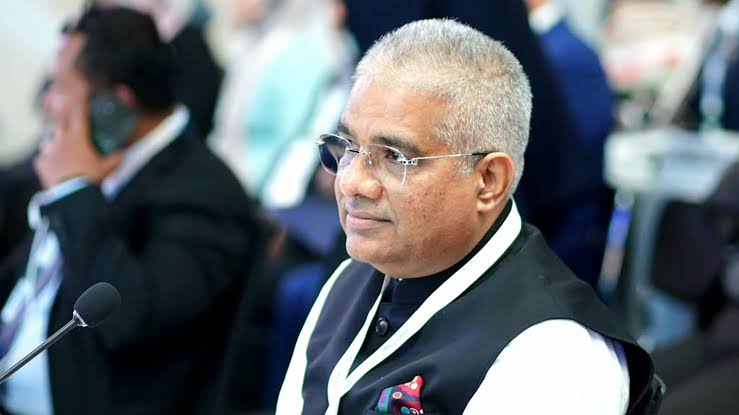
In a pivotal address at the 17th Conference of Parties (CoP17) of the UN Convention to Combat Desertification (UNCCD) held in Ulaanbaatar, Mongolia, Shri Bhupender Yadav, India’s Union Minister for Environment, Forest and Climate Change, emphasized the urgent need to transform global strategies on drought management. He called for a shift from merely providing reactive relief to adopting a proactive, technology-enabled resilience model. Yadav stressed that drought is now a persistent development challenge with far-reaching impacts on water security, food systems, biodiversity, and economic stability.
During the Ministerial Dialogue on ‘Accelerating Drought Resilience,’ Yadav outlined India’s integrative approach, which involves multiple agencies working together: from early warning systems and mitigation efforts to providing relief and fostering community resilience. He explained that rainfall monitoring and satellite drought assessments are key tools that allow for timely preparedness, preventing a dry spell from escalating into a full-blown crisis.
Innovative Strategies for Drought Management
Shri Yadav pointed out the essential connection between land and water, stressing the mantra, “restore the forest, before the flow.” India is prioritizing catchment area forestry and riverscape initiatives to curb erosion, enhance water retention, and revive groundwater supplies. The revival of traditional water bodies and river rejuvenation projects are also crucial steps towards elevating water security and strengthening rural drought resilience.
Community-Led Initiatives and Support Mechanisms
Highlighting community involvement, the Minister discussed the restoration of springs and recharge zones in hilly regions, alongside a comprehensive watershed programme that improves degraded rainfed lands across the plains. This pan-India initiative utilizes a ridge-to-valley approach, backed by community engagement and collaborations with employment schemes.
At the household level, initiatives are underway to guarantee access to drinking water even during periods of drought. These programs ensure consistent service, including local quality testing and prioritization of at-risk communities. Crop insurance schemes were another key focus, designed to protect farmers from drought-related losses through subsidized premiums and efficient claims processing.
A Call for Global Action
Shri Yadav reiterated that drought management must shift toward a mindset of seeing it as a foreseeable and manageable risk, rather than an unavoidable disaster. He emphasized the importance of proactive measures, including watershed development, water harvesting, climate-resilient crops, and emergency resources when needed. To confront this escalating threat, he urged stronger global cooperation, advocating for increased investment in ecosystem restoration and the development of robust early warning systems.
The Minister concluded his address with a clear message: building drought resilience is essential for the survival of the world’s most vulnerable populations. India stands ready to share its knowledge and experience in this realm, particularly in the area of early warning systems, working toward a drought-resilient future for all.
Observer Voice is the one stop site for National, International news, Sports, Editor’s Choice, Art/culture contents, Quotes and much more. We also cover historical contents. Historical contents includes World History, Indian History, and what happened today. The website also covers Entertainment across the India and World.

