

Understanding the Trump Administration’s Decision to Lower Tariff Rates on India from 12.5% to 10%

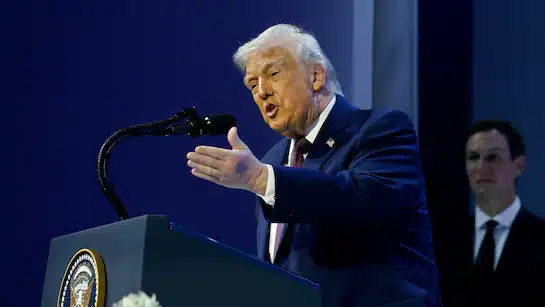
The Donald Trump administration has implemented new tariffs as the previous Section 122 duties expire on July 24. Under the revised Section 301 probe, India will face a reduced tariff rate of 10%, down from the initially proposed 12.5%. This new rate is effective immediately and also applies to 16 other economies, including Bangladesh, Pakistan, Canada, and the United Kingdom.
US Trade Representative Jamieson Greer announced the updated tariffs on 60 economies on Thursday, just one day before the expiration of the temporary additional 10% duties imposed on imports from all countries. While most of the economies under investigation will now incur a 12.5% tariff, India has secured a lower rate following discussions on labor practices.
What’s the Section 301 Probe?
Section 301 allows the US to investigate imports made using what it defines as “forced labor” and impose tariffs on such goods. Initially, India was categorized under the 12.5% tariff rate when the proposed tariffs were announced on June 3. Countries lacking legal provisions against the import of goods produced with forced labor, including China and Japan, will face the higher tariff.
Certain exemptions apply to the tariffs. They do not affect raw materials and agricultural inputs that cannot be produced in sufficient quantities within the US. Additionally, products that could trigger inflation or disrupt domestic supply chains are excluded. Industrial inputs such as specified plastic resins, metal products, and medical supplies, along with humanitarian items like books and charitable donations, are also exempted.
For imports from the European Union, Japan, South Korea, Taiwan, and Switzerland, the Section 301 tariff will be calculated on a net-of-MFN basis. This means that the total duty will reach the prescribed rate without adding the entire Section 301 duty on top of the existing Most Favoured Nation (MFN) tariff.
Why Did the US Reduce Tariffs on India?
The reduction in tariffs for India was achieved after productive discussions regarding labor practices. Officials indicated that India’s proactive stance, including a recent ban on imports of goods made with forced labor, contributed to the lower tariff rate. According to the US Trade Representative, the 10% rate is appropriate for economies that impose a prohibition on forced labor imports or have committed to enforce such prohibitions.
The Global Trade Research Initiative (GTRI) noted that India’s notification indicates a strengthening of its domestic legal framework in line with international standards. This move may enhance India’s position in future trade negotiations.
What Do the Tariffs Mean and Which Sectors Will Be Impacted?
Experts believe the impact of the new tariffs on India will be limited. Some analysts suggest that India may gain a relative advantage compared to developed economies facing the 12.5% tariff. Manoj Mishra from Grant Thornton Bharat stated that India’s 10% tariff rate places it on par with competing Asian exporters while advanced economies face higher tariffs.
This relative tariff advantage could boost India’s competitiveness in sectors such as engineering goods, auto components, electronics, specialty chemicals, pharmaceuticals, and textiles. However, Ajay Srivastava from GTRI expressed concerns about the lack of evidence supporting the US’s claims regarding forced labor in India. He emphasized that Indian law already prohibits forced labor in domestic production.
Srivastava also warned of potential future tariffs, as the Trump administration is expected to announce results from another Section 301 investigation into excess manufacturing capacity, which could lead to additional tariffs on various industrial products.
Observer Voice is the one stop site for National, International news, Sports, Editor’s Choice, Art/culture contents, Quotes and much more. We also cover historical contents. Historical contents includes World History, Indian History, and what happened today. The website also covers Entertainment across the India and World.

