

Government Panel Proposes ‘Aam’ Initiative to Support Totapuri Farmers with Increased Pulp Production and Tax Relief

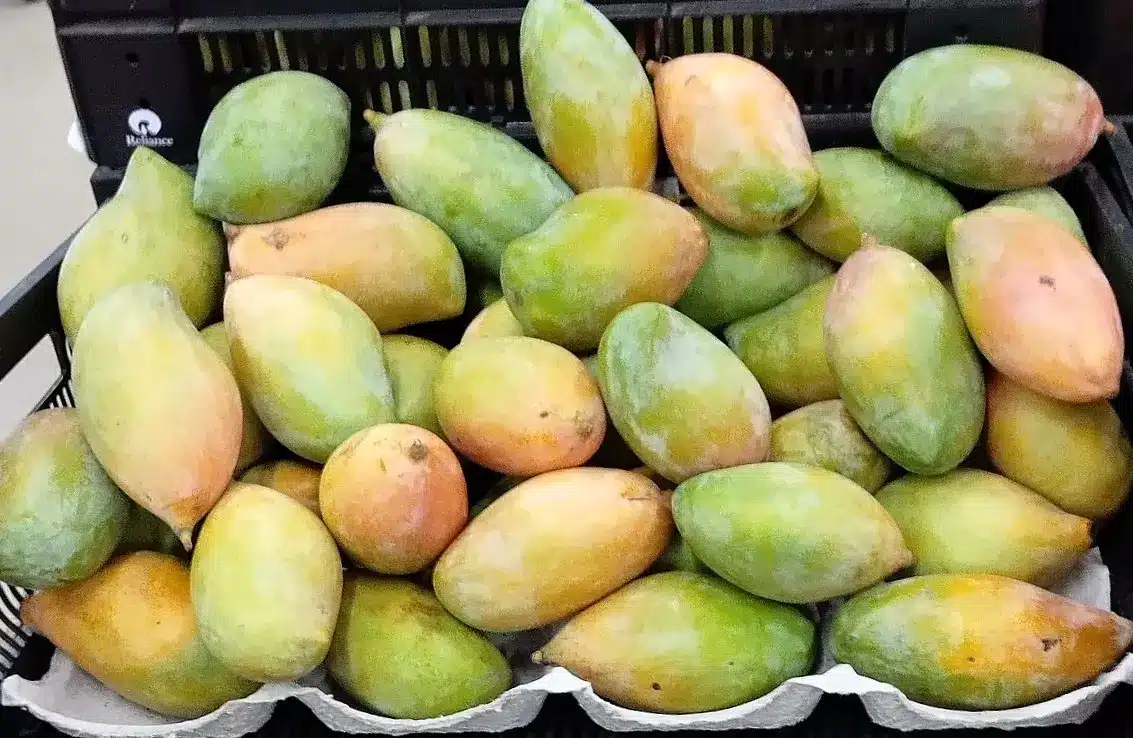
The Indian government is considering a new Goods and Services Tax (GST) structure for mango-based beverages to support farmers and encourage the use of real fruit. Under the proposed plan, a concessional GST rate of 5% would apply to drinks containing 22-25% genuine natural mango pulp. This initiative aims to revive demand for Totapuri mango pulp, which has seen a significant price drop this season across key growing regions.
The proposal comes from an expert committee led by T Damodaran, Director of ICAR-Central Institute of Subtropical Horticulture (CISH), Lucknow. The committee’s findings were submitted to Agriculture Minister Shivraj Singh Chouhan, who has instructed officials to begin inter-ministerial consultations regarding the recommendations. The committee was formed to address the sharp decline in Totapuri mango prices in Andhra Pradesh, Tamil Nadu, and Karnataka.
Tax incentives for Totapuri drinks
Central to the committee’s report is the recommendation to link GST rates to the amount of genuine mango pulp in beverages. Drinks with 22-25% pulp would qualify for the lower GST rate, while those with less would face a higher tax. The agriculture ministry stated that this approach is expected to boost the consumption of Totapuri mango pulp and enhance the nutritional quality of available beverages. To implement these changes, an inter-ministerial meeting will be convened, involving various stakeholders including the Food Safety and Standards Authority of India (FSSAI) and the GST Council.
The committee believes that applying higher GST rates to low-pulp products will not only increase the consumption of Totapuri mango pulp but also provide consumers with more nutritious fruit-based beverages.
Why Totapuri prices crashed
The committee identified several factors contributing to the decline in Totapuri prices, including a mismatch between processing capacity and procurement timelines, low pulp content in domestic beverages, and fluctuations in global prices. Damodaran noted that processing units often delay fruit procurement, leading to a surplus of mangoes in the market, which drives prices down and negatively impacts farmers’ incomes.
To mitigate these issues, the committee proposed establishing a Central Coordination and Price Stabilisation Committee for Andhra Pradesh, Tamil Nadu, and Karnataka. This body would assess crop estimates, processing demands, and market conditions before each season to set indicative farm-gate procurement prices and reference pulp prices.
Reviving ageing orchards
The report also highlighted the problem of ageing Totapuri orchards in Andhra Pradesh, where both yield and fruit quality have declined. To enhance productivity, the committee recommended top-working existing trees with higher-value mango varieties such as Neelam and Alphonso. This method could restore orchards to profitable production within two to three years.
Additionally, the committee suggested adopting Good Agricultural Practices (GAP) at the cluster level, along with farmer training programs and demonstration plots. To protect fruit quality, they proposed covering 23,333 hectares in the affected districts to reduce insect damage and improve marketability.
Procurement and exports
The committee recommended a zonal procurement and pre-processing system, with annual plans developed collaboratively by the horticulture department, processing units, and farmer producer organizations (FPOs). A standard operating procedure would require all registered processing units in Andhra Pradesh to begin procurement and pulp production by May 15 each year.
To create more income opportunities, the committee suggested promoting value-addition models led by farmers and FPOs, including products like mango butter. At a recent meeting, representatives from APEDA outlined plans to expand both domestic and export markets for Totapuri mangoes, focusing on reducing logistics costs through sea freight.
Chouhan stated that APEDA, ICAR, and state governments would work together to develop a coordinated export and marketing strategy for Totapuri products. The aim is to create a farmer-centric value chain that aligns GST, food safety standards, and state policies, ultimately increasing incomes for Totapuri growers in Andhra Pradesh, Tamil Nadu, and Karnataka. The committee’s report followed field visits to key districts where members engaged with various stakeholders in the Totapuri value chain.
Observer Voice is the one stop site for National, International news, Sports, Editor’s Choice, Art/culture contents, Quotes and much more. We also cover historical contents. Historical contents includes World History, Indian History, and what happened today. The website also covers Entertainment across the India and World.

