

India’s First High-Speed Rail Project: Indigenous Bullet Train and Inter-Operable Signalling System Developments

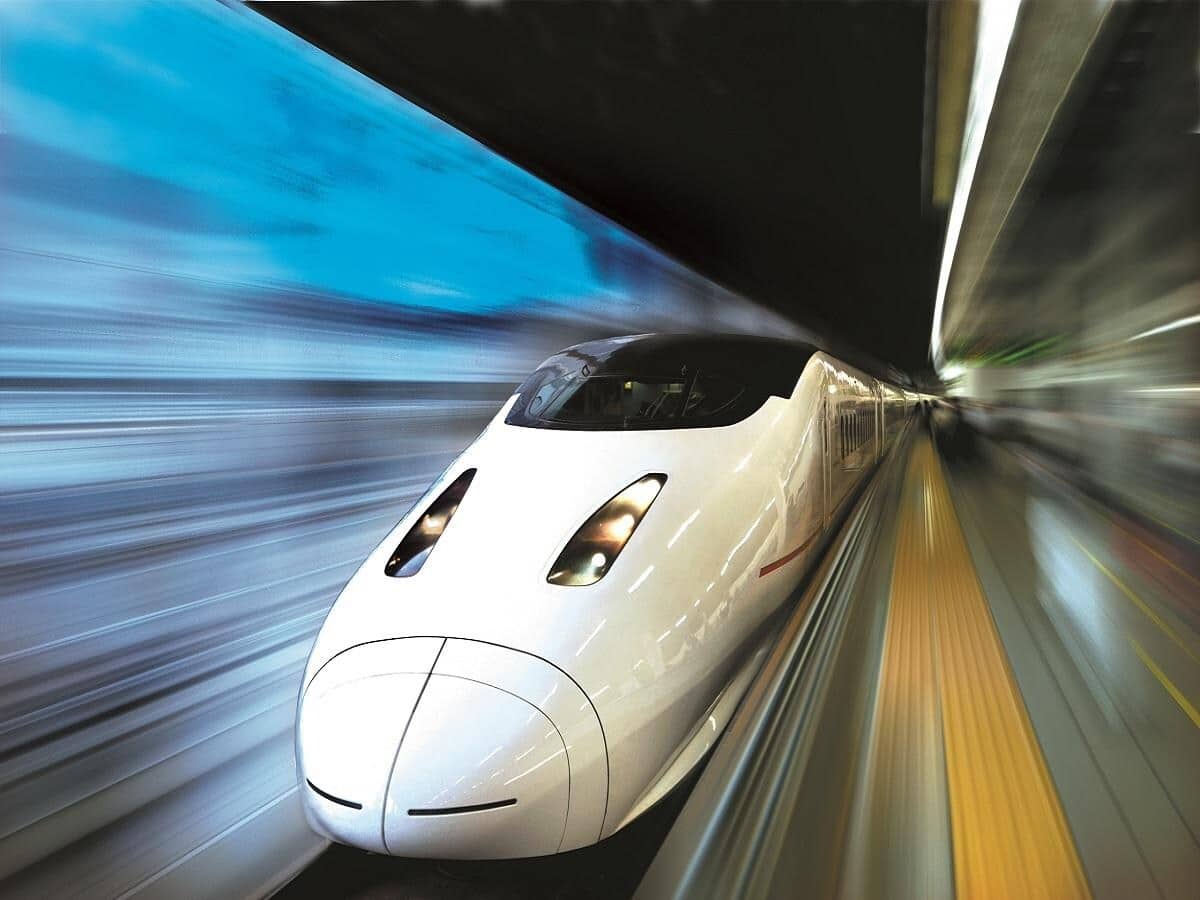
India’s first bullet train project is set to launch its inaugural high-speed train by 2027. The Mumbai-Ahmedabad corridor will feature indigenous bullet trains equipped with globally interoperable signalling systems, as confirmed by a senior official. Trials for these domestically developed trains are expected to commence by mid-2027, with civil construction on the 97-km Surat-Vapi stretch slated for completion this year.
India’s Own Bullet Trains
The trainsets for the high-speed rail corridor will be manufactured in India, marking a significant advancement in the country’s engineering and manufacturing sectors. The development program is divided into two phases. The initial trainsets will be designed for a top speed of 280 kmph, while future versions may reach speeds of up to 350 kmph. Integral Coach Factory (ICF) in Chennai has awarded a contract worth Rs 866.87 crore to BEML Limited for the design and manufacturing of two prototype high-speed trainsets.
These prototype trains will be capable of exceeding speeds of 250 kmph, with a design speed of 280 kmph. BEML will produce two eight-coach trainsets, scheduled for rollout in 2027. The design work is currently nearing completion. The trainsets will include fully air-conditioned chair car coaches with advanced passenger amenities, infotainment systems, reclining seats, and facilities for differently-abled passengers. BEML has established a dedicated ‘Aditya’ High-Speed Rail Complex in Bengaluru for this project.
Japan Trains for Later Stages
The project gained attention recently after former Japanese law minister Hideki Makihara criticized India for delays in negotiations. However, the Ministry of External Affairs clarified that discussions with Japan regarding the high-speed rail project are progressing smoothly. Officials noted that Makihara did not participate in relevant meetings, which have been coordinated by Japan’s Ministry of Land, Infrastructure, Transport and Tourism.
India’s decision to develop its own bullet trains arose after Japanese suppliers failed to provide proposals that aligned with the timeline for the Surat-Vapi section, set to begin operations in 2027. A senior official stated that both countries are committed to achieving commercial operations by 2027. Japanese experts have been involved in overseeing the project since construction began in 2021, ensuring that all approvals for designs and quality control are conducted jointly.
Observer Voice is the one stop site for National, International news, Sports, Editor’s Choice, Art/culture contents, Quotes and much more. We also cover historical contents. Historical contents includes World History, Indian History, and what happened today. The website also covers Entertainment across the India and World.
Follow Us on Twitter, Instagram, Facebook, & LinkedIn

