

Clinical Data Management Platforms: The Backbone of Modern Clinical Trials

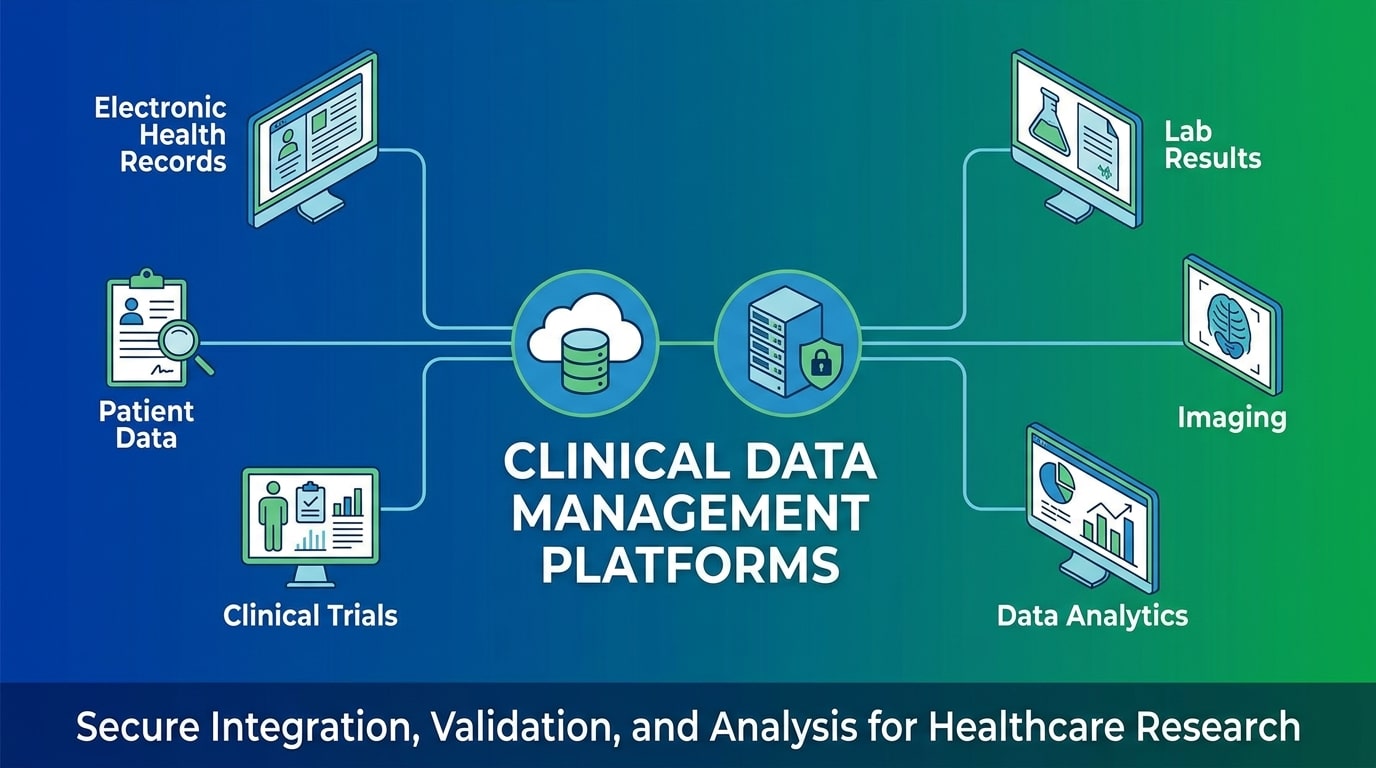
Clinical research has entered an era where success depends not only on scientific innovation but also on the ability to manage increasingly complex and diverse data. Today’s clinical trials collect information from electronic data capture (EDC) systems, laboratories, electronic clinical outcome assessments (eCOA), wearable devices, imaging platforms, electronic health records (EHRs), and numerous external vendors. As decentralized and hybrid trials become more common, the volume and complexity of data continue to grow.
For sponsors, CROs, and biotech companies, the challenge is no longer simply collecting data. It is ensuring that data is accurate, traceable, compliant, and readily available for decision-making throughout the trial lifecycle. This is where a modern Clinical Data Management Platform becomes a strategic asset rather than just another technology investment.
Why Clinical Data Management Has Become More Complex
Clinical data management has traditionally focused on collecting, validating, and cleaning study data before database lock. While these responsibilities remain essential, the expectations placed on data management teams have expanded considerably.
Modern studies often involve:
- Multiple data sources with different formats
- Global study sites operating across various regulatory environments
- Continuous data streams from connected devices
- Increasing pressure to shorten development timelines
- Higher expectations for real-time operational visibility
- More complex regulatory requirements from authorities such as the FDA and EMA
Managing these challenges with disconnected systems, spreadsheets, and manual reconciliation processes significantly increases operational risk while slowing study progress.
The Evolution from Data Collection to Data Intelligence
Traditional data management systems were primarily designed as repositories for clinical data. Today’s leading platforms are expected to do much more.
A comprehensive Clinical Data Management Platform enables organizations to:
- Centralize data from multiple clinical systems
- Automate validation and quality checks
- Detect inconsistencies earlier
- Support risk-based quality management (RBQM)
- Provide real-time dashboards and study metrics
- Simplify audit readiness and regulatory compliance
- Enable collaboration between clinical operations, data management, biostatistics, and medical monitoring teams
Rather than waiting until the end of a study to identify issues, modern platforms allow stakeholders to monitor data quality continuously throughout trial execution.
Key Capabilities That Matter
Not every clinical data platform delivers the same value. Organizations evaluating new solutions should look beyond standard EDC functionality and focus on capabilities that improve operational efficiency across the entire study.
Some of the most valuable features include:
Centralized Data Integration
Clinical trials generate data from numerous internal and external systems. A strong platform should seamlessly integrate laboratory data, imaging results, ePRO/eCOA, wearable devices, CTMS, RTSM, safety databases, and third-party vendor feeds into a unified environment.
Reducing data silos improves consistency while eliminating time-consuming manual reconciliation.
Automated Data Quality Management
Manual review remains important, but automation has become essential for maintaining high-quality clinical data.
Modern platforms automatically identify:
- Missing data
- Out-of-range values
- Protocol deviations
- Duplicate records
- Cross-form inconsistencies
- Unexpected trends
This allows data managers to focus on resolving meaningful issues instead of performing repetitive quality checks.
Real-Time Operational Visibility
Clinical development teams increasingly require access to live study metrics rather than static reports.
Interactive dashboards provide visibility into:
- Site performance
- Data completeness
- Query aging
- Enrollment progress
- Data review status
- Key quality indicators
- Study risks
Real-time monitoring enables proactive decision-making before minor issues become major delays.
Regulatory Compliance
Compliance is fundamental in clinical research.
An effective Clinical Data Management Platform should support regulatory expectations including:
- FDA 21 CFR Part 11
- ICH E6(R2) Good Clinical Practice
- ALCOA+ data integrity principles
- Complete audit trails
- Electronic signatures
- Role-based access controls
These capabilities help organizations maintain inspection readiness throughout the study lifecycle.
Supporting Risk-Based Clinical Trial Management
Risk-Based Quality Management (RBQM) has become a central component of modern clinical trial oversight. Regulatory agencies encourage sponsors to focus monitoring efforts on critical data and processes rather than relying solely on exhaustive source data verification.
Clinical Data Management Platforms play an important role in RBQM by consolidating operational and clinical data into a single environment where risk indicators can be monitored continuously.
Instead of reacting to quality issues after they occur, study teams can identify emerging risks early and implement corrective actions while the trial is still ongoing.
Business Benefits Beyond Data Management
The value of an advanced platform extends well beyond the data management department. Clinical operations teams benefit from improved study oversight. Biostatisticians gain access to cleaner, more consistent datasets.
Medical monitors receive earlier visibility into safety and efficacy trends. Executive leadership can monitor portfolio performance through standardized dashboards and KPIs. Ultimately, better data management contributes to faster database locks, reduced operational costs, improved inspection readiness, and accelerated clinical development timelines.
Choosing the Right Clinical Data Management Platform
Technology alone does not guarantee success. Organizations should evaluate platforms based on how well they support real-world clinical workflows rather than simply comparing feature lists.
Important evaluation criteria include:
- Ability to integrate multiple clinical systems
- Scalability across studies and therapeutic areas
- Ease of use for different stakeholders
- Advanced visualization and analytics
- Flexible configuration without extensive custom development
- Regulatory compliance capabilities
- Vendor expertise in clinical research operations
The most successful implementations combine robust technology with deep clinical domain knowledge.
Turning Clinical Data into Strategic Value
As clinical trials become increasingly decentralized, data-intensive, and globally distributed, organizations need more than isolated software solutions. They need an integrated platform that transforms fragmented data into reliable, actionable insights.
Platforms that combine centralized data integration, automated quality management, real-time analytics, and regulatory compliance enable sponsors and CROs to improve efficiency while maintaining the highest standards of data integrity.
As clinical trials continue to grow in complexity, organizations need more than disconnected systems to manage their data effectively. They need a scalable Clinical Data Management Platform that delivers reliable data, real-time visibility, and the flexibility to support modern clinical operations from study startup through database lock. BioGRID helps sponsors and CROs achieve these goals by centralizing clinical data, improving data quality, supporting risk-based trial management, and enabling faster, more confident decision-making throughout the clinical trial lifecycle.
Observer Voice is the one stop site for National, International news, Sports, Editor’s Choice, Art/culture contents, Quotes and much more. We also cover historical contents. Historical contents includes World History, Indian History, and what happened today. The website also covers Entertainment across the India and World.

