

India-UK Social Security Agreement to Reduce Costs for Companies

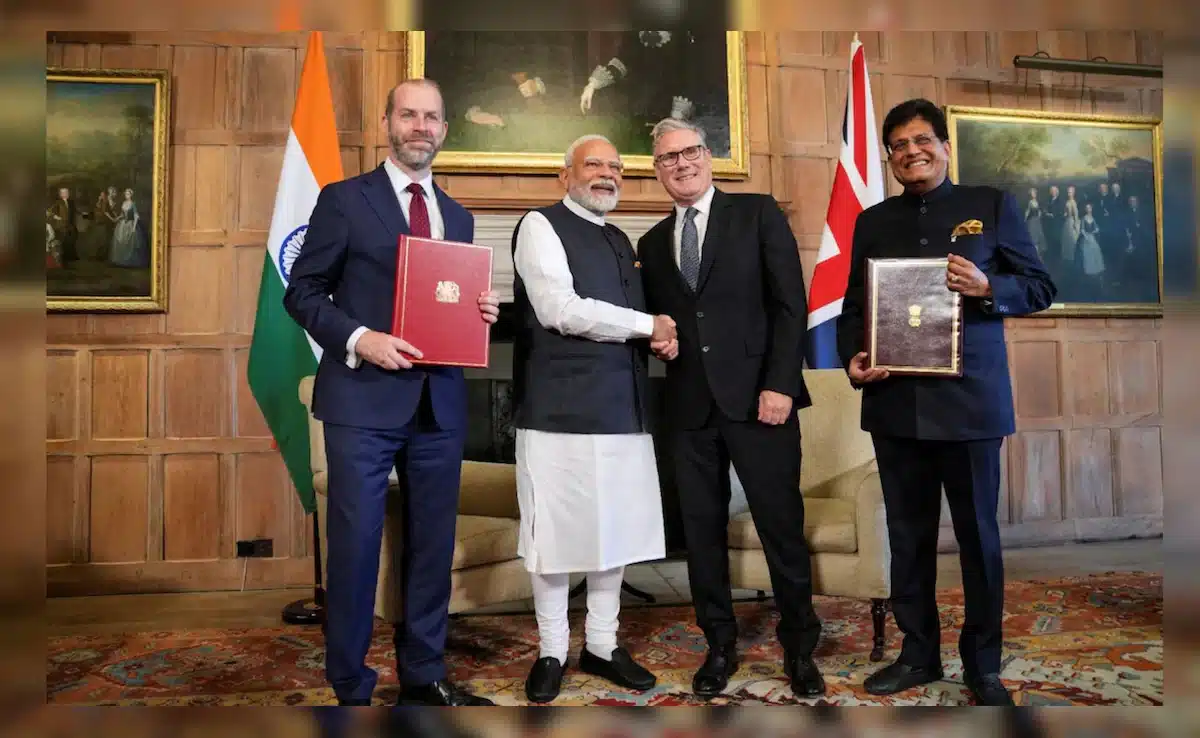
Thousands of Indian professionals working in the UK will stop paying dual social security contributions starting July 15, following the implementation of the India-UK social security pact. Officials estimate that 90-95% of these workers will benefit from the Agreement on Social Security, also known as the Double Contribution Convention (DCC), which coincides with the free trade agreement between the two nations.
The DCC is expected to reduce employment costs for Indian companies operating in the UK, enhancing the competitiveness of sectors such as information technology and professional services. Under this arrangement, employees temporarily assigned from India to the UK, or vice versa, will be exempt from contributing to the host country’s social security system for up to five years, provided they continue contributing in their home country.
“If an employer is contributing in India for the social security of the employee, they do not have to pay in the UK. For that, they have to share a certificate of coverage. From July 15, Indian employers can start enjoying this exemption,” an official stated. This benefit was a key demand from India during negotiations and is expected to particularly aid major IT firms like Tata Consultancy Services (TCS) and Infosys, which deploy many professionals to the UK.
Currently, around 75,000 Indian professionals work in Britain, with over 900 Indian companies operating there. The average annual salary for these professionals is estimated between GBP 40,000 and GBP 50,000, with about 15% typically allocated to social security contributions. However, the exemption will only apply to employees of Indian companies on temporary assignments and will not extend to Indians employed directly by foreign companies in the UK.
Officials noted that the pact would facilitate cross-border mobility and ensure continuity of social security coverage for employees working abroad for limited periods. This development is significant as the UK is the second-largest market for India’s $283-billion IT industry, contributing approximately 17% of the sector’s export revenues. India’s services exports to the UK reached $21.6 billion in 2024, while imports totaled $13.7 billion.
The social security pact will take effect alongside the India-UK Comprehensive Economic and Trade Agreement (CETA), which both countries plan to operationalize from July 15. UK Business and Trade Secretary Peter Kyle stated that the arrangement would benefit professionals from both nations. He mentioned that the benefit for UK nationals moving to India to work has been extended from 36 months to 60 months, allowing them to build entitlement to a UK State Pension while continuing to pay National Insurance Contributions without also contributing to social security in India.
The provision is reciprocal and applies to highly skilled professionals moving under existing visa routes. The UK already has similar agreements with countries such as Korea, Japan, and Canada. Kyle emphasized that the social security agreement and the free trade agreement would make trade “cheaper, quicker, and easier” for businesses in both countries.
Officials anticipate that the broader trade deal will boost labor-intensive sectors like textiles and footwear by granting duty-free access to the British market, where these sectors currently face import duties of around 8-10%. The agreement is projected to increase bilateral trade by GBP 25.5 billion annually in the long run, while boosting UK GDP by GBP 4.8 billion and Indian GDP by GBP 5.1 billion. “This is the most expansive agreement. It is a most aspirational agreement,” an official remarked.
Observer Voice is the one stop site for National, International news, Sports, Editor’s Choice, Art/culture contents, Quotes and much more. We also cover historical contents. Historical contents includes World History, Indian History, and what happened today. The website also covers Entertainment across the India and World.

