

Middle East Crisis Eases: What’s Next for Normalcy in the Strait of Hormuz?

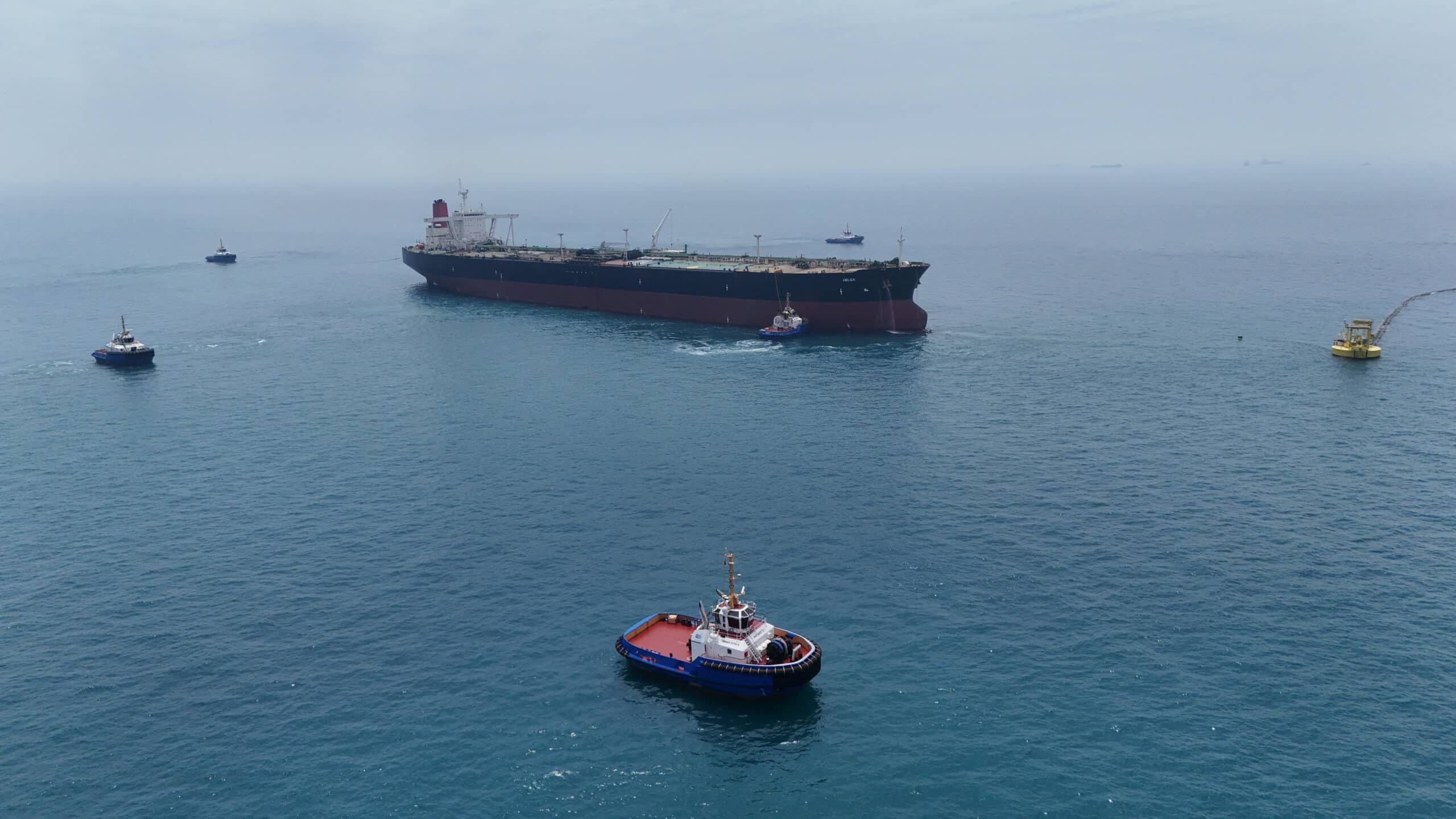
The United States and Iran have reached a tentative agreement to end the ongoing conflict in the Middle East, which has disrupted global energy markets for over three months. The Strait of Hormuz, a critical passage for oil trade, has been significantly affected, impacting more than 20% of the world’s oil supplies. While oil prices fell on Monday following the announcement, analysts caution that a return to normal supply levels will take weeks or even months.
Shipping Bottlenecks Persist
Even with the potential reopening of the Strait of Hormuz, normal shipping operations cannot resume immediately. Maritime intelligence firm Kpler reports that approximately 500 commercial vessels remain stranded in the Persian Gulf, unable to navigate the narrow waterway all at once. Richard Meade, editor-in-chief of Lloyd’s List, noted that many in the shipping sector are hesitant to return, citing mine clearance as a prerequisite for safe navigation.
A senior U.S. official indicated that shipping traffic would gradually increase, with significant activity not expected for up to two weeks. The timeline for a complete return to pre-conflict shipping levels remains uncertain, as companies assess the safety of operations based on varying risk tolerances.
Mine Clearance Operations Underway
Industry experts emphasize that mine clearance and the restoration of recognized transit lanes are crucial for full shipping resumption. Amena Bakr, head of Middle East energy and OPEC+ insights at Kpler, estimates that mine clearance could take as long as six months. The G7 leaders are reportedly set to discuss a framework for de-mining the waterway, although the exact number of mines and their locations remain unclear.
U.S. President Trump stated that ships are beginning to navigate the strait, with expectations of a complete reopening soon. However, the situation remains fluid, with conflicting statements from U.S. and Iranian officials adding to the uncertainty.
Complications from Toll Fees
The implications of an “open” Strait of Hormuz are still being defined. Iran has expressed intentions to charge fees for vessels using the passage, while Trump characterized the arrangement as a “toll-free opening.” This discrepancy raises questions about how shipping firms will navigate potential toll arrangements, especially given existing U.S. and EU sanctions against the Islamic Revolutionary Guard Corps.
Legal experts warn that allowing Iran to control passage through the strait could conflict with international maritime law. The uncertainty surrounding fee structures could complicate operations for shipping companies and financial institutions.
Slow Restart for Oil Producers
The conflict has not only disrupted shipping but also oil production. Some Middle Eastern producers halted extraction due to a lack of storage capacity. The process of restarting operations varies by country, with Saudi Arabia and the UAE likely to recover more quickly due to alternative export routes. In contrast, Iraq may face a longer recovery period, potentially taking up to a year.
Alan Gelder from Wood Mackenzie noted that restoring production to pre-war levels could take an additional three months in some regions. Energy producers are expected to remain cautious, waiting for assurances that the ceasefire will hold before ramping up output.
Market Sentiment and Recovery Timeline
While market sentiment has improved following the peace agreement, experts warn that actual supply recovery will take longer. Daniel Sternoff from the Center on Global Energy Policy stated that countries will seek guarantees that the truce will last before increasing production. Claudio Galimberti from Rystad Energy echoed this sentiment, emphasizing that logistical normalization and the dissipation of risk premiums in crude prices will take time.
Economists at Capital Economics predict that energy flows may recover to around 80% of pre-war levels by September. Following the announcement of peace terms, oil prices have decreased from above $100 per barrel but remain higher than the pre-conflict level of $70 per barrel.
Observer Voice is the one stop site for National, International news, Sports, Editor’s Choice, Art/culture contents, Quotes and much more. We also cover historical contents. Historical contents includes World History, Indian History, and what happened today. The website also covers Entertainment across the India and World.

