

India’s Bold Move Towards Flex-Fuel Vehicles: Understanding the Dual-Fuel Revolution

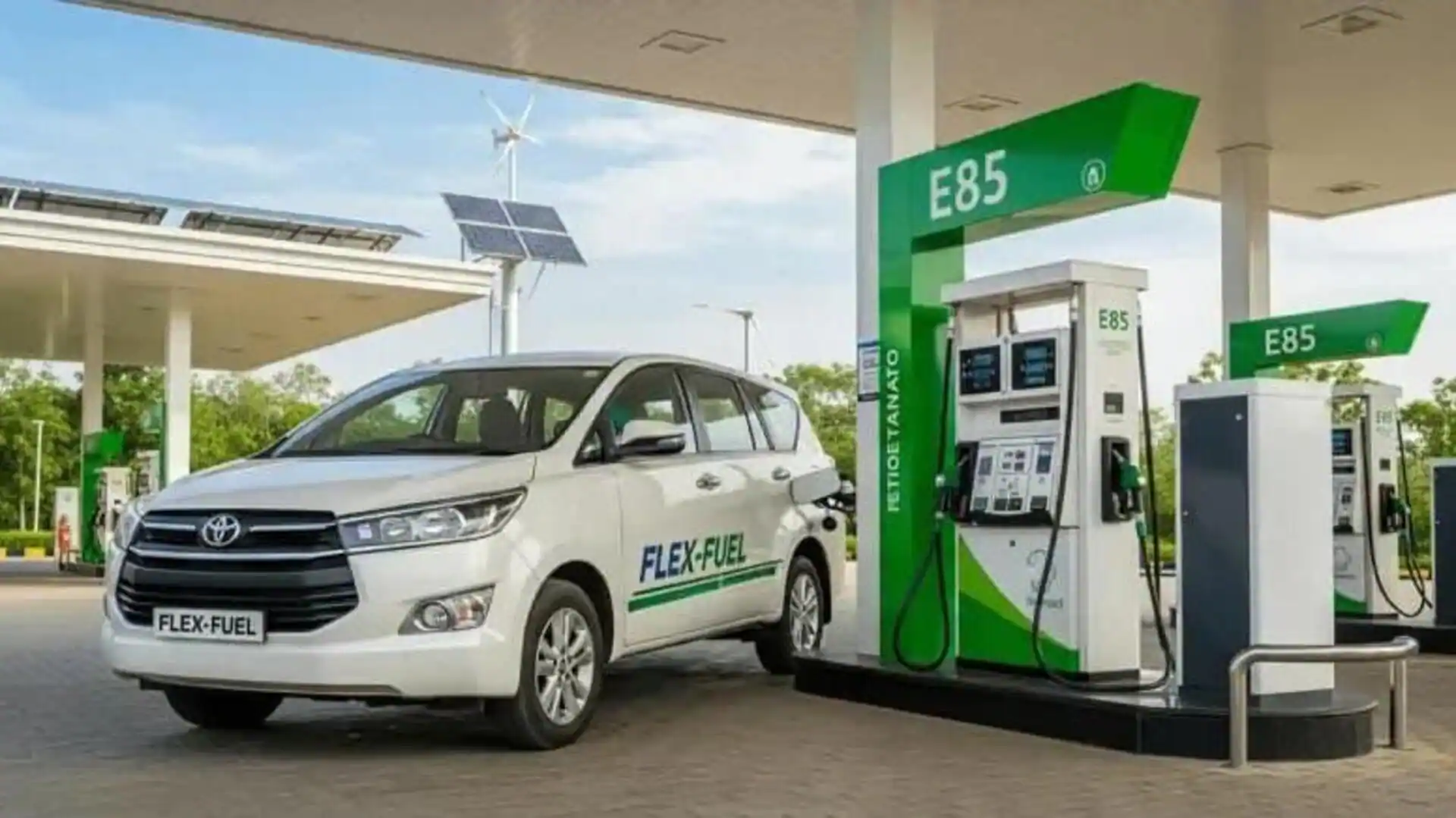
India’s initiative to promote flex-fuel vehicles aims to reduce crude oil imports and carbon emissions, according to Maruti Suzuki India MD and CEO Hisashi Takeuchi. Speaking at the launch of the company’s first flex-fuel car, the Wagon R, Takeuchi emphasized the need for a comprehensive ecosystem, including fuel availability and model diversity, to support this transition. He noted that the technology benefits not only the automotive sector but also farmers, ethanol producers, and the rural economy.
What is a flex-fuel vehicle?
A flex-fuel vehicle is designed to operate on various fuel blends, primarily a mix of petrol and ethanol or methanol. These vehicles can run on different ethanol content levels, ranging from E20 to E100, allowing them to use conventional petrol or nearly pure biofuel based on availability.
Flex-fuel meets both national objectives
Takeuchi highlighted India’s critical moment in addressing fuel consumption and import dependence, referencing Prime Minister Narendra Modi’s vision for self-reliance by 2047. He argued that long-term reliance on imported crude oil is unsustainable. “Flex-fuel meets both. It is truly Atmanirbhar and clean,” he stated, emphasizing its role in reducing imports and emissions.
Ecosystem needed for large-scale rollout
Takeuchi pointed out that widespread adoption of flex-fuel vehicles will require time and collaboration among various stakeholders, including fuel suppliers, pricing strategies, infrastructure development, and customer education. He urged oil marketing companies and ethanol producers to participate in this initiative as Maruti Suzuki takes its first significant step with the Wagon R flex-fuel launch.
Government pushes biofuel transition
At the launch event, Union Minister Nitin Gadkari discussed India’s potential transition from an energy-importing nation to an energy exporter, highlighting advancements in ethanol, hydrogen, and sustainable aviation fuel. He noted that India spends approximately Rs 22 lakh crore annually on fuel imports and stressed the importance of adopting clean energy to alleviate economic burdens and pollution.
Fuel transition and infrastructure push
Petroleum Minister Hardeep Singh Puri announced plans to establish 50–100 ethanol fuel stations in major cities, with an expansion goal of 500 by 2026 and 5,000 by 2027. He reported that ethanol blending has reached 20%, contributing to reduced crude imports and foreign exchange savings while enhancing rural incomes. Officials stated that the broader push for flex-fuel and biofuels aims to bolster energy security, support agricultural value chains, and cut emissions.
Observer Voice is the one stop site for National, International news, Sports, Editor’s Choice, Art/culture contents, Quotes and much more. We also cover historical contents. Historical contents includes World History, Indian History, and what happened today. The website also covers Entertainment across the India and World.

