

Hero MotoCorp Launches India’s First Flex-Fuel Motorcycle

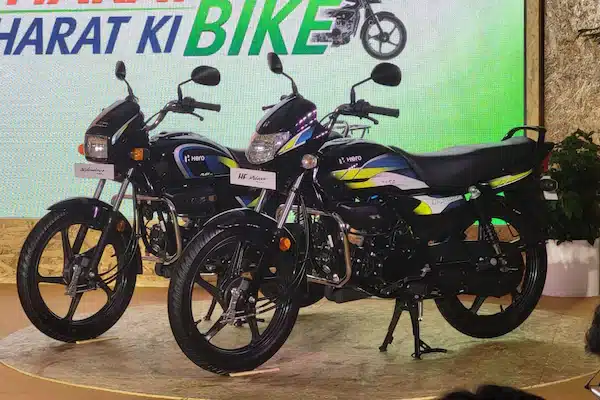
In a significant advancement for India’s energy landscape, Union Minister for Petroleum and Natural Gas, Shri Hardeep Singh Puri, today unveiled Hero MotoCorp’s first flex-fuel motorcycle in New Delhi. This initiative aims to cut down crude oil imports, boost the rural economy through enhanced ethanol demand, and promote low-carbon mobility across the nation. The launch event also featured Union Minister for Road, Transport and Highways, Shri Nitin Gadkari.
Calling the launch a pivotal moment in India’s energy journey, Minister Puri emphasized the introduction of new motorcycles capable of running on ethanol blends ranging from E20 to E85. He hailed the roll-out of the Splendor+ and HF Deluxe Flex Fuel motorcycles as a milestone in India’s efforts to establish mass-market flex-fuel mobility, encapsulated in the slogan, ‘भारत की बाइक, भारत का ईंधन!’ (India’s bike, India’s fuel!).
With over 300 million motorcycles in the nation, India holds one of the largest two-wheeler markets globally. The potential of flex-fuel technology to revolutionize the mobility sector is tremendous, according to Minister Puri.
The event marked a historic step in India’s ethanol blending initiatives, which saw blending rates soar from just 1.5% in 2014 to a remarkable 20% today. “Looking ahead, this shift directly aligns with our goal to decrease our energy import expenses while simultaneously providing a stable income source to farmers, transitioning their role from ‘Annadatas’ (food providers) to ‘Urjadatas’ (energy providers),” the minister stated.
India currently relies on imports for nearly 88.5% of its crude oil needs, heightening its vulnerability to global market fluctuations. Since the inception of the ethanol blending program in 2014-15, the initiative has reportedly saved India ₹1.84 lakh crore in foreign exchange, substituted 302 lakh metric tonnes of crude oil, and reduced CO₂ emissions by 909 lakh metric tonnes.
Puri further explained that even a 1% adoption rate of flex-fuel vehicles among annual petrol sales could create a demand for 4 crore liters of ethanol. This shift would result in payments worth ₹266 crore to distilleries and save ₹195 crore in foreign exchange. Additionally, it is estimated to decrease crude oil imports by roughly 0.28 lakh metric tonnes and lower CO₂ emissions by around 0.86 lakh metric tonnes.
Flex-fuel vehicles promise multiple advantages, such as reduced manufacturing costs and low infrastructure capital expenditures, enabling deployment that is significantly faster than electric vehicle (EV) networks. Unlike EVs, which heavily depend on imported battery components, flex-fuel vehicles rely on locally sourced biofuels, reducing their carbon footprint.
Minister Puri highlighted that for flex-fuel mobility to gain traction, it must also be economically viable for consumers. Research suggests that if E85 is priced lower than E20, vehicle owners could recoup their investments within three years via fuel savings. The government is actively formulating policies to promote affordable adoption.
Addressing concerns, the minister assured that extensive testing has validated India’s E20 rollout, with successful models of higher ethanol blends proven in countries like Brazil. He congratulated Hero MotoCorp for its pioneering role in this exciting national endeavor, introducing motorcycles that function on a range of petrol-ethanol blends.
Puri concluded by advocating for ongoing supportive policies and incentives to accelerate adoption and solidify India’s position as a leader in flex-fuel mobility solutions.
Observer Voice is the one stop site for National, International news, Sports, Editor’s Choice, Art/culture contents, Quotes and much more. We also cover historical contents. Historical contents includes World History, Indian History, and what happened today. The website also covers Entertainment across the India and World.

