

New Gene-Silencing Nanomedicine Targets Breast Cancer Effectively

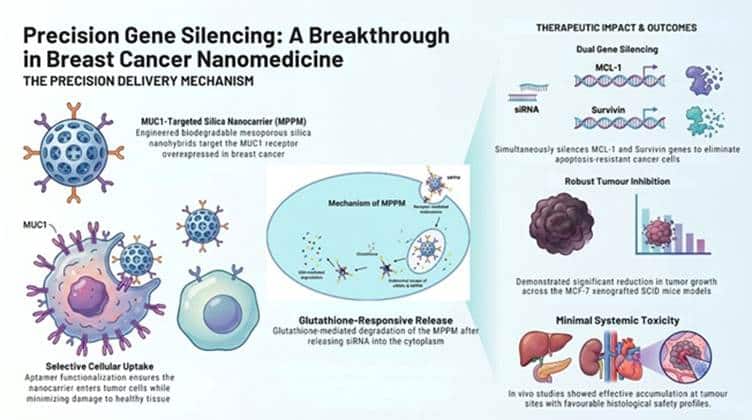
Scientists from Pune have unveiled a pioneering gene-silencing strategy that shows promise in inhibiting tumor growth in breast cancer. This innovative approach, developed at the Agharkar Research Institute (ARI) under the Department of Science and Technology (DST) of the Government of India, marks a significant step towards next-generation precision nanomedicine.
Recent advances in cancer nanomedicine are steering focus toward precision techniques that not only silence genes responsible for disease progression but also reduce systemic toxicity. The researchers from ARI have engineered a biodegradable nanocarrier platform specifically designed for targeted gene therapy in breast cancer, enhancing efficacy while minimizing side effects.
Innovative Platform for Targeted Therapy
The research, published in Advanced Healthcare Materials, introduces a novel method for targeted gene silencing of vital survival pathways in breast cancer, paving the way for safer and more effective therapies. The nanocarrier is structured using biodegradable mesoporous silica nanoparticles, which are recognized for their exceptional loading capacity and customizable surface chemistry. This allows for the effective delivery of small interfering RNA (siRNA) molecules essential for therapy.
By modifying the nanocarrier with a protamine biopolymer and an MUC1-specific aptamer, the team achieved precise targeting of breast cancer cells. This strategy utilizes the overexpression of MUC1 receptors on cancer cells, significantly improving cellular uptake and diminishing off-target effects that are common in traditional therapies.
Dual Gene-Silencing Approach
A standout feature of this research is its dual gene-silencing mechanism. The nanocarrier can deliver siRNAs targeting two crucial anti-apoptotic genes, MCL-1 and Survivin, both known for contributing to tumor survival and therapy resistance. Once the nanocarrier reaches the tumor microenvironment, its glutathione-responsive design facilitates controlled release of the therapeutic agents, ensuring targeted and effective treatment.
In biological tests conducted with MCF-7 breast cancer models, the approach demonstrated effective gene knockdown, leading to increased cancer cell death and marked inhibition of tumor growth. Additionally, in vivo studies with Severe Combined Immunodeficiency (SCID) mice revealed that the nanocarrier effectively localized at tumor sites while exhibiting minimal systemic toxicity, supported by favorable histological results. These outcomes align with growing evidence that aptamer-guided nanocarriers can significantly enhance tumor targeting and treatment efficacy.
Potential Impact on Cancer Therapy
This study reinforces a powerful integration of targeted delivery, stimuli-responsive release, and combinatorial gene silencing within a single biodegradable platform. This innovative framework serves as a strong candidate for the future of RNAi-based cancer therapies. By advancing precision oncology, these strategies could provide more effective and safer alternatives to conventional chemotherapy.
Observer Voice is the one stop site for National, International news, Sports, Editor’s Choice, Art/culture contents, Quotes and much more. We also cover historical contents. Historical contents includes World History, Indian History, and what happened today. The website also covers Entertainment across the India and World.

