

Goodpasture Syndrome: When Antibodies Attack Both the Lungs and Kidneys

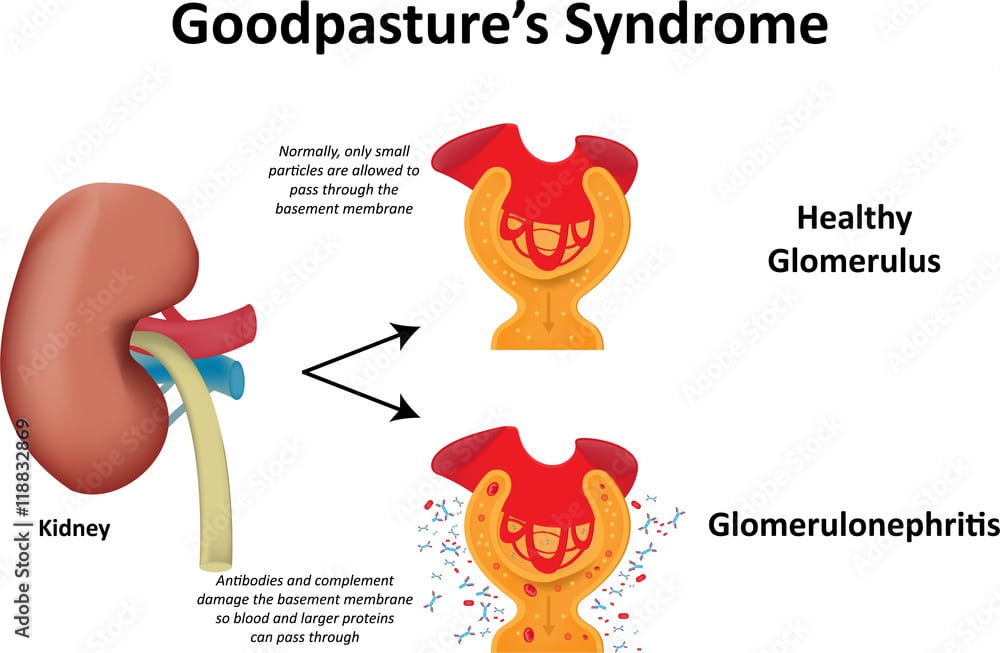
Goodpasture Syndrome is a rare, life-threatening autoimmune disease in which the immune system produces antibodies against basement membranes in the lungs and kidneys. Basement membranes are structural components of blood vessel walls and filtering structures. The disease is also called anti-glomerular basement membrane disease, or anti-GBM disease. The antibodies target the alpha-3 chain of type IV collagen in basement membranes. This component is present in both the lung alveolar basement membrane and the kidney glomerular basement membrane. The antibodies bind to basement membranes. Complement is activated. Inflammation occurs. Tissue is destroyed. The lung involvement causes pulmonary hemorrhage. Bleeding into lung alveoli. Blood fills the air sacs. Gas exchange impaired. Respiratory failure risk. The kidney involvement causes glomerulonephritis. Glomerular damage. Rapidly progressive glomerulonephritis. RPGN. Rapid loss of kidney function. Kidney failure develops rapidly. Goodpasture Syndrome affects approximately one to two people per one million per year worldwide. The disease is very rare. The disease predominates in males. Men affected approximately twice as often as women. The disease typically develops in young adults. Most commonly between ages twenty and thirty years. However, the disease can develop at any age. Goodpasture can develop in children. Can develop in older adults. Bimodal age distribution. Peak in young adults. Second peak in older adults. Goodpasture Syndrome is caused by autoimmune antibodies against the alpha-3 chain of type IV collagen. The exact trigger is unknown. Environmental exposure possibly triggers disease. Smoking increases risk. Smoking doubles risk. Chemical exposures possibly trigger. Hydrocarbons. Organic solvents. Infections possibly trigger. Viral infections. Bacterial infections. Genetic predisposition. HLA typing. Certain HLA alleles associated. The autoimmune antibodies are IgG class. Circulating anti-GBM antibodies. Deposit along basement membranes. Linear pattern on immunofluorescence. Distinctive for Goodpasture. Early diagnosis and immediate immunosuppression are crucial for preventing respiratory failure and kidney failure. Without treatment, the disease is rapidly fatal. With early aggressive immunosuppression and plasmapheresis, remission is achievable. However, permanent kidney damage may occur. Understanding Goodpasture Syndrome helps with early recognition and appropriate urgent management to prevent death and organ failure.
How Do Anti-GBM Antibodies Cause Pulmonary Hemorrhage and Glomerulonephritis?
To understand Goodpasture Syndrome, we need to learn about basement membranes and the immune system. Basement membranes are specialized structures. Thin sheets of extracellular matrix. Support blood vessel walls. Support epithelial cells. Composed of collagen. Mainly type IV collagen. Laminin. Nidogen. Perlecan. Proteoglycans. The alpha-3 chain of type IV collagen. An important component. Present in lungs. Present in kidneys. Present in eyes. The basement membrane acts as a structural scaffold. Provides mechanical support. Acts as selective barrier. Filters molecules. In the lungs, alveolar basement membranes. Support alveolar epithelial cells. Barrier between alveolar space and capillary. Allows gas exchange. In the kidneys, glomerular basement membrane. GBM. Supports glomerular cells. Acts as filtration barrier. Prevents blood cells and proteins from crossing. In Goodpasture Syndrome, autoimmune antibodies are produced. Anti-GBM antibodies. IgG class antibodies. Target alpha-3 chain of type IV collagen. The antibodies are highly specific. Only to basement membrane. The antibodies circulate in blood. Deposit along basement membranes. Deposit linearly. Along entire length. Distinctive pattern. Pathognomonic for Goodpasture. In lung alveoli, antibody deposits activate complement. Classical complement pathway. C3 deposition. MAC, membrane attack complex, forms. Cell membrane is damaged. Endothelial cells in alveolar capillaries. Damage occurs. Cell death. Capillary wall integrity compromised. Bleeding into alveoli. Pulmonary hemorrhage. Red blood cells leak into alveoli. Blood accumulates. Air sacs fill with blood. Gas exchange severely impaired. Hypoxemia. Low oxygen in blood. Respiratory distress. Respiratory failure risk. Hemorrhage may be massive. Life-threatening. Neutrophils infiltrate lungs. Neutrophil recruitment by complement. C5a chemotaxis. Neutrophils release enzymes. Protease. Elastase. Collagenase. Cause tissue damage. Release reactive oxygen species. ROS. Free radicals. Oxidative damage. Amplify lung injury. The pulmonary hemorrhage is progressive. Initial hemorrhage. May resorb. Then recur. Repeated hemorrhage. Progressive scarring. Fibrosis. Pulmonary fibrosis. Restrictive lung disease. Pulmonary function loss. In kidneys, antibody deposits also activate complement. Complement activation. C3 deposition. MAC formation. Glomerular capillary endothelial cells. Damage occurs. Glomerular basement membrane. Breached. Loss of filtration barrier function. Glomerular capillary walls necrotic. Segmental necrosis. Fibrinoid necrosis. Fibrin deposition. Crescent formation. Crescent cells. Proliferating cells in Bowman’s space. Parietal epithelial cells. Macrophages. T cells. Crescent formation indicates severe disease. Glomerulosclerosis. Glomerular scarring. Irreversible injury. Glomeruli permanently damaged. Loss of function. Tubular damage. Tubular epithelial cell necrosis. Acute tubular necrosis. ATN. Renal failure. Rapidly progressive renal failure. Serum creatinine rises rapidly. Over days to weeks. Acute kidney injury. Oliguria. Anuria. Complete renal failure. The severity depends on timing of treatment. Early treatment. Before extensive crescent formation. Before extensive glomerulosclerosis. Reversible. Later treatment. After extensive scarring. May be irreversible. Permanent renal failure. The eye involvement. Anti-GBM deposits in Descemet’s membrane. Cornea. Basement membrane of cornea. Ocular involvement. Usually asymptomatic. Usually not causing vision loss. May rarely cause corneal ulceration. Rare complication. Understanding the basement membrane targeting has led to development of immunosuppressive and plasmapheresis strategies.
What Are the Main Symptoms and Signs of Goodpasture Syndrome?
Goodpasture Syndrome causes acute, severe symptoms from pulmonary hemorrhage and rapidly progressive glomerulonephritis. The symptoms develop rapidly. Often over days to weeks. Pulmonary symptoms occur. Cough. Persistent cough. May be dry or productive. Hemoptysis. Coughing blood. Bloody sputum. Blood in sputum. Visible blood. Telltale sign. Shortness of breath. Dyspnea. Acute onset. Worsening. Severe dyspnea at rest. Dyspnea with minimal exertion. Tachypnea. Rapid breathing. Increased respiratory rate. Labored breathing. Accessory muscle use. Respiratory distress. Chest pain. Pleuritic chest pain. Worse with breathing. Worse with coughing. Sharp pain. Chest discomfort. Pleurisy. Fever. Low-grade fever. Often present. Malaise. General feeling of illness. Systemic symptoms. Weakness. Exhaustion. Fatigue. Disproportionate to activity. Pallor. Pale appearance. From anemia. From bleeding. Tachycardia. Rapid heart rate. From blood loss. From hypoxemia. Hypoxemia signs. Cyanosis. Blue discoloration of lips and nailbeds. From low oxygen. Mental status changes. Confusion. Altered mental status. From severe hypoxemia. From acidosis. Acute respiratory failure. Severe respiratory compromise. Respiratory distress. Stridor. Wheezing. Crackles. Rales. Adventitious lung sounds. On auscultation. Chest X-ray shows infiltrates. Bilateral infiltrates. Both lungs. Alveolar opacities. Cotton wool appearance. Classic finding. Renal symptoms occur. Hematuria. Blood in urine. Gross hematuria. Visible blood. Cola-colored urine. Brown or red-tinged. Or microscopic hematuria. RBCs on urinalysis. RBC casts. Indicate glomerular hematuria. Proteinuria. Protein in urine. May range from mild to nephrotic. Flank pain. Back pain. Over kidneys. Renal tenderness. Costovertebral angle tenderness. Pain with percussion. Oliguria. Reduced urine output. Progressive oliguria. Anuria. No urine output. Indicates renal failure. Edema. Swelling. From fluid retention. Face puffiness. Ankle swelling. Dependent edema. Hypertension. Blood pressure elevation. From fluid retention. From kidney disease. Nausea and vomiting. From uremia. Kidney failure. Appetite loss. Difficulty eating. Abdominal pain. Mild to moderate. From kidney disease. Weakness. Myalgia. Muscle pain. From systemic disease. Arthralgias. Joint pain. Non-erosive. Skin manifestations. Rash. Purpura. Small red or purple spots. Petechiae. Palpable purpura. Vasculitic lesion. Especially lower extremities. Livedo reticularis. Lacy mottling. Cyanotic extremities. Cold extremities. From vasoconstriction. From peripheral vasoconstriction. Respiratory failure signs. Cyanosis. Respiratory distress. Inability to speak full sentences. Tripoding. Sitting upright. Accessory muscle use. Inability to protect airway. Mechanical ventilation need. Urgent. Renal failure signs. Oliguria. Anuria. Elevated creatinine. Elevated BUN. Hyperkalemia. Metabolic acidosis. Encephalopathy. Uremia. The presentation is acute and severe. Pulmonary-renal syndrome. Both lungs and kidneys. Distinctive. Rapidly progressive. Days to weeks. Without treatment, rapid deterioration. Respiratory failure. Renal failure. Death. Urgent diagnosis and treatment necessary.
How is Goodpasture Syndrome Detected and Diagnosed?
Goodpasture Syndrome is diagnosed through clinical findings and specific laboratory tests identifying anti-GBM antibodies and distinctive kidney findings. Urgent diagnosis is critical. Clinical history is crucial. Acute hemoptysis. Pulmonary hemorrhage. Acute dyspnea. Respiratory distress. Acute hematuria. Rapidly rising creatinine. Rapid renal failure. Typical presentation. Young adult. Male predominant. Smoking history. Possible triggers. Physical examination findings. Tachypnea. Rapid breathing. Tachycardia. Rapid heart rate. Hypoxemia. Low oxygen saturation. Cyanosis. Crackles. Rales. On lung auscultation. Hypertension. Elevated blood pressure. Edema. Swelling. Complete blood count. Hemoglobin. Usually low. From bleeding. Anemia. Hematocrit. WBC. Usually normal or elevated. If infection. Platelets. Usually normal. Coagulation studies. PT/INR. aPTT. Baseline. Prolonged if DIC. Disseminated intravascular coagulation. Fibrinogen. Low if DIC. D-dimer. Elevated if thrombosis. Serum creatinine. Elevated. High. Indicates kidney dysfunction. May be very elevated. Acute kidney injury. BUN. Elevated. Electrolytes. Potassium. Usually elevated. Hyperkalemia. Life-threatening. Requires urgent treatment. Sodium. Usually low. Hyponatremia. Chloride. Bicarbonate. Low if acidosis. Urinalysis. Hematuria. RBCs. WBCs. Proteinuria. Protein. RBC casts. Indicate glomerular hematuria. Serum albumin. Usually low. From urinary losses. From malnutrition. From disease. Complement levels. C3 and C4. Usually normal. Normal complement helps distinguish from lupus. Important distinction. Anti-GBM antibody testing. ELISA test. Anti-GBM antibodies. IgG. Highly specific. Presence diagnostic. Sensitive test. Positive confirms diagnosis. Titer correlates with disease activity. Declining titer indicates response to treatment. ANCA testing. ANCA usually negative. Helps exclude ANCA-associated vasculitis. Important distinction. ANA testing. Antinuclear antibody. Usually negative. Helps exclude lupus. Important distinction. Cryoglobulin testing. Usually negative. Helps exclude cryoglobulinemia. Anti-dsDNA. Usually negative. Helps exclude lupus. Anti-thyroid peroxidase. Usually negative. HLA typing. HLA-DR15. HLA-DQ6. Associated alleles. Research. Chest X-ray. Bilateral infiltrates. Alveolar opacities. Cotton wool appearance. Characteristic. Progressive infiltrates. Rapid change. Resolution with treatment. CT chest. More detailed imaging. Extent of infiltrates. Pulmonary edema. Pulmonary fibrosis if chronic. Kidney ultrasound. Usually normal. Or mildly swollen. Normal or enlarged. Doppler assessment. Renal artery resistance. Usually increased. Kidney biopsy is gold standard for diagnosis. Shows rapidly progressive glomerulonephritis. RPGN. Crescent formation. Segmental necrosis. Fibrinoid necrosis. Glomerular proliferation. Immunofluorescence. Anti-GBM. Linear IgG deposits. Along GBM. Entire length. Linear pattern distinctive. Pathognomonic. Also C3 along GBM. Electron microscopy. Electron-dense material. Sparse. Along GBM. Subepithelial. The combination of clinical presentation with hemoptysis, hematuria, acute renal failure, positive anti-GBM antibodies, and kidney biopsy showing linear IgG deposits confirms Goodpasture Syndrome diagnosis. Urgent diagnosis allows immediate treatment initiation preventing death.
What Health Complications Do People with Goodpasture Syndrome Face?
People with Goodpasture Syndrome face life-threatening complications from pulmonary hemorrhage and rapidly progressive kidney disease. The complications are severe and potentially fatal without treatment. Massive pulmonary hemorrhage is the most immediately life-threatening complication. Severe bleeding into lungs. Alveolar hemorrhage. Massive hemorrhage. Large volume bleeding. Respiratory tract filling with blood. Hypoxemia. Severe. Respiratory failure. Unable to maintain oxygenation. Mechanical ventilation needed. Intubation. Endotracheal tube. Mechanical support. Even with ventilation. Severe hypoxemia. Refractory hypoxemia. Despite high oxygen. Despite mechanical ventilation. Respiratory distress syndrome. ARDS-like picture. Diffuse alveolar damage. Pulmonary edema. Airway obstruction. Blood in airways. Obstruction. Aspiration risk. Foreign body aspiration. Death. Without transfusion support. Rapid exsanguination. Massive blood loss. Hypovolemic shock. Cardiovascular collapse. Death. ECMO. Extracorporeal membrane oxygenation. Emergency support. Life-sustaining. Hemoptysis. Massive blood-tinged sputum. Aspiration. Hemoglobin iron accumulation in lungs. Pulmonary siderosis. Iron deposits in lungs. Chronic lung damage. Pulmonary fibrosis. Chronic restrictive lung disease. Reduced lung function. Chronic dyspnea. Chronic oxygen dependence. Long-term sequela. Anemia. Severe anemia. From blood loss. From chronic bleeding. Hemoglobin less than seven. Transfusion dependent. Transfusions needed. Multiple transfusions. Iron overload. Hemosiderosis. Cardiac dysfunction. Rapid kidney failure. Rapidly progressive glomerulonephritis. RPGN. Creatinine rising. Doubling. Over days. Oliguria progressing. Anuria. Complete renal failure. Acute kidney injury. AKI. Severe. Irreversible if delayed treatment. End-stage renal disease. ESRD. Kidney failure. Dialysis needed. Immediate. Hemodialysis emergency. Hyperkalemia. Elevated potassium. Dangerous. Life-threatening. Peaked T-waves. Widened QRS. Ventricular fibrillation. Cardiac arrest. Requires urgent treatment. Calcium gluconate. Insulin. Glucose. Potassium-binding resins. Dialysis. Metabolic acidosis. Low pH. Severe. Requires alkali therapy. Sodium bicarbonate. Hyperphosphatemia. Elevated phosphate. Contributes to hyperkalemia. Hypocalcemia. Low calcium. Causes muscle cramps. Tetany. Seizures. Hypertension. Severe blood pressure elevation. From kidney failure. From fluid overload. Risk of stroke. Heart attack. CNS complications. Encephalopathy. Altered mental status. Confusion. Seizures. Coma. From uremia. From severe electrolyte abnormality. Seizure emergency. Anticonvulsants. ICU monitoring. Cardiac complications. Arrhythmias. From hyperkalemia. From acidosis. Pericarditis. Pericardial inflammation. Chest pain. Pericardial effusion. Tamponade. Myocarditis. Myocardial inflammation. Heart failure. Cardiogenic shock. Pulmonary edema. Respiratory failure. Disseminated intravascular coagulation. DIC. If severe. Thrombosis. Bleeding. Thrombocytopenia. Microthrombi. Organ damage. Renal failure worsens. Catastrophic complications. Multiorgan failure. Without early aggressive treatment, complications are fatal. With early treatment, complications prevented or survivable. However, permanent organ damage possible.
What Treatments Help People with Goodpasture Syndrome?
Treatment for Goodpasture Syndrome requires urgent aggressive immunosuppression and plasmapheresis to remove circulating antibodies. Immediate treatment is life-saving. Plasmapheresis is first-line emergency therapy. Plasma exchange. Removes circulating anti-GBM antibodies. Removes pathogenic IgG. Removes circulating immune complexes. Reduces antibody levels. Rapid effect. Daily exchanges. Initially. Five plasma volumes. Approximately three to four liters. Exchanged for FFP. Fresh frozen plasma. Or albumin. Continued daily. Until antibodies undetectable. Or until crisis passes. Usually done initially. Then tapered. Three to five days daily. Then every other day. Then weekly. Allows kidney time to recover. Prevents progressive damage. Early plasmapheresis. Better outcomes. Within days of presentation. Prevents irreversible kidney damage. Delays plasmapheresis. Kidney damage irreversible. Permanent renal failure. Corticosteroids are essential immunosuppression. Methylprednisolone. High-dose IV corticosteroids. Pulse therapy. One gram daily. Three days. Rapid anti-inflammatory effect. Suppresses antibody production. Then transition to oral prednisone. One milligram per kilogram. Taper over weeks. Long-term low-dose maintenance. Immunosuppressive agents. Cyclophosphamide. Cytotoxic agent. Suppresses B cells. Suppresses antibody production. Reduces relapse. Often combined with corticosteroids. Used with plasmapheresis. Standard triple therapy. Plasmapheresis. Corticosteroids. Cyclophosphamide. Most effective. Prevents progression. Prevents relapse. Azathioprine. Alternative to cyclophosphamide. Some benefit. Less effective. Mycophenolate mofetil. Alternative. May have role. Data limited. Rituximab. B cell depletion. Used in some centers. Shows promise. Reduces antibody production. Alternative to cyclophosphamide. Emerging therapy. Supportive care. Mechanical ventilation if respiratory failure. Intubation. Intensive care. Oxygen. High-concentration oxygen. Maintain oxygenation. Ventilation. Assist breathing. ICU monitoring. Continuous monitoring. Blood transfusion. For anemia. For blood loss. Maintain hemoglobin. Usually seven or higher. Goal depends on severity. Fluid management. Careful balance. Fluid overload. Pulmonary edema. But adequate perfusion. Diuretics. For fluid overload. Dialysis. For renal failure. Urgent dialysis. Hyperkalemia treatment. Calcium gluconate. Stabilizes cardiac membrane. Insulin and glucose. Shift potassium intracellularly. Potassium-binding resins. Kayexalate. Binds potassium. Removes in stool. Sodium bicarbonate. For acidosis. Dialysis. Removes excess potassium. Removes excess acid. Antiarrhythmics. For dangerous arrhythmias. Lidocaine. Amiodarone. Anticonvulsants. For seizures. Phenytoin. Levetiracetam. Management of complications. Blood product support. Transfusion as needed. FFP for coagulation. Platelets if thrombocytopenia. Antibiotics. For infection prevention. Empiric antibiotics if infection. Ventilator-associated pneumonia prevention. Stress ulcer prophylaxis. Nutritional support. Enteral feeds. Parenteral nutrition. Supports healing. With urgent plasmapheresis, high-dose corticosteroids, and cyclophosphamide, remission is achievable. Antibodies become undetectable. Disease halts. But kidney damage may be irreversible. Dialysis may be permanent need. Lung function usually recovers if treated early.
Living with Goodpasture Syndrome
Living with Goodpasture Syndrome requires ongoing immunosuppression, careful monitoring, renal function preservation, and psychological adjustment to a disease with permanent potential organ damage. For people surviving acute Goodpasture Syndrome, the experience is traumatic. Near-death experience. Intensive care. Mechanical ventilation. Fear of recurrence. However, understanding that remission is achievable and further attacks preventable offers hope. Survivors often live relatively normal lives. Ongoing immunosuppression is critical. Corticosteroid continuation. Long-term low-dose maintenance. Gradually taper. But often lifelong low-dose needed. Discontinuation risks relapse. Immunosuppressive agents. Azathioprine or cyclophosphamide. Long-term continuation. Cyclophosphamide toxicity. Cancer risk. Bladder complications. Cystitis. Monitor. Azathioprine. Often used long-term. Mycophenolate mofetil. Long-term alternative. Regular monitoring essential. Anti-GBM antibody titers. Monitor. Declining titers. Good sign. Persistent antibodies. Risk of relapse. Rising titers. Relapse warning. Immediate intervention. Complement levels. C3. C4. Usually normalize with treatment. Kidney function monitoring. Serum creatinine. eGFR. Regular assessment. Monthly initially. Then quarterly. Then annually if stable. BUN. Potassium. Electrolytes. Urinalysis. Regular checks. Hematuria. Proteinuria. RBC casts. Indication of activity. Complete blood count. Hemoglobin monitoring. Anemia persistence. Transfusion needs. White cell counts. Cyclophosphamide effects. Immunosuppression effects. Infection monitoring. Cyclophosphamide increased infection risk. Trimethoprim-sulfamethoxazole. TMP-SMX. Pneumocystis prophylaxis. Prevents PCP. Usually continued. Fungal prophylaxis if severe immunosuppression. Tuberculosis screening. Annual. Activation risk. Renal function preservation. ACE inhibitor or ARB. Additional renoprotection. Blood pressure control. Less than one hundred thirty slash eighty. Proteinuria reduction. Goal. Less than one gram per day. Limiting sodium. Sodium restriction. Two grams daily. Reduces blood pressure. Reduces proteinuria. Adequate hydration. Prevents acute kidney injury. Regular hydration. Smoking cessation urgent. Smoking associated with disease. Smoking increases relapse risk. Cessation critical. Stress management. Stress may trigger relapse. Meditation and relaxation. Yoga. Regular exercise. Reduces stress. Low-impact. Walking. Swimming. Avoid strenuous. Protects lungs. Protects kidneys. Pulmonary function monitoring. Spirometry. Lung function assessment. Baseline initially. Then periodically. FEV1. FVC. DLCO. Lung function decline. Indicates fibrosis. Hypoxemia testing. Oxygen saturation. At rest and with activity. Supplemental oxygen if needed. Sleep apnea screening. If sleep disturbance. Pulmonary follow-up. Chest imaging. CT if symptoms. Monitor for fibrosis. Nutrition management. Renal diet. Potassium restriction. If kidney disease. Phosphate restriction. Protein moderation. Sodium restriction. Fluid restriction if severe kidney disease. Vitamin supplementation. Vitamins lost in dialysis. If dialysis needed. Work and school adjustments. Cyclophosphamide side effects. Fatigue. Immunosuppression. Infection risk. May need modifications. Medical appointments. Frequent initial. Then less frequent. Disability. If dialysis. If permanent kidney failure. Dialysis. If ESRD develops. Hemodialysis. Three times weekly. Peritoneal dialysis. Continuous infusion. Transplantation. If possible. Better than dialysis. Dating and relationships. Explaining condition. Disease rarity. Unusual presentation. Severe nature. Understanding from partners. Sexual function. Usually preserved. Renal failure. Uremia. May affect. Communication important. Psychological support. PTSD. Post-traumatic stress disorder. From near-death. From ICU experience. Nightmares. Flashbacks. Anxiety. Depression. Trauma counseling. PTSD therapy. Mental health support crucial. Support groups. Others with Goodpasture. Share experiences. Coping. Online communities. Family education. Explaining disease. Understanding immunosuppression. Understanding relapse risk. Support with medication management. Emotional support. Regular medical follow-up. Nephrology. Pulmonology. Regular assessment. Disease activity. Organ function. Medication side effects. Adjustment as needed. With appropriate ongoing immunosuppression ensuring compliance, regular antibody and organ function monitoring, renal protective measures, pulmonary monitoring, stress management, smoking cessation, psychological support, family and social support, most Goodpasture Syndrome survivors achieve stable remission and prevent relapse with appropriate lifelong immunosuppression despite the severe nature of this rapidly progressive anti-GBM autoimmune disease affecting both lungs and kidneys.
Frequently Asked Questions About Goodpasture Syndrome
FAQ 1: Can Goodpasture Syndrome recur? Goodpasture Syndrome can recur. Relapse risk approximately ten to fifteen percent. Usually within first two years. However, can occur later. Relapse indicated by rising anti-GBM titers. Recurrent hemoptysis. Recurrent hematuria. Rising creatinine. Usually responds to renewed intensive therapy. But cumulative organ damage worsens. Early recognition important. Regular monitoring. Antibody titers. Prophylaxis with long-term immunosuppression. Reduces relapse risk. Long-term therapy important.
FAQ 2: Will Goodpasture Syndrome cause permanent kidney failure? Goodpasture Syndrome may cause permanent kidney failure. Depends on timing of treatment. Early treatment. Before extensive crescent formation. Before extensive scarring. Kidney function may recover. Dialysis may be temporary. Late treatment. After extensive irreversible damage. Permanent ESRD likely. Dialysis permanent. Transplantation needed. Timing of treatment critical. Within days of presentation. Best outcomes. Delayed diagnosis. Worse outcomes.
FAQ 3: Is Goodpasture Syndrome fatal? Goodpasture Syndrome is life-threatening without treatment. Mortality high. Respiratory failure. Cardiac complications. However, with immediate aggressive treatment, survival achievable. Most survivors with early treatment. However, permanent organ damage possible. Some require lifelong dialysis. Some have residual lung disease. But alive. Early treatment saves lives.
FAQ 4: Can women with Goodpasture Syndrome become pregnant? Pregnancy possible with Goodpasture Syndrome. However, high risk. Disease may flare in pregnancy. Immunosuppression needed. Some medications teratogenic. Cyclophosphamide. Avoided in pregnancy. Careful planning necessary. Close medical monitoring. Fetal monitoring. Obstetric and nephrology collaboration. Most successful with appropriate precautions. However, risks present.
FAQ 5: Are there new treatments being developed for Goodpasture Syndrome? Yes, research ongoing. C5 inhibitors. Eculizumab. Complement inhibition. Reduces glomerular damage. Phase studies. Rituximab. B cell depletion. Reduces antibody production. Shows benefit. Alternative to cyclophosphamide. Newer B cell agents. Ocrelizumab. Ofatumumab. Under investigation. Antigen-specific tolerance. Restoring immune tolerance. Experimental. Gene therapy. Correcting immune defect. Experimental. Better treatments anticipated.
References and Further Reading
For more information about Goodpasture Syndrome, you can visit several trusted and authoritative sources providing detailed information for patients and families dealing with this rapidly progressive autoimmune kidney and lung disease. The World Health Organization at WHO.int provides comprehensive information about Goodpasture Syndrome and anti-GBM disease. The National Kidney Foundation at Kidney.org offers patient education about kidney diseases including Goodpasture Syndrome. The American Lung Association at Lung.org provides resources about lung diseases including pulmonary-renal syndromes. The American Society of Nephrology at ASN.org provides professional and patient resources about kidney disease. MedlinePlus, a service of the National Library of Medicine at MedlinePlus.gov, has detailed medical information about Goodpasture Syndrome written in language that patients and families can easily understand without specialized medical knowledge. The five main reference links are: 1) WHO.int – Goodpasture Syndrome, 2) National Kidney Foundation, 3) American Lung Association, 4) American Society of Nephrology, and 5) MedlinePlus – Goodpasture Syndrome.
Disclaimer
This article adapts publicly available information from WHO’s Goodpasture Syndrome and anti-GBM disease information pages. This content is for informational and educational purposes only and does not constitute medical advice. ObserverVoice.com is a news and information platform — not a healthcare provider. If you or someone you know has been diagnosed with Goodpasture Syndrome or shows signs of this condition including hemoptysis, hematuria, rapidly rising creatinine, pulmonary hemorrhage with respiratory distress, or acute kidney failure, please seek emergency medical care immediately and consult with qualified healthcare professionals, nephrologists, pulmonologists, and critical care specialists for urgent diagnostic evaluation with anti-GBM antibody testing, kidney biopsy, chest imaging, and immediate initiation of plasmapheresis, high-dose corticosteroids, and immunosuppressive therapy. Early aggressive treatment is life-saving and prevents irreversible organ damage. Urgent treatment is essential. For more information, visit WHO.int and ObserverVoice.com.
Observer Voice is the one stop site for National, International news, Sports, Editor’s Choice, Art/culture contents, Quotes and much more. We also cover historical contents. Historical contents includes World History, Indian History, and what happened today. The website also covers Entertainment across the India and World.

