

Asian Markets Surge as Iran-US Ceasefire Talks Alleviate Tensions; Kospi Gains 1.9%, Nikkei Up 1.5%

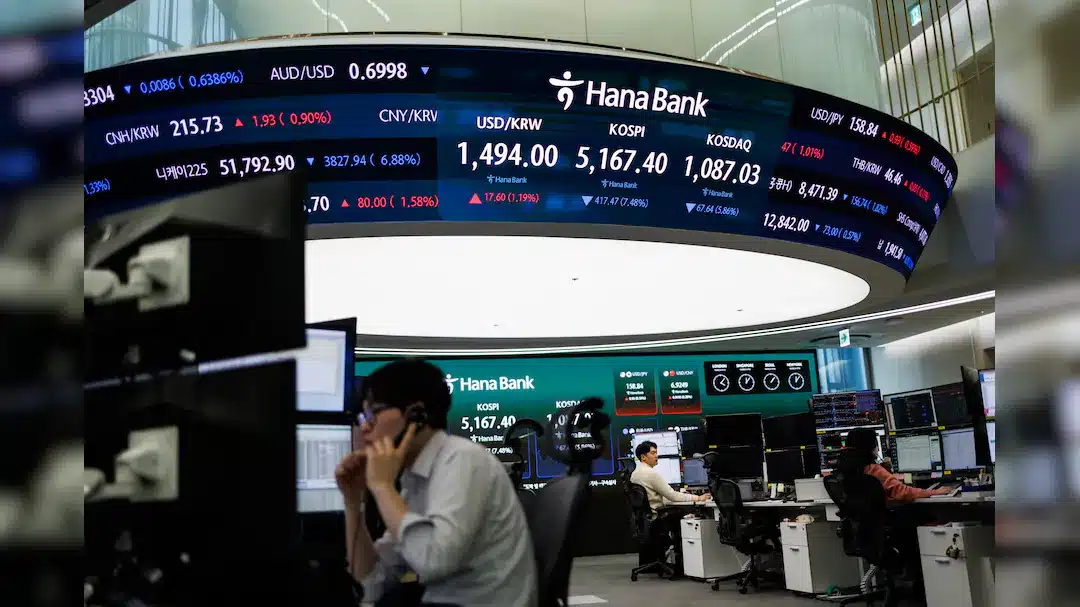
Asian markets experienced a notable upswing in early trading on Friday, buoyed by a reduction in geopolitical tensions and a slight recovery in global risk sentiment linked to ongoing peace efforts in the Middle East. The MSCI index, which tracks shares across the Asia-Pacific region excluding Japan, climbed by 0.5%. Japan’s Nikkei 225 surged by 1.5%, while South Korea’s Kospi led the regional gains with a 1.9% increase. However, despite this positive momentum, traders remained cautious, questioning the sustainability of the recent U.S.-Iran ceasefire amid ongoing concerns regarding Israel-Lebanon peace negotiations.
Geopolitical Concerns Linger
Despite the initial optimism following the U.S.-Iran ceasefire, investors are still closely monitoring geopolitical risks. Reports indicate that ongoing strikes in Lebanon pose significant challenges to the ceasefire framework, leading to a cautious approach among traders. Rupal Agarwal, an Asia quant strategist at Bernstein in Singapore, noted that while the ceasefire has sparked a recovery in Asian markets, the overall risk sentiment remains fragile. Agarwal suggested that this moment could represent an opportunity for investors to refocus on pre-war trends and fundamentals, advocating for the reintroduction of previously undervalued stocks into investment portfolios.
Wall Street’s Influence
On Thursday, Wall Street also saw positive movement, with the S&P 500 rising by 0.6% as markets reacted to signs of tentative diplomatic engagement in the Middle East. However, the sentiment remains delicate due to renewed violence in the region, which has kept investors on edge regarding potential shifts in risk appetite. The interplay between geopolitical developments and market responses continues to shape investor behavior, highlighting the interconnectedness of global financial markets.
Energy Markets and Currency Fluctuations
Energy markets are particularly sensitive to geopolitical developments, with Brent crude oil prices rising by 1% to $96.83 a barrel as trading resumed in Asia. This increase follows heightened security concerns stemming from fresh tensions in the region and ongoing disruptions in shipping through critical routes. The Strait of Hormuz, a vital passage for global oil and gas shipments, remains largely restricted, contributing to worries about energy security and global supply chain stability.
In currency markets, the U.S. dollar index saw a slight increase of 0.1% to 98.92, influenced by recent labor market data showing a rise in weekly jobless claims. Additionally, inflation indicators revealed persistent price pressures, with the core PCE price index rising for the second consecutive month. U.S. Treasury yields also experienced a slight uptick, reflecting adjustments in investor expectations regarding the Federal Reserve’s monetary policy trajectory. Meanwhile, in private markets, there are reports of significant asset withdrawals from Carlyle’s flagship private credit fund, underscoring ongoing stress in certain financial sectors. In the cryptocurrency space, Bitcoin and Ether experienced minor declines, mirroring the broader caution observed in global markets.
Observer Voice is the one stop site for National, International news, Sports, Editor’s Choice, Art/culture contents, Quotes and much more. We also cover historical contents. Historical contents includes World History, Indian History, and what happened today. The website also covers Entertainment across the India and World.
Follow Us on Twitter, Instagram, Facebook, & LinkedIn

