

Significance of Kharg Island: The Oil Supply Chain Targeted by Trump

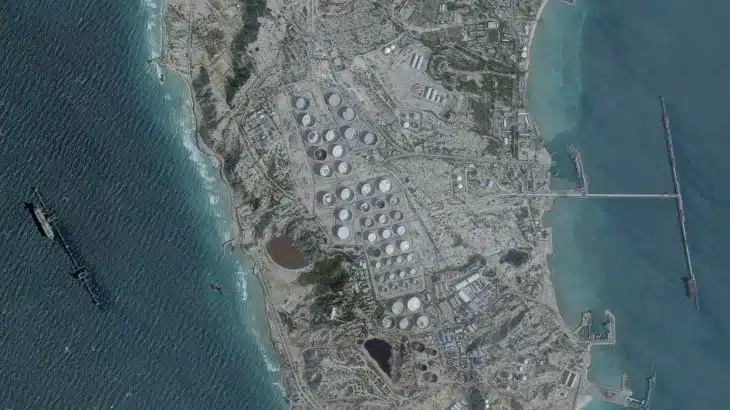
A small yet strategically significant island in the Persian Gulf, Kharg Island, has emerged as a focal point in the rising tensions between the United States and Iran. Located just 15 nautical miles off Iran’s southern coast, this rocky island plays a crucial role in the country’s oil export system, with approximately 90% of Iran’s crude oil exports passing through its facilities. As President Donald Trump seeks to rally international support to reopen the Strait of Hormuz, the implications of Kharg Island’s military and economic significance are becoming increasingly apparent.
Strategic Importance of Kharg Island
Despite its modest size, Kharg Island is vital to Iran’s economy and energy infrastructure. The island hosts a massive oil terminal where pipelines transport crude oil from the mainland for loading onto large tankers. These vessels, capable of carrying millions of gallons of oil, then navigate through the Strait of Hormuz, a critical maritime chokepoint, primarily heading to Asian markets, especially China, which is the largest buyer of Iranian oil. Analysts often refer to Kharg Island as Iran’s economic lifeline, as the revenue generated from oil exports is crucial for the country’s economy and supports the powerful Islamic Revolutionary Guard Corps (IRGC). The island’s strategic location near deep waters allows for efficient docking and loading of very large crude carriers, making it an indispensable asset for Iran’s oil trade.
U.S. Military Actions and Their Implications
In recent developments, President Trump has confirmed that U.S. forces targeted military installations on Kharg Island, including missile storage sites and naval mine facilities. The strikes, executed by the United States Central Command, reportedly hit over 90 military targets while intentionally avoiding damage to oil facilities. This approach is seen as a calculated move to send a strong message to Iran without immediately crippling its economy. By targeting military assets, the U.S. aims to demonstrate its capability to disrupt Iran’s oil exports if tensions escalate further. Trump has indicated that the decision to spare oil infrastructure could change if Iran interferes with shipping in the Strait of Hormuz, highlighting the delicate balance of power in the region.
Consequences of Targeting Oil Infrastructure
The decision not to bomb Kharg Island’s oil terminal reflects a strategic restraint by the U.S. administration. Destroying the oil facilities could significantly cut off Iran’s oil revenue, potentially leading to soaring global oil prices and retaliatory attacks throughout the Middle East. Iran has warned that any attack on its energy infrastructure would prompt it to target oil and energy facilities associated with U.S. interests. Additionally, Tehran possesses the capability to launch drones and missiles at Gulf infrastructure, raising concerns that any conflict could extend beyond Iran’s borders and destabilize the region further.
The Broader Context of U.S.-Iran Relations
By striking military sites while sparing the oil terminal, the U.S. appears to be exercising both restraint and strategic leverage. Kharg Island’s critical role in Iran’s oil exports makes it a significant pressure point in the ongoing conflict. The situation remains precarious, as any shift in the status of the island’s energy infrastructure could escalate both economic and geopolitical tensions. The international community watches closely, aware that the stakes are high and the potential for conflict could have far-reaching consequences.
Observer Voice is the one stop site for National, International news, Sports, Editor’s Choice, Art/culture contents, Quotes and much more. We also cover historical contents. Historical contents includes World History, Indian History, and what happened today. The website also covers Entertainment across the India and World.
Follow Us on Twitter, Instagram, Facebook, & LinkedIn

