

Trump Criticizes Supreme Court Ruling, Asserts Right to Impose Tariffs in Alternate Forms

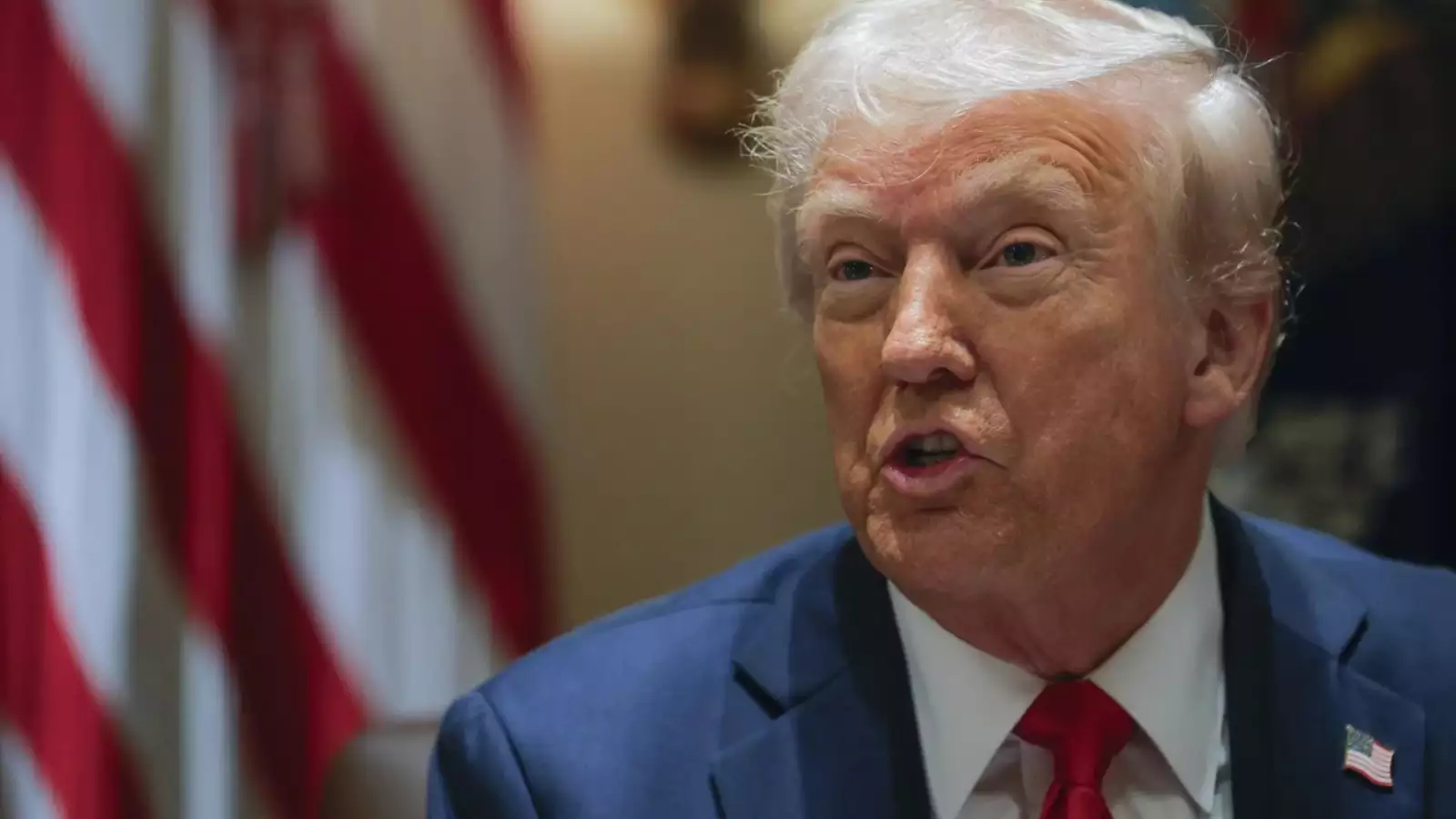
US President Donald Trump has expressed strong disapproval of the Supreme Court’s recent ruling that invalidated his global tariffs, warning that the decision could lead to significant financial losses for the United States. He argued that the verdict favors foreign nations and corporations that have historically exploited the U.S. economy. In a series of posts on Truth Social, Trump emphasized the importance of tariffs and hinted at his intention to impose them in a different manner.
Trump’s Reaction to the Supreme Court Ruling
Following the Supreme Court’s decision, Trump took to social media to voice his concerns. He stated that the ruling could potentially cost the U.S. trillions of dollars and accused the court of undermining his efforts to protect the American economy. Trump highlighted tariffs as a crucial issue in the case, asserting that the court’s decision would benefit countries and companies that have taken advantage of the United States for years. He expressed disappointment, stating, “The decision that mattered most to me was TARIFFS!” Trump also claimed that he still holds the right to impose tariffs in another form and is already taking steps to do so.
In his posts, Trump thanked three justices—Samuel Alito, Clarence Thomas, and Brett Kavanaugh—for their support regarding the tariff case. He praised their understanding of the law and their recognition of the harm caused by foreign competitors. However, he criticized the broader functioning of the Supreme Court, suggesting that justices appointed by Democratic presidents tend to vote in unison, while Republican appointees do not. He accused them of disrespecting the presidents who nominated them and of making rulings that reflect political bias rather than legal principles.
Criticism of Federal Reserve and Judicial Bias
In addition to his comments on tariffs, Trump directed criticism at Federal Reserve Chair Jerome Powell. He described a renovation project at the Federal Reserve complex in Washington, D.C., as a “money pit” and an embarrassment for the nation, alleging that the costs had exceeded the budget by billions. Trump’s remarks reflect his ongoing dissatisfaction with the Federal Reserve’s management and its impact on the economy.
Moreover, Trump targeted U.S. District Judge James Boasberg, accusing him of political bias and calling for his removal from cases involving Trump and his allies. He claimed that Boasberg has demonstrated extreme partisan bias against Republicans and the Trump administration. Trump argued that the judge’s actions in various cases were politically motivated rather than grounded in law, further asserting that the recent Supreme Court ruling exemplifies the politicization of the judicial system.
Efforts to Recover Tariff Revenue
As the Trump administration grapples with the implications of the Supreme Court’s ruling, officials are intensifying efforts to recover approximately $1.6 trillion in tariff revenue. The court’s decision to strike down several of Trump’s import duties has prompted the administration to explore alternative legal avenues for imposing replacement tariffs. However, experts caution that recovering this amount may be challenging, as the new procedures could be more complex and provide U.S. companies with greater opportunities to seek exemptions.
In response to the ruling, U.S. Trade Representative Jamieson Greer announced plans to investigate 16 economies, including the European Union, to assess whether government subsidies are leading to excessive factory capacity that negatively impacts U.S. manufacturing. Additionally, a separate investigation will evaluate whether numerous countries have failed to prohibit goods produced with forced labor, which the U.S. considers an unfair trade practice. This review will encompass the EU, China, Mexico, Canada, Australia, and Brazil.
Future Implications for U.S. Trade Policy
The Supreme Court’s ruling and Trump’s subsequent reactions signal a pivotal moment for U.S. trade policy. The administration’s efforts to impose new tariffs and recover lost revenue could reshape the landscape of international trade relations. As investigations into foreign practices unfold, the outcomes may influence future negotiations and the overall approach to trade. The complexities involved in implementing replacement tariffs highlight the challenges the administration faces in navigating a rapidly changing economic environment. With Trump’s continued emphasis on tariffs as a key issue, the administration’s trade strategy will likely remain a focal point in the coming months.
Observer Voice is the one stop site for National, International news, Sports, Editor’s Choice, Art/culture contents, Quotes and much more. We also cover historical contents. Historical contents includes World History, Indian History, and what happened today. The website also covers Entertainment across the India and World.

