

Government Addresses Biennial Bearing Issue in Mango Cultivation

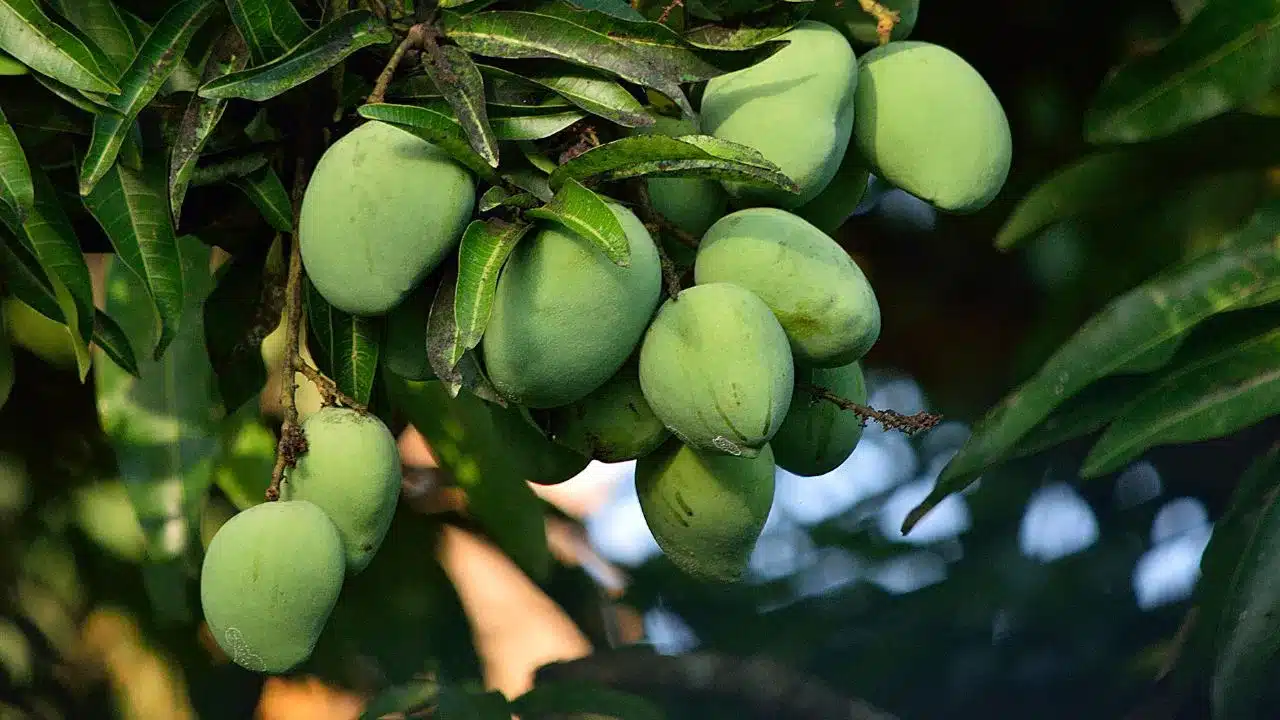
The issue of biennial bearing in mango crops is localized and has minimal impact on overall mango production across India, particularly affecting certain areas in North India. Recent scientific studies, conducted by the Indian Council of Agricultural Research (ICAR) and its various institutes, have shed light on this agricultural phenomenon, identifying multiple causes and their regional influence. These insights were shared in a written statement by Shri Ramnath Thakur, the Minister of State for Agriculture and Farmers Welfare, in the Lok Sabha.
Understanding Biennial Bearing
Biennial bearing, where mango trees alternate between high and low yield years, has shown to predominantly affect well-known varieties such as Dashehari, Langra, Chausa, Fazli, and Alphonso. The primary reasons behind this issue involve a complex interaction of genetic factors, nitrogen and carbon reserves within the trees, hormonal regulation of flowering, and various cultural practices. Climatic conditions also play a significant role, further complicating the challenges faced by mango cultivators.
ICAR’s Efforts to Combat the Problem
In response to the challenges posed by biennial bearing, the ICAR has implemented several targeted measures. Among these, there has been a concerted effort to develop and promote mango varieties and hybrids that are more consistent in their bearing patterns. Varieties such as Amrapali, Mallika, Pusa Arunima, and CISH-Ambika are among those highlighted as reliable options for farmers.
The ICAR is also working on the distribution of quality planting materials to farmers through registered nurseries and its institutes. Furthermore, the Mission for Integrated Development of Horticulture has rolled out the Clean Plant Program, aimed at producing disease-free and high-quality saplings for effective cultivation.
Innovative Management Practices
Beyond genetic solutions, ICAR is introducing improved horticultural management techniques to help minimize the effects of biennial bearing. Farmers are encouraged to adopt practices such as canopy management, high-density planting, and balanced nutrient and water management. Additionally, climate-resilient technologies like pruning, coupled with the application of Nanoflorin, are being promoted to help induce regular flowering. The use of Paclobutrazol at the pea stage is recommended to promote new shoots, further aiding in the fruiting process of mango trees in subsequent seasons.
Through these combined efforts, the government aims to bolster mango productivity and support farmers in overcoming the challenges posed by biennial bearing, ensuring a more stable supply of one of India’s most beloved fruits.
Observer Voice is the one stop site for National, International news, Sports, Editor’s Choice, Art/culture contents, Quotes and much more. We also cover historical contents. Historical contents includes World History, Indian History, and what happened today. The website also covers Entertainment across the India and World.

