

Speakers Discuss Strategies to Enhance Economic and Social Council’s Role in Socioeconomic Progress

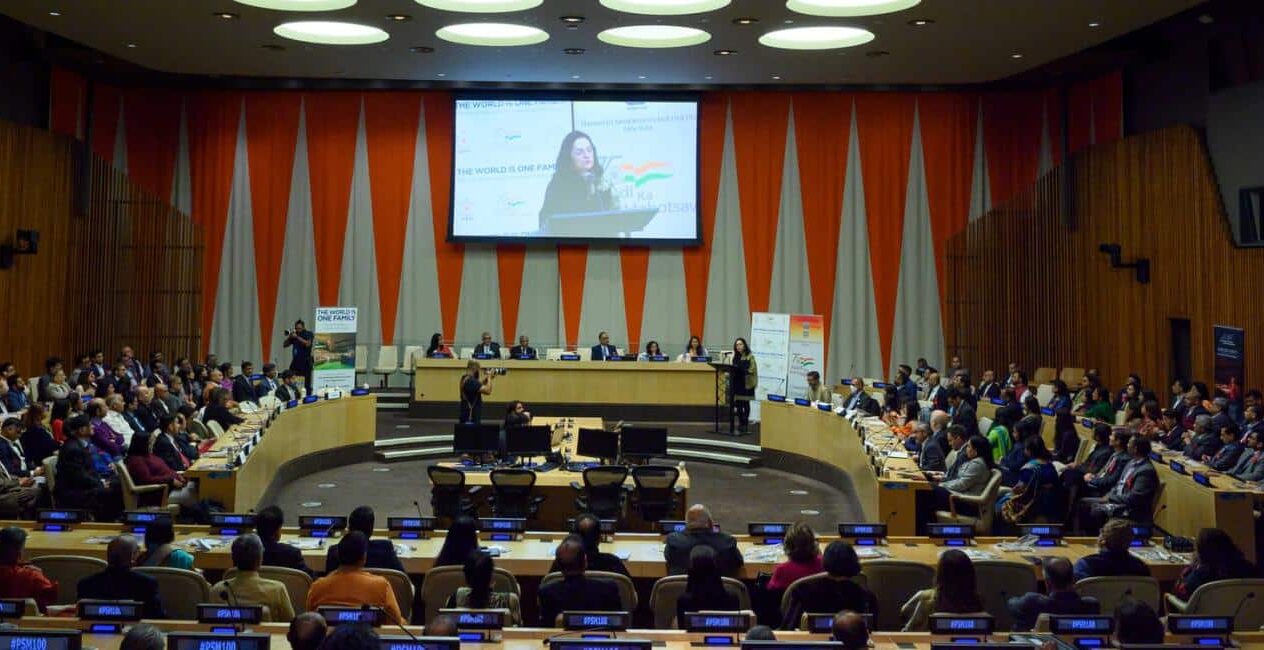
Closing its annual two-day coordination segment, the Economic and Social Council (ECOSOC) focused on enhancing stakeholder engagement to tackle pressing global challenges. Under-Secretary-General for Economic and Social Affairs, Li Junhua, emphasized the need for ECOSOC to leverage its expertise and convening power to drive impactful, evidence-based actions. The Council aims to ensure that policies developed through collaboration with civil society, academia, and the private sector effectively address real-world needs and deliver tangible results.
ECOSOC’s Role in Global Development
Paruyr Hovhannisyan, Vice-President of ECOSOC, highlighted the Council’s unique position as a “connective tissue” that links peace, development, human rights, and humanitarian action. He stressed the importance of strengthening the Council through clearer political guidance and more purposeful use of its convening power. This year’s Coordination Segment, themed “Transformative, equitable, innovative and coordinated actions for the 2030 Agenda and its SDGs for a sustainable future for all,” aims to contribute to the high-level political forum on sustainable development. The discussions will focus on key Sustainable Development Goals (SDGs) such as clean water, affordable energy, and sustainable cities.
During the first panel discussion, Council President Lok Bahadur Thapa emphasized the urgency of addressing today’s challenges, stating that partnerships are essential for effective resource utilization. He noted that the scale of current global issues requires more than incremental changes, calling for collaborative efforts that involve local actors to ensure lasting impact. The emphasis on co-creating solutions with stakeholders reflects a commitment to making policies that resonate with the needs of communities.
Importance of Partnerships and Civil Society Engagement
The panel discussions underscored the critical role of partnerships and civil society participation in achieving meaningful outcomes. Foteini Papagioti, Director of Policy and Advocacy at the International Center for Research on Women, asserted that civil society involvement is vital for legitimacy and accountability in multilateral decision-making. She pointed out the growing disconnect between the recognized value of civil society participation and the actual conditions that facilitate it. Engaging civil society early in the process can help address implementation gaps and lead to more coherent policy outcomes.
Anes Mušić, a member of the GenJust Youth Network, echoed this sentiment, noting that young people often identify community issues early but lack representation in decision-making processes. He advocated for a shift from mere consultation to genuine co-creation, emphasizing that when stakeholders see their contributions lead to tangible results, their engagement becomes more meaningful. The panel also included insights from representatives of the private sector and humanitarian organizations, highlighting the diverse perspectives necessary for effective partnerships.
Breaking Institutional Silos for Sustainable Development
The second panel discussion focused on how the ECOSOC system can work collaboratively towards the 2026 High-Level Political Forum. Speakers from various UN entities discussed the importance of breaking down institutional silos to address the interconnectedness of multiple SDGs. Gerd Müller, Director-General of the United Nations Industrial Development Organization (UNIDO), emphasized the need for industry leadership in achieving SDG 9, which supports other goals. He highlighted initiatives like the Net Zero Partnership aimed at industrial decarbonization.
Anacláudia Rossbach, Executive Director of UN-Habitat, pointed out that approximately 1.2 billion people live in slum-like conditions, which hinder progress across various SDGs. She noted that informal settlements not only reflect urban poverty but also impede access to clean water and affordable energy. Retno Marsudi, the Secretary-General’s Special Envoy for Water, called for collaborative action to enhance the political standing of water in multilateral decision-making, stressing that weak water systems slow down progress across all SDGs.
Strategic Imperatives for ECOSOC’s Future
The final panel addressed the strategic imperatives for ECOSOC as it navigates institutional reform. Carolyn Schwalger from New Zealand emphasized the need for a cultural shift in how the UN creates and implements mandates. She shared insights from a recent retreat, advocating for improved coordination mechanisms among UN entities. Leticia Leobet from the Geledés Institute highlighted the importance of addressing structural inequalities that affect participation in multilateralism, stressing that the voices of marginalized groups must be included in all stages of decision-making.
Achim Steiner, a Senior Fellow at the Oxford Martin School, reminded attendees of ECOSOC’s foundational role in integrated multilateral governance. He urged the Council to focus on its strengths as a convenor and coordinator rather than competing with other UN bodies. The discussions concluded with a call for a renewed commitment to the ambitious mandate of ECOSOC, ensuring that economic progress, social justice, and international cooperation remain intertwined in global development efforts.
Observer Voice is the one stop site for National, International news, Sports, Editor’s Choice, Art/culture contents, Quotes and much more. We also cover historical contents. Historical contents includes World History, Indian History, and what happened today. The website also covers Entertainment across the India and World.
Follow Us on Twitter, Instagram, Facebook, & LinkedIn

