

WHO Advances Global Traditional Medicine Integration in New Delhi

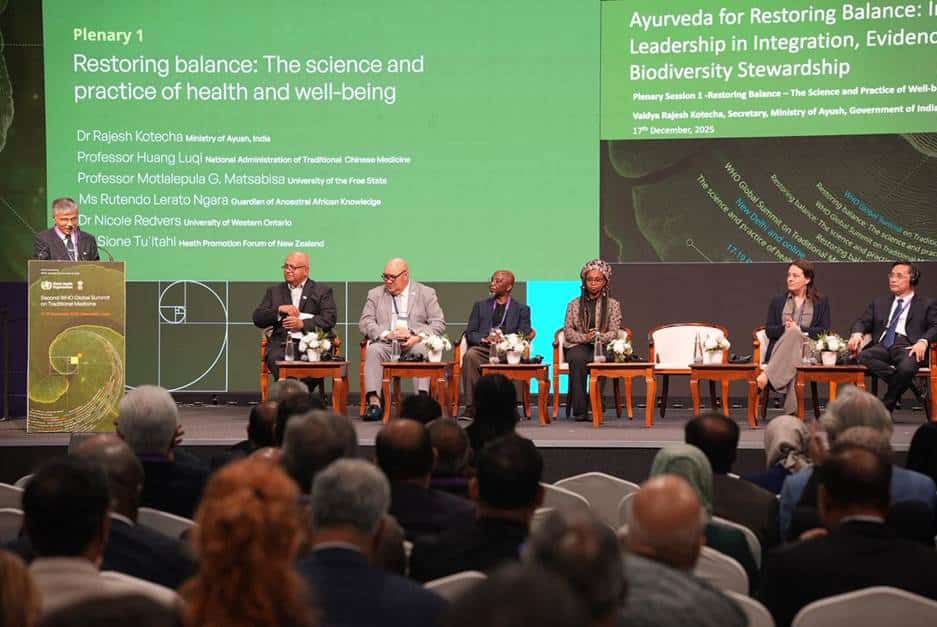
In a significant move to unify traditional healthcare systems worldwide, the World Health Organization (WHO) hosted a pivotal two-day Technical Project Meeting focused on the development of a Traditional Medicine intervention code set. This event took place at the Hotel Imperial in New Delhi on December 20–21, 2025. The initiative was sparked by a groundbreaking Memorandum of Understanding (MoU) and Donor Agreement signed between India’s Ministry of Ayush and WHO on May 24, 2025. This agreement marks a critical step towards establishing a dedicated Traditional Medicine module within the International Classification of Health Interventions (ICHI), which serves as the global standard for classifying healthcare interventions.
India is playing a vital role by providing the necessary financial and technical frameworks to help bring Ayurveda, Siddha, and Unani systems into the spotlight of global healthcare. This initiative complements Prime Minister Shri Narendra Modi’s vision for expanding the reach of Ayush systems globally in a scientifically validated manner. In his _Mann Ki Baat_ address, Modi highlighted that this standardized framework would foster global recognition and scientific legitimacy for Ayush systems.
The meeting was chaired by Ms. Kavita Garg, Joint Secretary at the Ministry of Ayush, who led an esteemed Indian delegation in creating National Health Intervention Codes for Ayurveda, Siddha, and Unani medicine. Under her guidance, a team of notable experts, including Prof. Rabinarayan Acharya, Prof. N. J. Muthukumar, and Dr. Zaheer Ahmad, worked collaboratively on this initiative.
Participants from all six WHO regions—AFRO, AMRO, EMRO, EURO, SEARO, and WPRO—attended the meeting, contributing to a comprehensive global discourse on traditional medicine. Key representatives from WHO Headquarters in Geneva, including Robert Jakob, Nenad Kostanjsek, Stéphane Espinosa, and Dr. Pradeep Dua, facilitated classification discussions alongside Dr. Geetha Krishnan from the WHO Global Traditional Medicine Centre in Jamnagar and Dr. Pawan Kumar Godatwar from the WHO SEARO office in Delhi. Countries such as Bhutan, Brazil, India, Iran, Malaysia, Nepal, Mauritius, South Africa, Sri Lanka, the Philippines, the UK, and the USA engaged actively to review their statuses and synchronize intervention descriptions.
The integration of traditional medicine into the ICHI framework is essential as it establishes a common language for health procedures across diverse medical systems worldwide. By standardizing these intervention codes, healthcare practitioners can more effectively document, report, and analyze the prevalence and efficacy of traditional treatments. The WHO is committed to adhering to strict timelines for this project and will implement a scientific approach that not only enhances clinical research and policy formation but also sets the stage for scaling traditional medicine within global health information systems.
Observer Voice is the one stop site for National, International news, Sports, Editor’s Choice, Art/culture contents, Quotes and much more. We also cover historical contents. Historical contents includes World History, Indian History, and what happened today. The website also covers Entertainment across the India and World.
Follow Us on Twitter, Instagram, Facebook, & LinkedIn

