

India Unveils New Nuclear Legislation to Boost Energy Sector

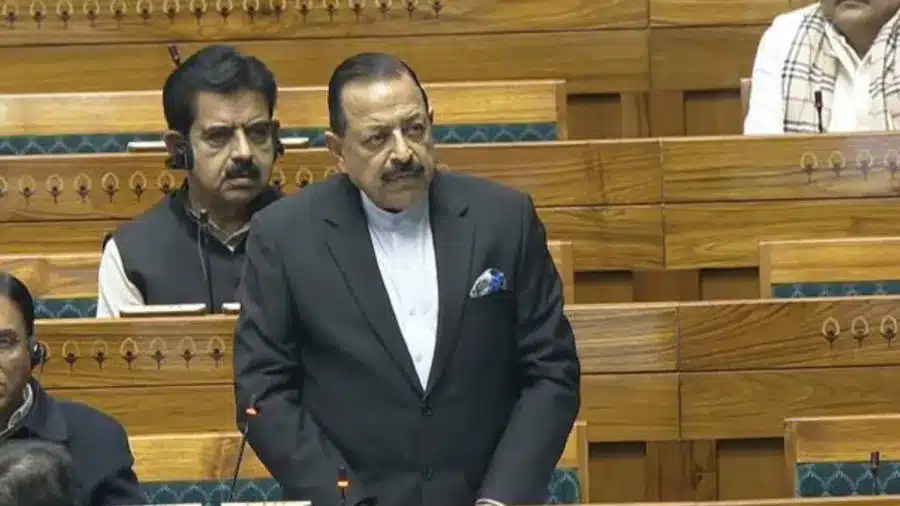
In a significant move for the country’s energy framework, Union Minister of Science and Technology, Dr. Jitendra Singh, addressed the Lok Sabha on Tuesday regarding the Sustainable Harnessing and Advancement of Nuclear Energy for Transforming India Bill, 2025. The Minister provided clarity on the government’s decision to introduce a comprehensive nuclear law, responding to various concerns from Members across party lines. Dr. Singh emphasized that the new legislation aims to modernize India’s nuclear framework to reflect current technological, economic, and energy conditions while reinforcing existing safety and regulatory measures established since the Atomic Energy Act of 1962.
Modernizing India’s Nuclear Framework
The proposed Bill seeks to consolidate existing nuclear laws and enhance the regulatory structure by granting statutory status to the Atomic Energy Regulatory Board, which previously operated under an executive order. Dr. Singh assured that all safety protocols and security measures pertaining to fissile material, spent fuel, and heavy water would continue to be under government control, ensuring that private companies would not manage sensitive materials. The management of spent fuel will remain a government responsibility, maintaining the standards set for decades.
Clarifying Liability and Compensation
Addressing a key issue in the legislative debate, the Minister confirmed that the Bill does not reduce the compensation available to victims of nuclear incidents. Instead, it rationalizes operator liability with graded caps linked to reactor sizes, promoting newer technologies like small modular reactors while ensuring that affected individuals receive full compensation through a comprehensive system. This includes operator liability, a proposed Nuclear Liability Fund, and compensation from international agreements such as the Convention on Supplementary Compensation. The proposal to exclude supplier liability was made after thorough review of global standards and advancements in reactor safety, while negligence and penalties will remain enforceable.
Investment and Future Prospects
Dr. Singh dismissed concerns that the Bill signifies a withdrawal from public sector capabilities, noting a substantial 170 percent increase in the Department of Atomic Energy’s budget over the past ten years and a doubling of installed nuclear capacity since 2014. He highlighted that India’s current nuclear energy share is relatively low compared to global peers, making it imperative to scale up to meet growing energy demands across various sectors, including data processing, healthcare, and industry. The Bill is designed to encourage responsible private and joint venture participation, addressing resource needs without compromising national security or public interests.
A Broader Vision for Nuclear Energy
In his closing remarks, Dr. Singh placed the legislation within a wider context, illustrating the diverse applications of nuclear energy beyond electricity generation, including its roles in healthcare, agriculture, and industry. For the first time, the Bill also defines environmental and economic damage as part of nuclear harm. With announced investments gearing towards small modular reactors and fostering research and innovation, the proposed law seeks to cultivate a sustainable energy ecosystem as India approaches its centenary of independence while reaffirming its commitment to the peaceful use of atomic energy.
Observer Voice is the one stop site for National, International news, Sports, Editor’s Choice, Art/culture contents, Quotes and much more. We also cover historical contents. Historical contents includes World History, Indian History, and what happened today. The website also covers Entertainment across the India and World.
Follow Us on Twitter, Instagram, Facebook, & LinkedIn

