

Smaller Manufacturers in China Aim to Embrace Automation Trends

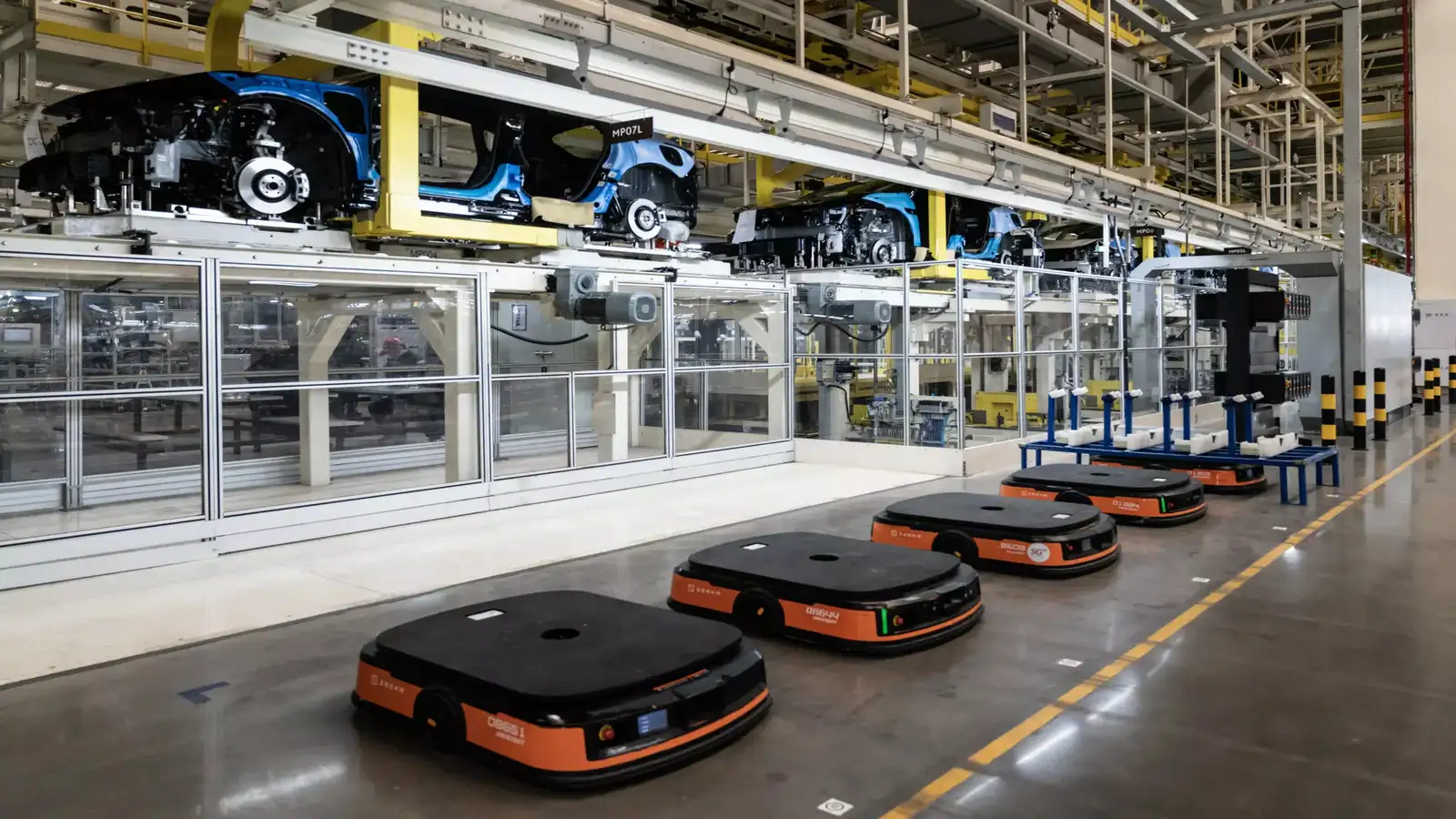
In a bustling workshop in eastern China, the future of manufacturing is taking shape as robotic arms assemble autonomous vehicles. This scene reflects the broader trend of increasing automation across the country, which is already the world’s largest market for industrial robots. With the Chinese government investing billions in robotics and artificial intelligence, the manufacturing landscape is rapidly evolving. However, this shift raises concerns about job security and the challenges faced by smaller companies in adapting to these technological advancements.
Automation in Manufacturing
The rise of automation in China’s manufacturing sector is evident in factories like Neolix, where human workers and advanced technology coexist. Manager Liu Jingyao emphasizes that while automation plays a significant role, human judgment remains essential in decision-making processes. Neolix specializes in producing small, driverless vehicles designed for urban parcel delivery. At their facility, vehicles navigate a testing track filled with simulated obstacles, showcasing the capabilities of modern robotics. Liu asserts that automation primarily serves to assist human workers, reducing labor intensity rather than replacing them entirely.
Despite the advancements, experts like Ni Jun from Shanghai’s Jiaotong University highlight the feasibility of full automation in various sectors. Companies like Xiaomi have already implemented “dark factories,” where robotic systems operate without human intervention. This stark contrast between high-tech giants and smaller enterprises underscores the challenges faced by many in the industry.
The Digital Divide
The disparity in technological adoption between large corporations and smaller businesses is a pressing issue. Zhu Yefeng, who runs Far East Precision Printing Company, illustrates this divide. Located just outside Shanghai, his factory employs a small team and has only recently begun to modernize its operations. Previously reliant on manual processes, the company has transitioned to using software that tracks workflow through QR codes. While this is a step forward, Zhu acknowledges that full automation remains a distant goal due to financial constraints.
Zhu’s factory, like many others, struggles to keep pace with larger competitors that can invest heavily in automation. The transition to more advanced technologies is hindered by limited resources, making it difficult for smaller firms to compete for larger contracts. Zhu’s team is currently working on developing a robotic quality testing machine, but for now, human workers continue to play a crucial role in ensuring product quality.
Employment Challenges
The shift towards automation raises significant concerns about potential job losses. Jacob Gunter from the Mercator Institute for China Studies warns that while companies may benefit from reduced labor costs, the government faces pressure to maintain high employment levels. As Beijing pushes for increased industrial robot development, the challenge lies in balancing technological advancement with social responsibility.
Experts stress the importance of finding a middle ground between automation and employment. Jiaotong University’s Ni advocates for a balanced approach that considers technical feasibility, social implications, and business needs. Zhou Yuxiang, CEO of Black Lake Technologies, echoes this sentiment, suggesting that factories will likely remain hybrid environments. The ultimate goal for manufacturers is to optimize production while meeting customer demands and maintaining profitability.
Observer Voice is the one stop site for National, International news, Sports, Editor’s Choice, Art/culture contents, Quotes and much more. We also cover historical contents. Historical contents includes World History, Indian History, and what happened today. The website also covers Entertainment across the India and World.

