

Government Approves Legislation to Allow Private Companies in Civil Nuclear Power Sector

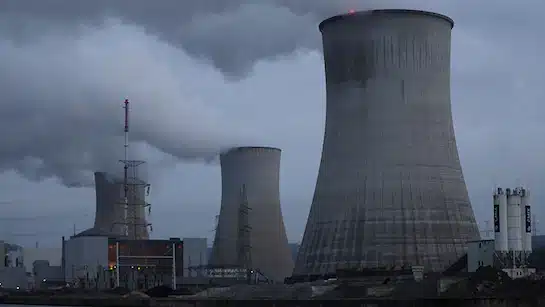
The Indian Union Cabinet has taken a significant step towards transforming the nuclear power sector by approving the Sustainable Harnessing and Advancement of Nuclear Energy for Transforming India (SHANTI) Bill. This legislation aims to open the previously restricted nuclear power industry to private companies, a move that aligns with the country’s ambitious goal of achieving 100 gigawatts of nuclear power capacity by 2047. The bill is set to be introduced during the ongoing winter session of Parliament, marking a pivotal moment in India’s energy landscape.
Key Provisions of the SHANTI Bill
The SHANTI Bill introduces several crucial amendments to existing laws governing the nuclear sector. One of the primary changes includes the amendment of civil liability laws to protect plant operators and limit the liability of equipment suppliers. Additionally, the bill proposes a redesign of operator insurance, establishing a cap of ₹1,500 crore per incident under the Indian Nuclear Insurance Pool. This framework aims to create a more secure environment for private investment in nuclear energy.
Furthermore, the bill allows for up to 49% foreign direct investment in the nuclear sector, which is expected to attract global players and enhance technological collaboration. To streamline operations, the legislation proposes the establishment of a unified legal framework for atomic energy, including a specialized nuclear tribunal to handle disputes related to nuclear activities. While private entities will be permitted to enter the sector, the government will maintain oversight, ensuring that the Department of Atomic Energy retains control over essential functions such as nuclear material production and waste management.
Government’s Vision for Nuclear Energy
Finance Minister Nirmala Sitharaman first announced the government’s intention to invite private participation in the nuclear power sector during her budget speech in February. She also introduced a Nuclear Energy Mission, which allocates ₹20,000 crore for research and development of small modular reactors (SMRs). The government aims to operationalize five indigenously developed SMRs by 2033, reflecting a strategic push towards modernizing India’s nuclear capabilities.
Prime Minister Narendra Modi has previously indicated that the government is preparing to open the nuclear sector to private players, similar to the recent developments in the space sector. Currently, the Atomic Energy Act restricts private entities and state governments from operating nuclear power plants, leaving the Nuclear Power Corporation of India Limited (NPCIL) as the sole operator of the country’s 24 commercial reactors.
Addressing Energy Demands and Future Prospects
The SHANTI Bill is designed to tackle long-standing issues within the nuclear energy sector, including private-sector participation, liability concerns, and fuel supply management. With rising domestic energy demands and India’s commitment to achieving net-zero emissions by 2070, there is a renewed global interest in nuclear power. This interest is further fueled by advancements in technology, particularly in the development of SMRs and safer large reactors.
Officials emphasize that scaling nuclear capacity ten-fold over the next two decades will necessitate significant private-sector involvement, as the public sector alone may not meet this ambitious target. SMRs are particularly well-suited for energy-intensive industries, such as steel and cement production, as well as data centers, which are expected to drive future energy consumption.
Implications for Investment and Regulation
Experts believe that aligning civil nuclear liability for operators and suppliers with international standards is essential to attract global technology providers and private investors. Currently, the tariff for nuclear power is determined by the Department of Atomic Energy in consultation with the Central Electricity Authority. However, the introduction of private sector participation may require governance by an independent regulator, such as the Central Electricity Regulatory Commission (CERC), to facilitate competitive tariff determination.
Involving the private sector in the research and development of nuclear technologies, particularly for civil use, is seen as a progressive step. This could include the establishment of intellectual property rights, aligning India’s approach with practices adopted by several developed nations. The SHANTI Bill represents a crucial shift in India’s energy policy, aiming to harness the potential of nuclear power to meet future energy demands while fostering private investment and innovation.
Observer Voice is the one stop site for National, International news, Sports, Editor’s Choice, Art/culture contents, Quotes and much more. We also cover historical contents. Historical contents includes World History, Indian History, and what happened today. The website also covers Entertainment across the India and World.
Follow Us on Twitter, Instagram, Facebook, & LinkedIn

