

2026 Stock Market Holidays: NSE Unveils Holiday Calendar

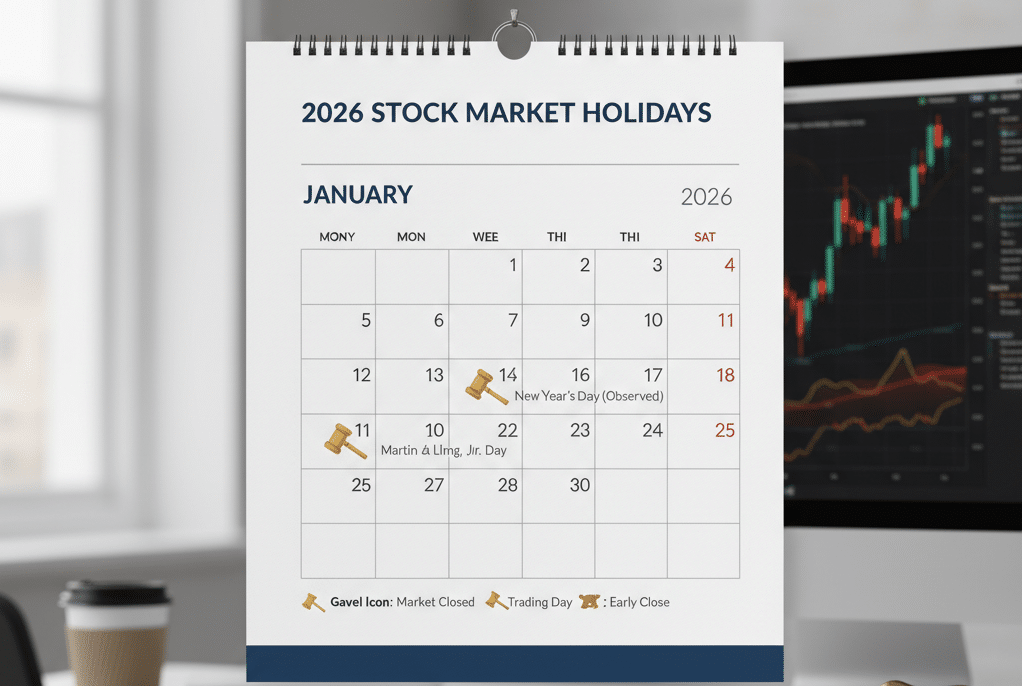
Leading Indian stock exchange, the National Stock Exchange (NSE), has released its official trading holiday calendar for 2026, providing traders and investors with essential information about non-trading days. The calendar outlines 15 full trading holidays, an increase from the previous year, and highlights significant festivals that coincide with weekends. Notably, the calendar also specifies the date for the traditional Muhurat Trading session, which is a key event for market participants.
Full Trading Holidays in 2026
The NSE has designated 15 days in 2026 when equity, equity derivatives, and currency markets will be closed. The holiday schedule kicks off with Republic Day on January 26 and includes several major festivals throughout the year. Key holidays include Holi on March 3, Ram Navami on March 26, and Mahavir Jayanti on March 31. Other significant dates include Good Friday on April 3, Ambedkar Jayanti on April 14, and Maharashtra Day on May 1. The second half of the year features closures for Muharram on June 26, Ganesh Chaturthi on September 14, and Gandhi Jayanti on October 2, among others. Notably, there will be no trading holiday for Diwali Laxmi Pujan, as it falls on a Sunday.
Weekend Festivals and Muhurat Trading
In 2026, four major festivals will coincide with weekends, meaning there will be no market shutdown on those days. These festivals include Mahashivratri on February 15, Eid-ul-Fitr on March 21, Independence Day on August 15, and Diwali Laxmi Pujan on November 8. However, the NSE will conduct its customary Muhurat Trading session on November 8, which is a one-hour trading window that takes place on Diwali. The specific timing for this auspicious trading session will be announced closer to the festival date, allowing traders to prepare for this significant event.
Importance of the Holiday Calendar for Traders
The release of the trading holiday calendar is crucial for market participants as it aids in planning various trading strategies. Traders can use this information to adjust their portfolios, develop derivatives expiry strategies, and manage liquidity around global market timings. Understanding non-trading days is essential for anticipating how holidays may influence weekly and monthly index expiries, which can significantly affect short-term trading behavior, particularly for options traders. By being aware of these holidays, traders can better navigate the market landscape and make informed decisions.
Market Outlook for 2026
Looking ahead, several brokerages are optimistic about the Indian equity market’s performance in 2026, anticipating a recovery following a volatile 2025. Analysts from firms such as Morgan Stanley, Citigroup, and Goldman Sachs suggest that the markets may regain lost ground as earnings stabilize and policy support strengthens. ICICI Direct forecasts that the Nifty index could approach the 30,000 mark, citing historical patterns of strong rallies following corrective phases. Meanwhile, Kotak Securities has set a more ambitious target of 32,032 for the Nifty by December 2026, with a focus on banking, financial services, and information technology stocks.
Observer Voice is the one stop site for National, International news, Sports, Editor’s Choice, Art/culture contents, Quotes and much more. We also cover historical contents. Historical contents includes World History, Indian History, and what happened today. The website also covers Entertainment across the India and World.
Follow Us on Twitter, Instagram, Facebook, & LinkedIn

