

New Deep-Sea Fishing Regulations Announced by Centre: Impact on Indian Fishers and Foreign Vessels

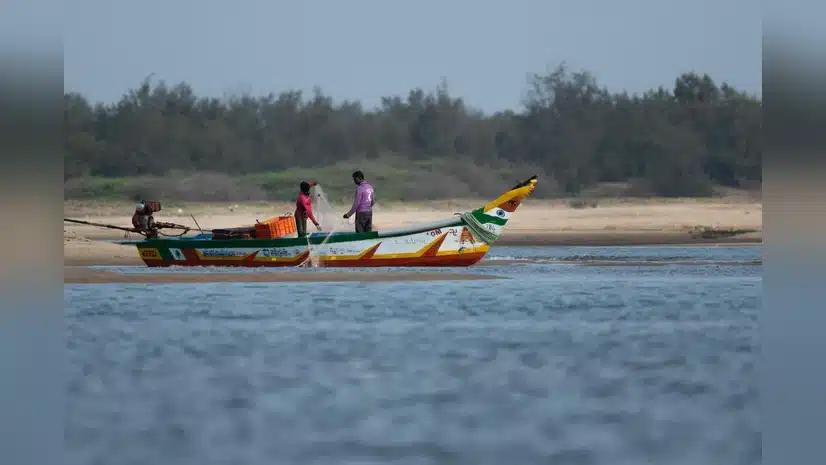
In a significant policy shift, the Indian government has announced new regulations for deep-sea fishing within the country’s Exclusive Economic Zone (EEZ). Effective from November 4, these rules prioritize local fishermen cooperatives and small-scale fishers while banning foreign vessels from Indian waters. The initiative aims to enhance India’s marine fisheries sector, particularly in high-value tuna fishing, which has been underutilized by Indian fleets despite heavy exploitation by other nations.
New Framework for Fishermen
The newly implemented framework emphasizes the importance of Fishermen Cooperative Societies and Fish Farmer Producer Organisations (FFPOs) in deep-sea operations. These groups will receive first preference for utilizing technologically advanced vessels, marking a shift towards empowering local fishing communities. A notable innovation in the policy is the introduction of the “mother-and-child vessel” model. This model facilitates mid-sea transshipment under Reserve Bank of India guidelines, which is particularly beneficial for the Andaman & Nicobar and Lakshadweep Islands, areas that constitute nearly 49% of India’s EEZ.
The new regulations also aim to protect the marine ecosystem by prohibiting harmful fishing practices such as LED light fishing, pair trawling, and bull trawling. To ensure sustainable fishing, Fisheries Management Plans will be developed in consultation with stakeholders, and minimum legal sizes for various fish species will be established. This comprehensive approach seeks to balance economic growth with ecological preservation.
Digital Transparency and Access
A key feature of the new rules is the introduction of the ReALCRaft portal, which streamlines the registration and approval process for fishing vessels. Mechanised and large motorised vessels will now require a free Access Pass through this digital platform. In contrast, traditional and small-scale fishers using motorised or non-motorised crafts will be exempt from this requirement. The digital system allows vessel owners to apply for and track approvals in real time, eliminating the need for in-person visits to government offices.
As of now, approximately 2.38 lakh fishing vessels have been registered on the portal across 13 coastal states and Union Territories. Out of these, around 64,187 mechanised vessels will need Access Passes for operations in the EEZ. The complete ban on foreign vessels is expected to protect the interests of small-scale Indian fishers, ensuring they can compete more effectively in the market.
Support and Safety Measures
To bolster the fishing community, the government plans to provide extensive support through training programs, international exposure visits, and capacity-building initiatives. These efforts will cover various aspects of the marine value chain, including processing, marketing, and exports. Additionally, credit access will be facilitated under the Pradhan Mantri Matsya Sampada Yojana (PMMSY) and the Fisheries and Aquaculture Infrastructure Development Fund (FIDF).
Safety measures are also a priority in the new regulations. The rules mandate the use of transponders and QR-coded Aadhaar/Fishers ID cards for identification and tracking purposes. Furthermore, the ReALCRaft system will integrate with the Nabhmitra app, which is utilized for real-time navigation and coastal security by the Indian Coast Guard and Navy. These measures aim to enhance the safety and efficiency of fishing operations along India’s extensive coastline.
Strengthening India’s Global Seafood Trade
India’s coastline stretches over 11,099 kilometers, and its EEZ covers approximately 23 lakh square kilometers, supporting over 50 lakh livelihoods in the fishing community. The country ranks second globally in fish production and aquaculture, with exports valued at Rs 60,000 crore. However, the deep-sea potential, particularly in tuna-rich waters, remains largely untapped.
The new policy aims to combine community participation, digital governance, and sustainable practices to strengthen India’s position in the global seafood trade. By ensuring that fish caught from India’s EEZ are recognized as ‘Indian origin,’ the government seeks to enhance the competitiveness of Indian seafood in premium global markets while maintaining long-term ecological balance.
Observer Voice is the one stop site for National, International news, Sports, Editor’s Choice, Art/culture contents, Quotes and much more. We also cover historical contents. Historical contents includes World History, Indian History, and what happened today. The website also covers Entertainment across the India and World.
Follow Us on Twitter, Instagram, Facebook, & LinkedIn

