

Trump Considers Ending Business Ties with China, Threatens Cooking Oil Trade Disruption

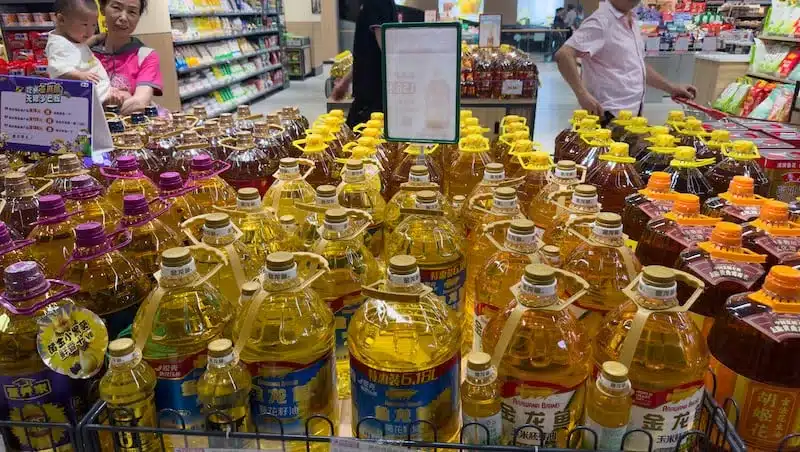
US President Donald Trump has accused China of deliberately halting soybean purchases from American farmers, labeling the move as an “economically hostile act.” In a post on Truth Social, Trump expressed that this decision could lead the U.S. to reconsider its trade relationship with China, particularly concerning cooking oil and other trade elements. As the U.S. soybean harvest begins, the absence of Chinese orders has caused prices to plummet, leaving farmers anxious about their financial futures.
China’s Impact on U.S. Soybean Farmers
The United States is currently experiencing a significant decline in soybean exports, with China, once the largest buyer, not placing any orders for the current harvest. This situation has sent soybean prices tumbling and left farmers in distress. The U.S. typically exports around 61% of the world’s soybeans, but this year, there have been zero purchases from China, a stark contrast to the previous year’s purchases valued at approximately Rs 1.05 lakh crore. The sudden halt in orders is seen as part of a broader trade dispute, with China leveraging economic measures in response to renewed tariffs imposed by the Trump administration.
Lu Ting, chief economist at Nomura Holdings, noted that U.S. soybeans have become less critical to China, allowing Beijing to use the import ban as a negotiation tool. Farmers across the Midwest are feeling the pressure, with many opting to store their crops and delay sales due to the uncertain market conditions. Morey Hill, a soybean grower from Iowa, highlighted the lack of incentive to sell at the moment, warning that without a timely resolution with China, the soybean market could face severe challenges.
Historical Context of Trade Tensions
The current soybean situation echoes China’s previous strategies involving rare earth minerals, which were used as leverage in negotiations with the Trump administration. As the soybean harvest progresses, it appears that Beijing is employing similar tactics. Lu Ting remarked that the import ban on U.S. soybeans has become a new bargaining chip for China. While soybeans do not have the unique properties of rare earth elements, they are vital for China’s large hog and poultry industries.
In light of escalating trade tensions, China has begun increasing its soybean imports from South America, purchasing 2 million tons from Argentina in September alone. This shift in sourcing raises concerns for U.S. farmers, who are already grappling with rising costs for fertilizers and equipment due to the tariffs. Dean Buchholz, a farmer nearing the end of his crop cycle, expressed frustration over the financial strain, stating that continuing to farm under current conditions is becoming increasingly impractical.
The Urgency of Resolution
The timing of the trade dispute is critical, as over half of U.S. soybean exports typically occur between October and December, immediately following the harvest. However, China is reportedly delaying its purchases until February, when Brazilian crops become available. This delay could significantly impact U.S. farmers, as they risk missing the global buying window if an agreement is not reached by December.
Sarah Taber, a crop scientist from North Carolina, emphasized the urgency of the situation, noting that many farmers had anticipated the potential fallout from Trump’s policies yet still supported him. The ongoing trade dispute poses a serious threat to the livelihoods of U.S. soybean farmers, who are facing increased expenses and dwindling buyers in a challenging market environment. As the situation unfolds, the agricultural community remains hopeful for a resolution that could stabilize the market and restore trade relations with China.
Observer Voice is the one stop site for National, International news, Sports, Editor’s Choice, Art/culture contents, Quotes and much more. We also cover historical contents. Historical contents includes World History, Indian History, and what happened today. The website also covers Entertainment across the India and World.

