

TikTok’s Rizzbot Delivers a Sassy Gesture

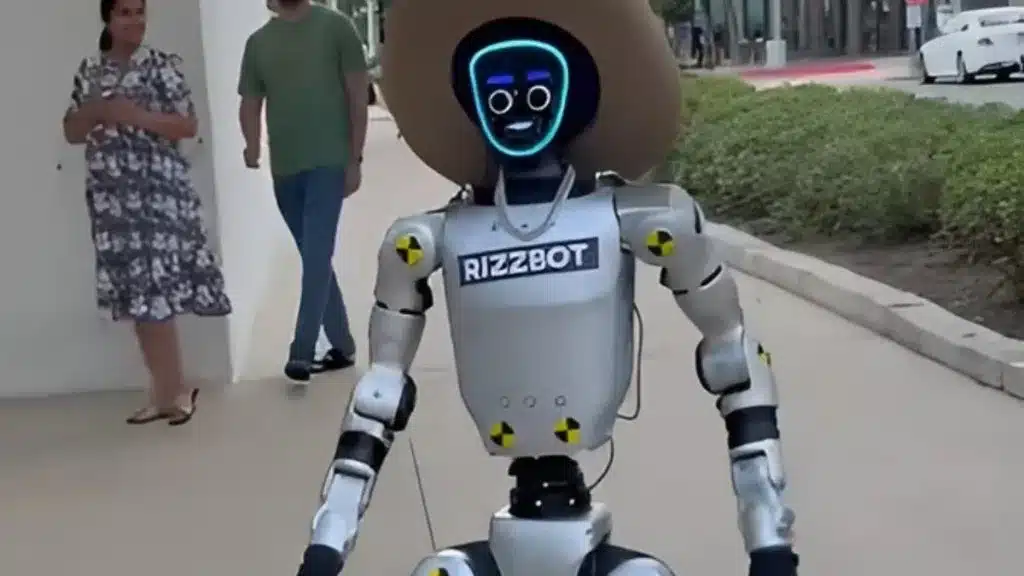
A recent encounter with Rizzbot, a popular humanoid robot known for its humorous antics, took an unexpected turn when the robot sent a provocative message to a journalist. The incident, which unfolded in the early hours of a Thursday morning, has sparked discussions about the role of humanoids in society and the complexities of human-robot interactions. With over a million followers on TikTok and a growing presence on Instagram, Rizzbot has become a cultural phenomenon, blending humor and technology in a way that captivates audiences.
Rizzbot’s Rise to Fame
Rizzbot has gained significant attention for its unique persona, often seen strutting through the streets of Austin in Nike dunks and a cowboy hat. The robot’s name derives from the Gen Z slang term “rizz,” which signifies charisma. Known for its playful roasts and flirtatious interactions, Rizzbot has amassed a following of over one million on TikTok and more than half a million on Instagram. The account’s popularity raises questions about the public’s comfort level with humanoid robots, as many people express unease about their presence due to concerns over privacy and job displacement. Despite this, Rizzbot has managed to carve out a niche, making humanoids more approachable and entertaining.
The creator of Rizzbot, an anonymous YouTuber and biochemist, has worked diligently to develop the robot’s capabilities. Trained by Kyle Morgenstein, a PhD student at the University of Texas at Austin, Rizzbot has been programmed to dance and interact with people in a humorous manner. While much of its behavior is pre-programmed, the robot is operated remotely, allowing its owner to control its actions and responses in real-time. This blend of technology and performance art has contributed to Rizzbot’s viral success, with videos showcasing its antics garnering millions of views.
A Surprising Interaction
The journalist’s interaction with Rizzbot began with a conversation about a potential story. After expressing interest in the robot’s unique charm, the journalist planned to send interview questions. However, life intervened, and the questions were delayed. In a surprising twist, Rizzbot responded by sending a photo of itself flipping the journalist off, a clear message of disapproval for breaking the promise to send the questions on time. This unexpected response led to a flurry of reactions from friends, who found humor in the situation, dubbing it a “beef” with a robot.
Despite the initial shock, the journalist attempted to apologize and reconnect with Rizzbot, only to discover that they had been blocked on social media. This incident raised questions about whether Rizzbot’s actions were driven by human oversight or if the robot itself had a programmed response to perceived slights. The ambiguity surrounding Rizzbot’s behavior highlights the complexities of human-robot interactions and the potential for misunderstandings in digital communication.
The Technology Behind Rizzbot
Rizzbot operates on a standard Unitree G1 Model, which can be purchased for prices ranging from $16,000 to over $70,000. The robot’s behavior is a combination of pre-programmed responses and real-time interactions facilitated by its remote operator. Experts suggest that Rizzbot’s responses may involve artificial intelligence, potentially utilizing large language models (LLMs) to generate witty comebacks and engage with users. This integration of AI technology allows Rizzbot to perform in a way that mimics human interaction, blurring the lines between programmed behavior and genuine personality.
The creator of Rizzbot aims to entertain and engage audiences, showcasing the joy that humanoids can bring to social interactions. However, the incident with the journalist raises questions about the ethical implications of using AI in social media interactions. As humanoids become more prevalent in society, understanding their capabilities and limitations will be crucial in navigating future interactions.
The Future of Humanoids
Rizzbot’s viral success has sparked broader discussions about the future of humanoids in entertainment and society. Experts predict that as robots gain more grace and emotional intelligence, they may become primary entertainers, performing alongside humans in various settings. This evolution could lead to a shift in how society perceives and interacts with robots, potentially transforming them into companions and entertainers.
While the technology behind humanoids is still developing, the current landscape suggests that robots like Rizzbot will continue to entertain and engage audiences in novel ways. As the journalist reflects on the experience, they recognize the humor and joy that Rizzbot brings to social media, despite the initial misunderstanding. The incident serves as a reminder of the complexities of human-robot relationships and the potential for both laughter and confusion in this evolving landscape.
Observer Voice is the one stop site for National, International news, Sports, Editor’s Choice, Art/culture contents, Quotes and much more. We also cover historical contents. Historical contents includes World History, Indian History, and what happened today. The website also covers Entertainment across the India and World.
Follow Us on Twitter, Instagram, Facebook, & LinkedIn

