

Stiff Person Syndrome: One of the Rarest Neurological Disorders Explained

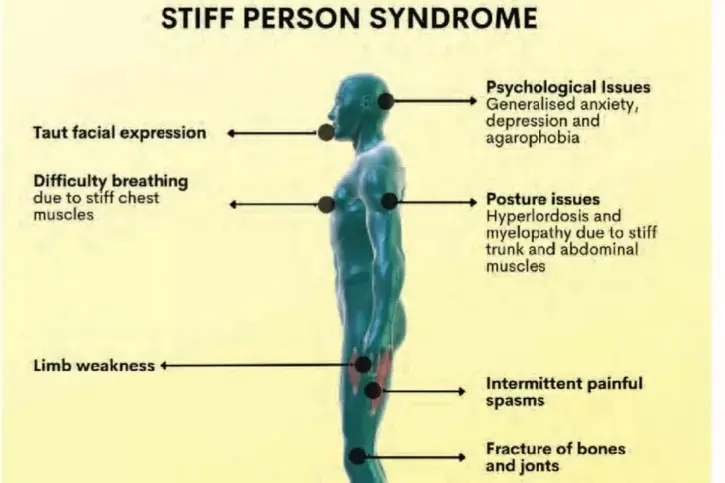
Stiff Person Syndrome, commonly called SPS, is an extremely rare autoimmune neurological disorder that causes progressive muscle stiffness and rigidity throughout the body. The condition affects approximately one to two people per million worldwide, making it one of the rarest neurological disorders. Stiff Person Syndrome is caused by abnormally high levels of muscle tension and rigidity that develop over months or years. The muscles become increasingly stiff and contracted, making movement difficult and painful. Unlike muscular dystrophies where muscles weaken and degenerate, in Stiff Person Syndrome the muscles themselves are normal but are held in a state of constant contraction due to abnormal nerve signals. The rigidity in Stiff Person Syndrome is caused by loss of inhibitory control in the nervous system. Normally, the nervous system has both excitatory signals that tell muscles to contract and inhibitory signals that tell muscles to relax. In Stiff Person Syndrome, the inhibitory signals fail, leaving only the excitatory signals active. This causes muscles to remain in a state of constant contraction. The condition is autoimmune, meaning the body’s immune system mistakenly attacks nerve cells in the spinal cord that produce GABA, an important inhibitory neurotransmitter that normally tells muscles to relax. Without GABA, muscles cannot relax properly. Stiff Person Syndrome is often misdiagnosed initially as anxiety, Parkinson’s disease, multiple sclerosis, or other neurological conditions because the symptoms are unusual and the condition is so rare. Early recognition and diagnosis is important because treatment can slow or even halt progression of symptoms. With appropriate treatment, many people with Stiff Person Syndrome can manage symptoms and maintain quality of life, though the condition is lifelong. Some people respond very well to treatment while others continue to experience significant disability despite treatment. Understanding Stiff Person Syndrome helps patients, families, and healthcare providers recognize the condition and initiate appropriate treatment.
How Does the Immune System Cause Stiff Person Syndrome?
To understand Stiff Person Syndrome, we need to learn about how the nervous system controls muscle relaxation. Your body is made up of cells, and the nervous system controls all body functions including muscle contraction and relaxation. The spinal cord is a major part of the nervous system and contains nerve cells that control muscles. Some nerve cells in the spinal cord produce a chemical messenger called GABA, which stands for gamma-aminobutyric acid. GABA is an inhibitory neurotransmitter, which means it sends signals that tell muscles to relax and not contract. GABA acts like the brakes on muscle contraction. When you want to relax a muscle after it contracts, GABA signals are sent to turn off the muscle’s contraction. In Stiff Person Syndrome, the immune system produces antibodies that attack nerve cells in the spinal cord that produce GABA. These antibodies destroy the GABA-producing nerve cells or prevent them from working properly. Without enough GABA, muscles cannot receive the signals to relax. Only the excitatory signals that tell muscles to contract remain active. With no inhibitory signals to counterbalance the excitatory signals, muscles remain in a state of constant contraction. About seventy percent of people with Stiff Person Syndrome have antibodies against glutamic acid decarboxylase, or GAD, which is an enzyme needed to produce GABA. These people are called GAD-positive. Some people have antibodies against other proteins in nerve cells including amphiphysin and gephyrin. A small percentage of people with Stiff Person Syndrome are seronegative, meaning they have no detected antibodies but still have symptoms of the disease. The specific antibodies present may affect disease severity and response to treatment. Why the immune system starts attacking GABA-producing nerve cells is not completely understood. Some genetic predisposition appears to increase risk of developing Stiff Person Syndrome. Environmental triggers may be involved, but specific triggers have not been clearly identified. Some cases of Stiff Person Syndrome are associated with other autoimmune diseases or with cancer, suggesting these conditions may somehow trigger the immune attack. Stiff Person Syndrome is not inherited and does not run in families. It is an acquired autoimmune disease that develops during a person’s lifetime.
What Are the Main Symptoms and Signs of Stiff Person Syndrome?
Stiff Person Syndrome causes progressive muscle stiffness and rigidity that develops gradually over time. The symptoms can be profoundly disabling, affecting the ability to walk, work, and perform daily activities. The characteristic symptom is progressive muscle stiffness that worsens over weeks to months or years. The stiffness is not weakness but actual muscle rigidity where muscles remain tightly contracted. The stiffness usually begins in the trunk and lower back muscles and gradually spreads to involve muscles in the shoulders, neck, and limbs. Early symptoms may be subtle, with the person noticing slight stiffness in the back or hips. Over time, the stiffness becomes more pronounced and more widespread. Walking becomes progressively more difficult due to stiffness in the hip and leg muscles. The person may walk with a stiff, robotic gait. Stairs, standing from a seated position, and other movements become increasingly difficult. The trunk stiffness can be severe, making bending forward or backward nearly impossible. The abdominal muscles become rigid, which can interfere with breathing. Muscle pain and spasms often accompany the stiffness. Sudden, involuntary muscle spasms, called paroxysmal spasms, can occur and be very painful. These spasms can be triggered by sudden movements, unexpected stimuli, emotional stress, or can occur unpredictably. Spasms can last seconds to minutes and can be severely disabling. Anxiety and heightened startle response are common. Loud noises, sudden movements, or emotional stress can trigger severe spasms. People with Stiff Person Syndrome often have anxiety about triggering spasms. Facial stiffness may develop, making facial expressions difficult. Speech may become slurred due to stiffness of facial and throat muscles. Swallowing may become difficult due to throat muscle stiffness. Respiratory problems can develop as trunk and respiratory muscles become stiff. Shortness of breath with exertion is common. Severe respiratory muscle stiffness can compromise breathing. Some people may eventually need respiratory support. Posture becomes increasingly abnormal due to muscle stiffness. The spine may curve excessively. The person may be bent forward at the waist due to trunk muscle stiffness. Falls are common due to stiffness limiting movement and balance. Immobility due to severe stiffness can lead to contractures where muscles permanently shorten. Bones may become weak from immobility, increasing fracture risk. The progression of Stiff Person Syndrome is variable. Some people have rapidly progressive disease becoming severely disabled within months to a few years. Others have slowly progressive disease where symptoms develop very gradually over many years. Some people have fluctuating symptoms that may improve or worsen unpredictably. With treatment, progression can be slowed or halted in many people.
How is Stiff Person Syndrome Detected and Diagnosed?
Stiff Person Syndrome is difficult to diagnose because it is so rare and symptoms are unusual. The condition is often misdiagnosed initially as anxiety, Parkinson’s disease, multiple sclerosis, or other neurological conditions. A high index of suspicion is necessary to recognize Stiff Person Syndrome. Clinical history of progressive muscle stiffness, rigidity, and spasms that worsens over time helps raise suspicion for SPS. A family history of autoimmune diseases or other neurological conditions may increase suspicion. Physical examination shows characteristic findings of muscle rigidity and stiffness. The person may have difficulty moving due to severe muscle contraction. Involuntary muscle spasms may be observed during examination. The startle response may be exaggerated. Electromyography, or EMG, shows continuous motor unit activity even at rest, which is characteristic of Stiff Person Syndrome. Normal muscles at rest show electrical silence. In SPS, muscles show continuous electrical activity indicating they are contracting even though the person is not trying to contract them. This finding helps confirm SPS. Antibody testing for anti-GAD antibodies is positive in about seventy percent of people with SPS. A positive anti-GAD antibody test strongly supports diagnosis of Stiff Person Syndrome. Testing for other antibodies including anti-amphiphysin and anti-gephyrin antibodies may be done. Some people with SPS are seronegative, lacking detectable antibodies, but still have clinical symptoms of SPS. Lumbar puncture, where cerebrospinal fluid is sampled, may show elevated GABA levels or abnormalities in immune cells. This can support diagnosis of SPS. MRI of the brain and spinal cord is usually normal in SPS but helps rule out other conditions like multiple sclerosis or structural problems. Blood tests looking for other autoimmune markers may be done to look for associated autoimmune conditions. Cancer screening is sometimes done since Stiff Person Syndrome can be associated with cancer in a small percentage of cases. Genetic testing may be done to look for genetic predisposition to autoimmune disease. EMG testing during sudden stimulation showing exaggerated response helps confirm the heightened startle response. Diagnosis is based on clinical presentation combined with laboratory findings. A combination of typical symptoms, EMG findings showing continuous motor activity, and positive antibodies confirms diagnosis. Early diagnosis is important so that treatment can be started to prevent progression of symptoms. Genetic counseling may be done to discuss autoimmune disease risks in family members.
What Causes the Loss of Inhibitory Control in Stiff Person Syndrome?
Understanding how loss of inhibitory control causes Stiff Person Syndrome requires learning about nerve communication in the spinal cord. The spinal cord contains millions of nerve cells that control all voluntary and many involuntary functions. Movement is controlled through a balance between excitatory signals that tell muscles to contract and inhibitory signals that tell muscles to relax. Excitatory neurotransmitters like glutamate stimulate muscle contraction. Inhibitory neurotransmitters like GABA prevent or stop muscle contraction. In normal nervous system function, both excitatory and inhibitory signals work together to control precise movements. When you want a muscle to contract, excitatory signals are increased. When you want the muscle to relax, inhibitory signals are increased to stop the muscle contraction. This balance allows smooth, controlled, coordinated movements. In Stiff Person Syndrome, the immune system attacks nerve cells that produce GABA. GABA is produced by a type of nerve cell called an interneuron. These interneurons release GABA onto motor neurons, which are nerve cells that directly control muscles. When GABA binds to receptors on motor neurons, it hyperpolarizes the motor neuron, making it less likely to fire and send signals to muscles. This inhibitory effect is essential for muscle relaxation. Without adequate GABA, motor neurons are not inhibited. They remain in an excited state and continue sending signals to muscles to contract. Even when the person consciously tries to relax a muscle, the muscle cannot relax because the inhibitory signal is missing. The muscle remains in a state of constant contraction. This loss of inhibitory control is the fundamental problem in Stiff Person Syndrome. The muscle itself is not damaged. The nerves controlling the muscle are not damaged. The problem is purely the loss of inhibitory control of muscle activation. This explains why the muscles themselves appear completely normal when examined or imaged. The problem is at the level of nerve control, not muscle structure. Understanding this mechanism of how loss of GABA leads to muscle stiffness explains the treatment approaches. Treatments that increase GABA levels, increase GABA receptor sensitivity, or reduce excitatory signals can help restore the balance of inhibition and excitation and reduce muscle stiffness.
What Health Problems Do People with Stiff Person Syndrome Face?
People with Stiff Person Syndrome face many serious health challenges due to progressive muscle stiffness and rigidity. The condition can become profoundly disabling if not treated appropriately. Progressive loss of mobility is the primary problem. As muscles become increasingly stiff and rigid, movement becomes progressively more difficult. Eventually, severe stiffness can confine people to wheelchairs or bedbound status. Falls and injuries result from difficulty with movement, balance problems due to spasticity, and inability to catch oneself due to rigid muscles. Bone fractures occur frequently from falls. The vulnerability to injury requires careful environmental modifications and assistance with mobility. Muscle pain is common and can be severe. The constant muscle contraction causes pain, fatigue, and exhaustion. Muscle spasms can be extremely painful and debilitating. Pain management is difficult because standard pain medications may not be effective. Severe muscle spasms can be triggered by emotional stress, loud noises, or unexpected movements. Spasms can be so intense and painful that they cause complete disability during the spasm. Over time, repeated severe spasms can cause rhabdomyolysis, breakdown of muscle tissue, leading to kidney damage. Anxiety is very common in Stiff Person Syndrome. The fear of triggering spasms leads to avoidance of situations that might trigger spasms. Social isolation may result from difficulty with mobility and anxiety about spasms. Depression is common due to progressive disability and quality of life limitations. Mental health support is important. Respiratory problems can develop as trunk and respiratory muscles become stiff and rigid. Shortness of breath with exertion is common. Sleep apnea may develop. Severe respiratory muscle stiffness can compromise breathing and require respiratory support. Swallowing difficulties may develop, risking aspiration of food or liquids into the lungs. Modified diet and careful eating may be necessary. Feeding tubes may be needed if swallowing becomes severely impaired. Nutritional problems may result from difficulty eating. Bone health problems including osteoporosis develop due to immobility and sometimes corticosteroid use in treatment. Fractures can occur easily from minor trauma. Sexual dysfunction may occur due to muscle rigidity and spasticity. Fertility problems may result from the condition and medications used to treat it. Urinary and bowel problems may develop due to spasticity affecting bladder and bowel control. Kidney damage can result from rhabdomyolysis from severe spasms. Cardiovascular problems including autonomic dysfunction may occur. Heart rate and blood pressure may become unstable. Fever and sudden increases in body temperature can occur from severe muscle spasms. Profound disability and life limitations result from severe muscle stiffness. Some people become wheelchair-dependent or bedbound. Dependency on caregivers for all activities of daily living may develop. Shortened lifespan may result from severe disease and complications, though with treatment many people live normal lifespans. With appropriate treatment, progression can be slowed or halted and many of these complications can be prevented or minimized.
What Treatments Help People with Stiff Person Syndrome?
Treatment for Stiff Person Syndrome aims to increase inhibitory control by increasing GABA levels or reducing excitatory signals, suppress the autoimmune attack, and manage symptoms. Several different treatment approaches are available and often used in combination. Benzodiazepines are medications that enhance the effects of GABA. Diazepam is the most commonly used benzodiazepine for SPS. These medications make GABA more effective at inhibiting muscle activation. Benzodiazepines can significantly reduce muscle stiffness and spasms. However, benzodiazepines can cause drowsiness, dependence, and other side effects with long-term use. The goal is to use the lowest effective dose. Baclofen is a medication that acts as a GABA agonist, meaning it mimics GABA’s effects. Baclofen reduces muscle stiffness and spasms. It can be given orally or sometimes intrathecally, where it is injected directly into the cerebrospinal fluid around the spinal cord. Intrathecal baclofen can be very effective in severe cases that don’t respond to oral medications. Dantrolene is a medication that reduces muscle contraction by acting directly on muscle cells. It can be used in combination with other medications. Gabapentin enhances GABA effects and reduces excitatory signals. It can be used alone or in combination with other medications. Pregabalin is similar to gabapentin and can be used for symptom management. Immunosuppressive medications suppress the autoimmune attack that is destroying GABA-producing nerve cells. Corticosteroids, particularly prednisone, suppress immune function. Intravenous immunoglobulin, or IVIG, provides immune-modulating effects that can reduce the autoimmune attack. IVIG requires periodic infusions but can be very effective. Plasma exchange removes antibodies from the blood. It can be effective acutely but requires repeated procedures for long-term benefit. Other immunosuppressive agents including azathioprine and mycophenolate mofetil can be used to suppress immune function over the long term. These agents allow reduction of corticosteroid doses. Rituximab, a monoclonal antibody that targets B cells of the immune system, has shown promise in treating SPS. It may reduce antibody production and slow disease progression. Physical therapy is important for maintaining mobility and function. Stretching helps prevent contractures. Gentle exercise helps maintain muscle flexibility and strength, though excessive exercise should be avoided. Occupational therapy helps develop strategies to maintain independence with daily activities. Psychological support including counseling helps address anxiety, depression, and emotional challenges of living with a chronic, progressive condition. Pain management is important and may require multiple approaches including medications, physical therapy, and sometimes interventional procedures. Environmental modifications including accessible home setup, assistive devices, and removal of fall hazards help maintain safety. Respiratory support may be needed if respiratory muscles become affected. Sleep studies can assess for sleep apnea. Non-invasive ventilation may help if respiratory weakness develops.
Living with Stiff Person Syndrome
Living with Stiff Person Syndrome is extremely challenging due to progressive disability and the unpredictable nature of spasms. The condition profoundly affects every aspect of life including work, relationships, physical activities, and emotional wellbeing. For people newly diagnosed with Stiff Person Syndrome, the diagnosis can be devastating. Learning about a rare, progressive, autoimmune neurological condition is overwhelming. However, understanding the condition and beginning appropriate treatment offers hope that progression can be slowed or halted. Patient education about the condition, treatment options, and trigger avoidance helps people take an active role in managing their condition. In early stages of disease, some people can maintain work and normal activities with accommodations. As disease progresses, work may become impossible due to increasing disability from stiffness and frequent, severe spasms. Career planning should consider realistic possibilities given progressive disease. Disability support services may be necessary. School adjustments may be needed for school-age people with SPS. Educational accommodations including modified physical education, frequent breaks, accessibility modifications, and excused absences for medical appointments help students succeed. Physical activities are often limited by stiffness and risk of triggering spasms. Many athletic activities are no longer feasible. Adaptive recreation and gentle activities may be possible. Walking becomes progressively more difficult and eventually may be impossible without assistive devices or wheelchairs. Mobility aids including canes, walkers, and wheelchairs help maintain independence and safety. Home modifications including wheelchair ramps, accessible bathrooms, and grab bars help maintain safety and independence. Driving may become impossible as disease progresses, affecting independence and requiring reliance on others for transportation. Public transportation accessibility issues may limit transportation options. Social interaction becomes challenging due to mobility limitations and anxiety about triggering spasms. Social isolation may result. Support groups for people with SPS provide community and practical advice from others with the condition. Dating and relationships are complicated by physical limitations and progressive disability. Open communication about the condition helps partners understand and support each other. Sexual relationships may be affected by muscle rigidity and spasticity. Emotional and mental health are profoundly affected by living with a progressive, disabling condition. Depression and anxiety are very common. Counseling and sometimes medication help address mental health challenges. Grief about loss of function and abilities is normal and understandable. Family relationships change as the person with SPS requires increasing assistance. Caregiving responsibilities fall on family members, who may experience caregiver burden and stress. Family counseling and respite care help support families. Pain management is a major focus of daily life for many people with SPS. Chronic pain affects mood, sleep, work capacity, and quality of life. Multiple pain management approaches may be needed. Medication management requires careful balance between symptom control and side effects. Regular clinic visits for monitoring and medication adjustment are necessary. Sleep disturbances are common due to pain, spasms, and sometimes respiratory problems. Sleep apnea should be diagnosed and treated. Adequate sleep is important for overall health. Trigger avoidance becomes a major part of daily life. Avoiding stress, loud noises, sudden movements, and other known triggers helps prevent severe spasms. However, triggers are not always avoidable, making daily life uncertain. With appropriate medical treatment, supportive care, family and social support, mental health support, and adaptations to living with progressive disability, people with Stiff Person Syndrome can maintain some quality of life and meaningful connections despite the severe challenges presented by this rare and disabling condition.
Frequently Asked Questions About Stiff Person Syndrome
FAQ 1: Is Stiff Person Syndrome inherited and does it run in families? Stiff Person Syndrome is not inherited and does not run in families. SPS is an autoimmune disease that develops during a person’s lifetime due to the immune system attacking GABA-producing nerve cells. However, genetic factors may increase susceptibility to developing autoimmune diseases in general. If one family member has an autoimmune disease, other family members may have slightly increased risk of developing autoimmune diseases, though not necessarily SPS specifically. Identical twins do not always both develop SPS even though they have identical genetics, which shows that genetics alone does not cause SPS. Environmental triggers in combination with genetic predisposition appear necessary for SPS to develop. Genetic counseling is not necessary for family members of people with SPS since SPS is not inherited. However, family members should be aware of autoimmune disease risk and alert to symptoms of SPS or other autoimmune diseases.
FAQ 2: Can Stiff Person Syndrome be cured? Stiff Person Syndrome cannot be completely cured, but symptoms can be effectively managed with treatment and disease progression can be slowed or halted in many people. With appropriate immunosuppressive therapy and symptom management medications, many people can achieve significant improvement in symptoms or even complete remission of symptoms. Remission means symptoms disappear completely and may remain absent even if treatment is reduced or discontinued. However, remission is not guaranteed and some people continue to have significant symptoms despite optimal treatment. The goal of treatment is to suppress the autoimmune attack, increase inhibitory control through GABA enhancement, and manage symptoms to optimize quality of life. Early treatment is important as starting treatment early may prevent or minimize permanent disability. As research continues and new treatments are developed, outcomes for people with SPS will likely improve.
FAQ 3: How quickly does Stiff Person Syndrome progress? The progression rate of Stiff Person Syndrome is highly variable. Some people have rapidly progressive disease where symptoms worsen significantly over months to a few years. Others have slowly progressive disease where symptoms develop very gradually over many years. Some people have relatively stable disease where symptoms remain at a constant level. The progression depends on disease severity, which antibodies are present if any, how well the person responds to treatment, and other individual factors. Some people with SPS experience only mild stiffness affecting a limited area of the body for many years. Others develop severe, rapidly progressive disease affecting many muscle groups and causing profound disability. With appropriate treatment, progression can be slowed or halted in many people. Without treatment, progression tends to be more rapid and more disabling.
FAQ 4: What is the difference between Stiff Person Syndrome and similar conditions like multiple sclerosis or Parkinson’s disease? Stiff Person Syndrome is different from MS and Parkinson’s in fundamental ways. In MS, the immune system attacks myelin, the insulation around nerve fibers, causing damage to nerves and leading to weakness, numbness, and other symptoms. MS causes inflammation visible on MRI. In SPS, the immune system attacks GABA-producing nerve cells, causing loss of inhibitory control. SPS does not cause myelin damage or visible inflammation on MRI. In Parkinson’s disease, there is loss of dopamine-producing nerve cells in the brain. Parkinson’s causes tremor, slowness of movement, and rigidity, but not the profound muscle stiffness and spasms characteristic of SPS. The pathophysiology, imaging findings, and response to treatment are very different between these conditions. Diagnosis requires clinical recognition of SPS features and appropriate testing including EMG and antibody testing.
FAQ 5: Are there new treatments being developed for Stiff Person Syndrome? Yes, there is ongoing research into new treatments for Stiff Person Syndrome. Scientists are studying monoclonal antibodies that target specific B cells or T cells of the immune system to reduce autoimmune attack. Gene therapy approaches are being researched to see if GABA-producing nerve cells could be restored through genetic engineering. Stem cell therapy is being investigated as a potential future treatment. New medications that enhance GABA effects or reduce excitatory signals are in development. Improved understanding of the mechanisms of SPS is leading to development of more targeted treatments. Clinical trials of new treatments are ongoing. People with SPS should discuss participation in clinical trials with their doctors. As new treatments are developed and studied, the prognosis for people with SPS will likely improve significantly.
References and Further Reading
For more information about Stiff Person Syndrome, you can visit several trusted and authoritative sources that provide detailed information for patients and families dealing with this rare autoimmune neurological disorder. The World Health Organization at WHO.int provides comprehensive information about rare autoimmune neurological diseases including Stiff Person Syndrome and how autoimmune disease develops in the nervous system. The Stiff Person Syndrome Support Group at StiffPersonSyndromeSupport.com offers excellent patient education, family resources, support communities, information about treatments, and updates about research and clinical trials for SPS. MedlinePlus, a service of the National Library of Medicine at MedlinePlus.gov, has detailed medical information about Stiff Person Syndrome written in language that patients and families can easily understand without specialized medical knowledge. The National Institutes of Health at NIH.gov provides scientific information about Stiff Person Syndrome research, ongoing clinical trials seeking participants, and the latest discoveries being made by scientists studying autoimmune neurological diseases. The Genetic and Rare Diseases Information Center at GARD.NIH.gov provides reliable medical information about Stiff Person Syndrome and helps connect patients and families to neurologists, immunologists, genetic counselors, mental health professionals, and communities of others managing the condition. The five main reference links are: 1) WHO.int – Rare Autoimmune Neurological Diseases, 2) Stiff Person Syndrome Support Group, 3) MedlinePlus – Stiff Person Syndrome, 4) National Institutes of Health, and 5) Genetic and Rare Diseases Information Center.
Disclaimer
This article adapts publicly available information from WHO’s Stiff Person Syndrome and rare autoimmune neurological disease information pages. This content is for informational and educational purposes only and does not constitute medical advice. ObserverVoice.com is a news and information platform — not a healthcare provider. If you or someone you know has been diagnosed with Stiff Person Syndrome or shows signs of this condition including progressive muscle stiffness and rigidity, involuntary muscle spasms, exaggerated startle response, muscle pain, or difficulty with movement and mobility, please consult immediately with qualified healthcare professionals, neurologists, and immunologists for proper diagnosis, antibody testing, neuroimaging, and appropriate immunosuppressive and symptom management treatment. For more information, visit WHO.int and ObserverVoice.com.
Observer Voice is the one stop site for National, International news, Sports, Editor’s Choice, Art/culture contents, Quotes and much more. We also cover historical contents. Historical contents includes World History, Indian History, and what happened today. The website also covers Entertainment across the India and World.

