

Sitharaman: Global Shift from Considering Indian Purchases to Seamless Buying

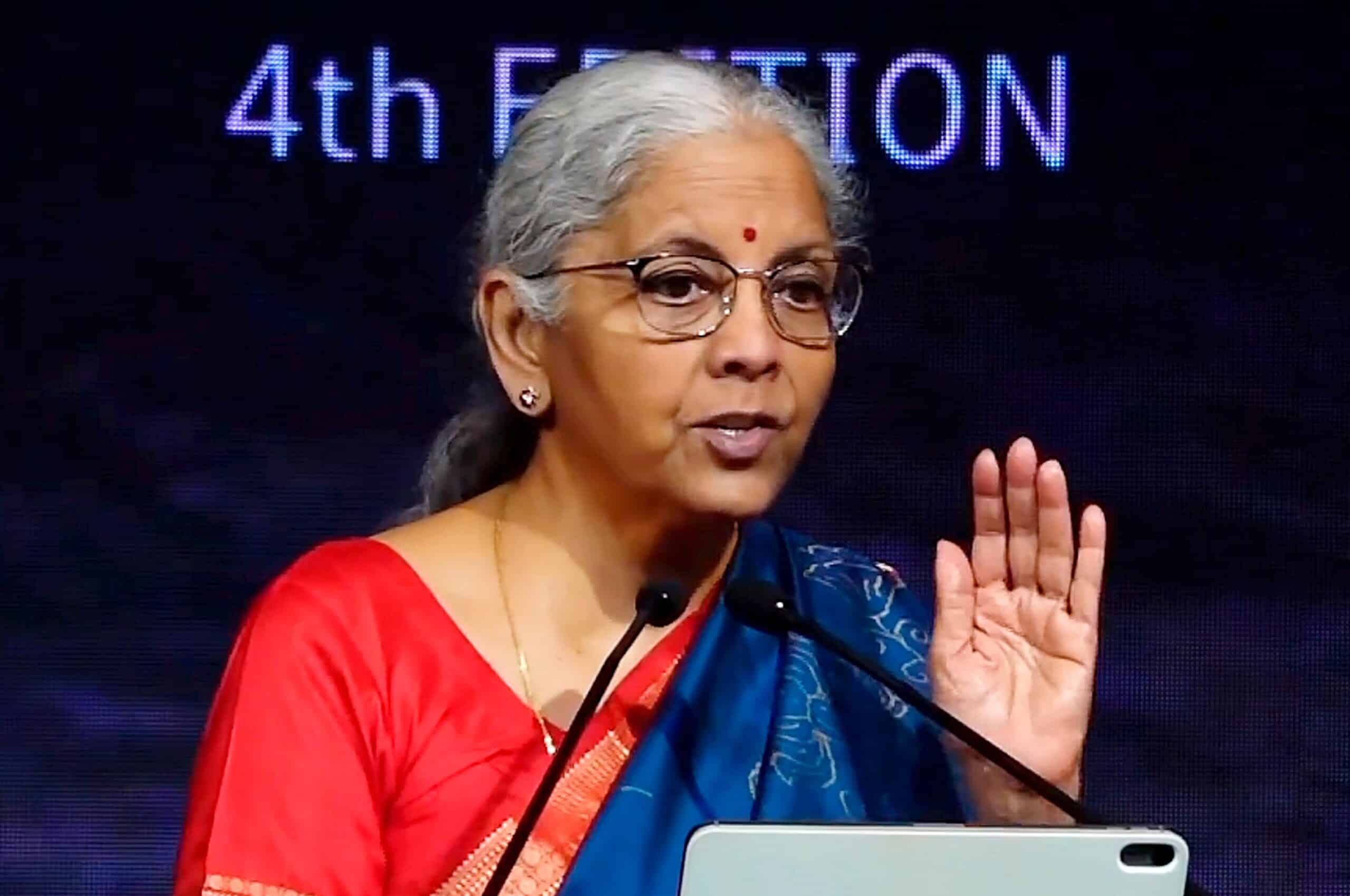
Union Finance Minister Nirmala Sitharaman recently emphasized the transformative potential of India’s manufacturing sector, as outlined in the Economic Survey. She stated that the country is transitioning from merely “thinking about buying Indian” to “buying Indian without thinking.” This shift is attributed to the government’s focus on deregulation and enhancing manufacturing capabilities, which aligns with Prime Minister Narendra Modi’s vision of Aatmanirbhar Bharat and Make in India. The survey highlights significant growth in the manufacturing sector, driven by initiatives such as the Production-Linked Incentive (PLI) scheme.
Manufacturing Sector Growth
Sitharaman pointed out that the Economic Survey indicates a robust revival in the manufacturing sector, with growth rates of 7.72% in the first quarter and 9.13% in the second quarter of FY 2025-26. This growth is largely attributed to the PLI scheme and various reforms aimed at boosting the sector. As of September 2025, the PLI schemes have attracted investments exceeding Rs 2 lakh crore, leading to an incremental production value of over Rs 18.70 lakh crore and the creation of more than 12.60 lakh jobs. The government’s push for modernization has resulted in medium- and high-technology activities now constituting 46.3% of India’s total manufacturing value added, showcasing a significant shift towards advanced manufacturing practices.
Strengthening Human Capital
In her address, Sitharaman also highlighted the importance of human capital in India’s growth strategy, as detailed in the Economic Survey. She noted measurable improvements in education and health outcomes. The quality of school education is advancing, with 13,076 PM SHRI schools serving as model institutions. Post-pandemic recovery in foundational skills has been notable, with Grade III mathematics proficiency rising from 42% in 2021 to 65%. Digital integration in education is also on the rise, facilitated by over 4.6 crore APAAR IDs that allow for effective tracking of student progress. Additionally, higher education capacity has expanded, with the Gross Enrolment Ratio increasing to 29.5, supported by the establishment of more premier institutions, including 23 IITs, 21 IIMs, and 20 AIIMS, some of which have international campuses.
Improvements in Health Indicators
Sitharaman further discussed significant advancements in public health, noting a decline in infant mortality rates from 40 per 1,000 live births in 2013 to 25 in 2023. This improvement reflects ongoing enhancements in public health delivery systems. The country now boasts a comprehensive primary healthcare network, anchored by 1.82 lakh Ayushman Arogya Mandirs. The distribution of 42.78 crore Ayushman cards and over 10.98 crore hospital admissions illustrates the extensive healthcare coverage provided to families. Additionally, efforts to control diseases have shown progress, with tuberculosis incidence decreasing by 21% since 2015, underscoring the government’s commitment to improving health outcomes.
Strategic Resilience and State Capacity
In her remarks, Sitharaman emphasized that the Economic Survey recognizes ‘State capacity’ as fundamental to achieving strategic resilience and indispensability. She explained that strategic resilience is fostered through the collaborative efforts of the state, businesses, and citizens, highlighting a shared responsibility among these entities. This concept aligns with Prime Minister Modi’s vision of “Sabka Saath, Sabka Vikas, Sabka Vishwas, Sabka Prayaas.” The survey also notes that the drive for state-level deregulation is gaining momentum, reflecting the principles of cooperative and competitive federalism. This approach aims to create a more resilient and self-reliant economy, positioning India favorably in the global market.
Observer Voice is the one stop site for National, International news, Sports, Editor’s Choice, Art/culture contents, Quotes and much more. We also cover historical contents. Historical contents includes World History, Indian History, and what happened today. The website also covers Entertainment across the India and World.
Follow Us on Twitter, Instagram, Facebook, & LinkedIn

