

Shadab Khan Faces Backlash Over Controversial ‘Pakistan Beat India’ Remark

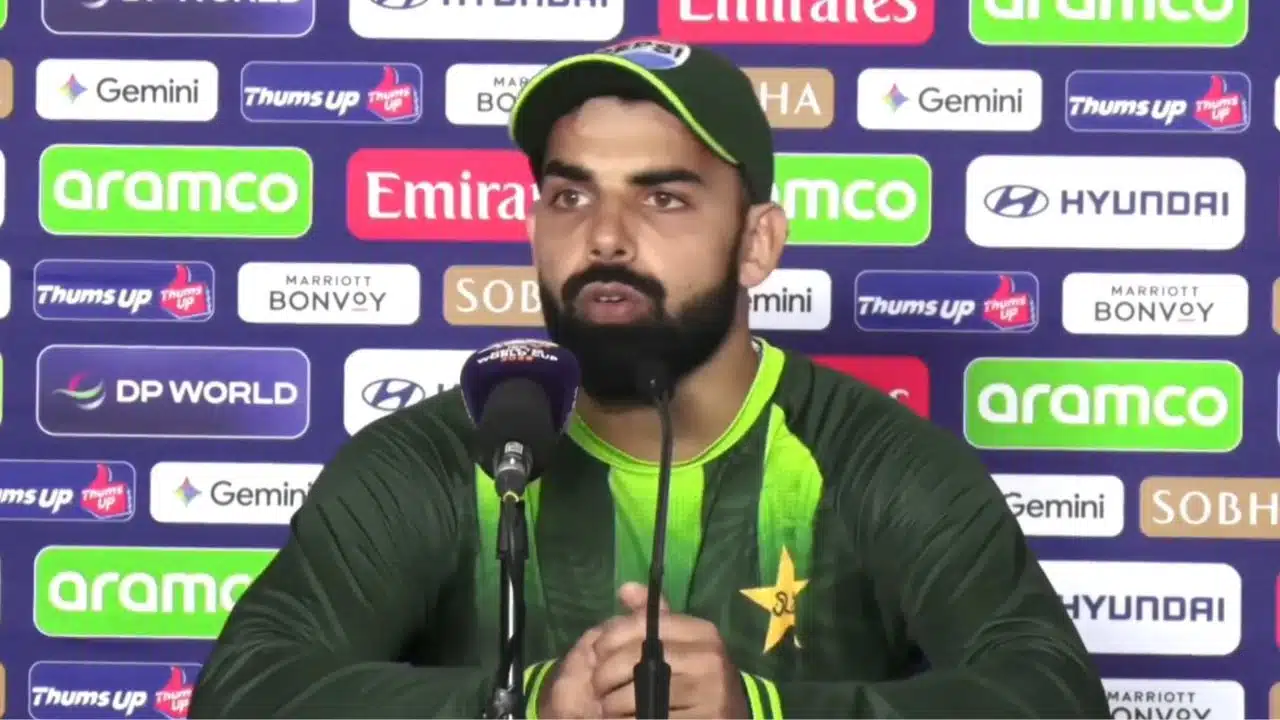
Veteran Pakistan cricketer Ahmed Shehzad has publicly criticized all-rounder Shadab Khan following controversial remarks made by Shadab about former national players. This exchange comes after Pakistan’s disappointing loss to India in the T20 World Cup, which has led to significant scrutiny of the team’s performance. Shadab’s comments, suggesting that he has achieved more than previous generations, did not sit well with Shehzad, who questioned Shadab’s place in the national squad and accused him of receiving preferential treatment.
Shehzad’s Strong Rebuttal
During a televised debate, Ahmed Shehzad did not hold back in his criticism of Shadab Khan. He challenged Shadab’s credentials, claiming that the all-rounder had not earned his spot on the team through merit. Shehzad pointed out that Shadab’s selection seemed to stem from favoritism rather than performance, stating, “First of all, you came in through the back door. You’re neither a performer nor a regular in domestic cricket.” He emphasized that Shadab’s lack of significant contributions in domestic matches raises questions about his inclusion in the national team.
Shehzad also highlighted the issue of favoritism within the team, referencing the treatment of other players like Hasan Ali, who was dropped from central contracts despite his contributions. “If that’s not favoritism, then I don’t know what is,” Shehzad remarked. He further criticized Shadab for making comparisons with legendary players from the 1990s, asserting that those players had a far superior track record against India. Shehzad concluded his remarks by urging Shadab to show respect to senior players who have supported him in the past.
Reactions from Former Players
The debate surrounding Shadab’s comments drew responses from other former players, including Mohammad Amir and Rashid Latif. Amir expressed his disappointment with Shadab’s timing, suggesting that such remarks were inappropriate while the team was on tour. He stated, “If you’re on tour, there will be criticism. So, you’ve got no right to say such things when you are on tour.” Amir emphasized the importance of focusing on performance rather than engaging in public disputes, recalling how he dealt with criticism by letting his game do the talking.
Rashid Latif, on the other hand, took a different approach. He acknowledged Shadab’s courage to speak out but did so with a hint of sarcasm. Latif remarked, “Shadab should get credit for showing the courage to say what he said. Everyone has the right to speak, so it is okay.” This response highlights the varied perspectives within the cricketing community regarding how players should handle criticism and express their opinions.
The Impact of the T20 World Cup Loss
Pakistan’s defeat to India in the T20 World Cup has sparked intense discussions about the team’s performance and the dynamics within the squad. The loss has not only led to criticism from former players but has also raised questions about the team’s strategy and preparation. The fallout from this match has put additional pressure on players like Shadab Khan, who are expected to lead the team in challenging situations.
As the team navigates through this difficult period, the internal conflicts and public criticisms may affect morale and performance. The players must find a way to channel this criticism into motivation for future matches. With the T20 World Cup still ongoing, the focus will be on how the team responds to this setback and whether they can regroup and perform better in upcoming fixtures. The scrutiny from former players and the media will likely continue, making it essential for the team to maintain unity and focus on their objectives.
Observer Voice is the one stop site for National, International news, Sports, Editor’s Choice, Art/culture contents, Quotes and much more. We also cover historical contents. Historical contents includes World History, Indian History, and what happened today. The website also covers Entertainment across the India and World.

